One-Punch Man fan remake · Episode 1
Storyboarding in clay
We built two scenes of our One-Punch Man remake as rough 3D sets, painted every cut four ways and compared them side by side. The blocking fixed continuity, but the pictures painted without it were composed better, so we solved each camera to match the better picture.
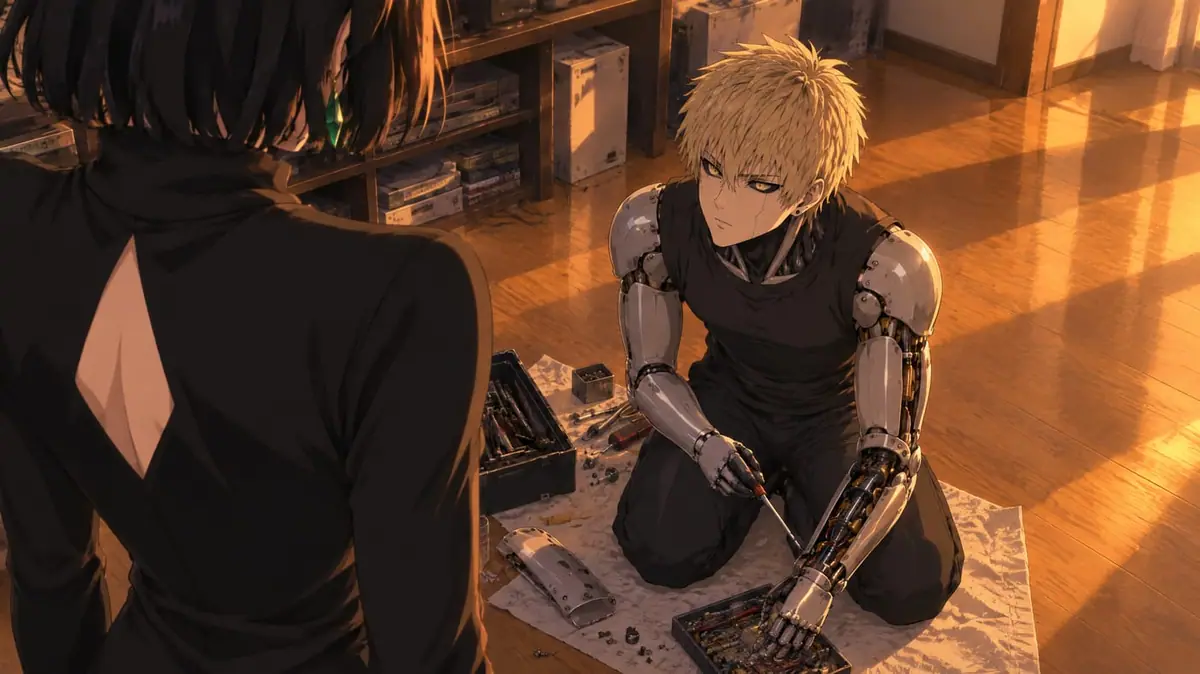 Cut 124 · first staging
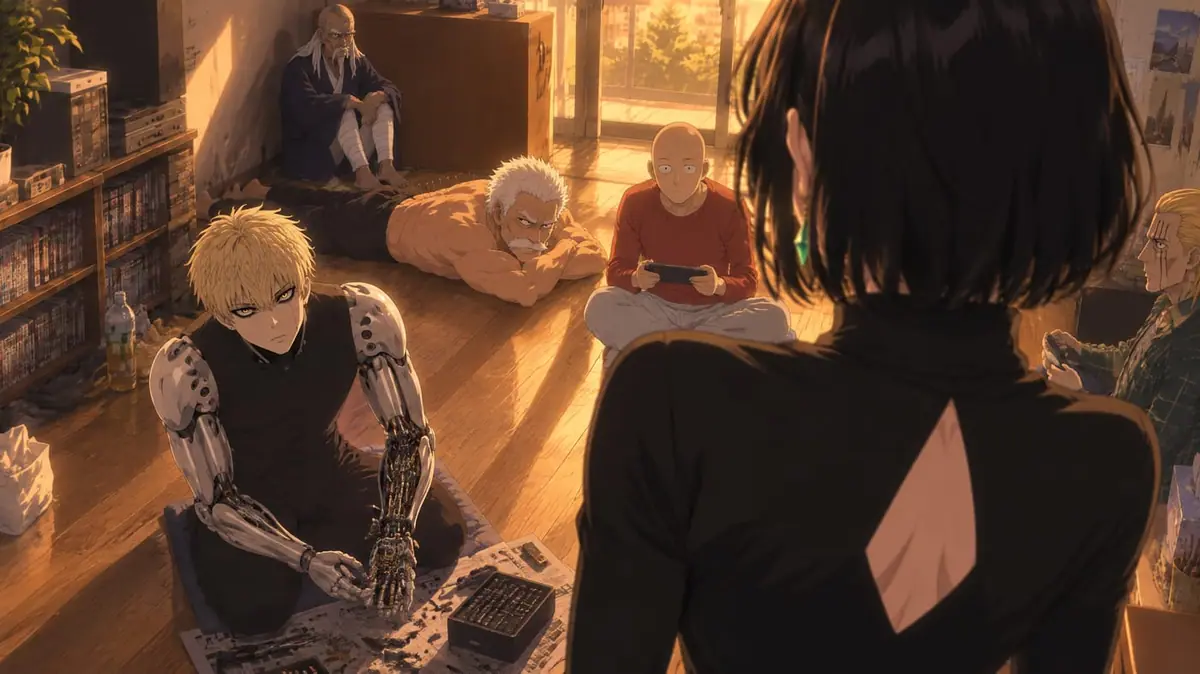 Cut 124 · second staging
01Why we block before we paint
Episode 1 of our fan remake adapts chapters 86 and 87 of Yusuke Murata's manga. In our first motion cut of the Fubuki scene, every frame was drawn on its own. People changed clothes from one cut to the next, sat in different places, and at 0:33 the camera jumped across the room.
 0:33
 0:34 · jump
 0:40
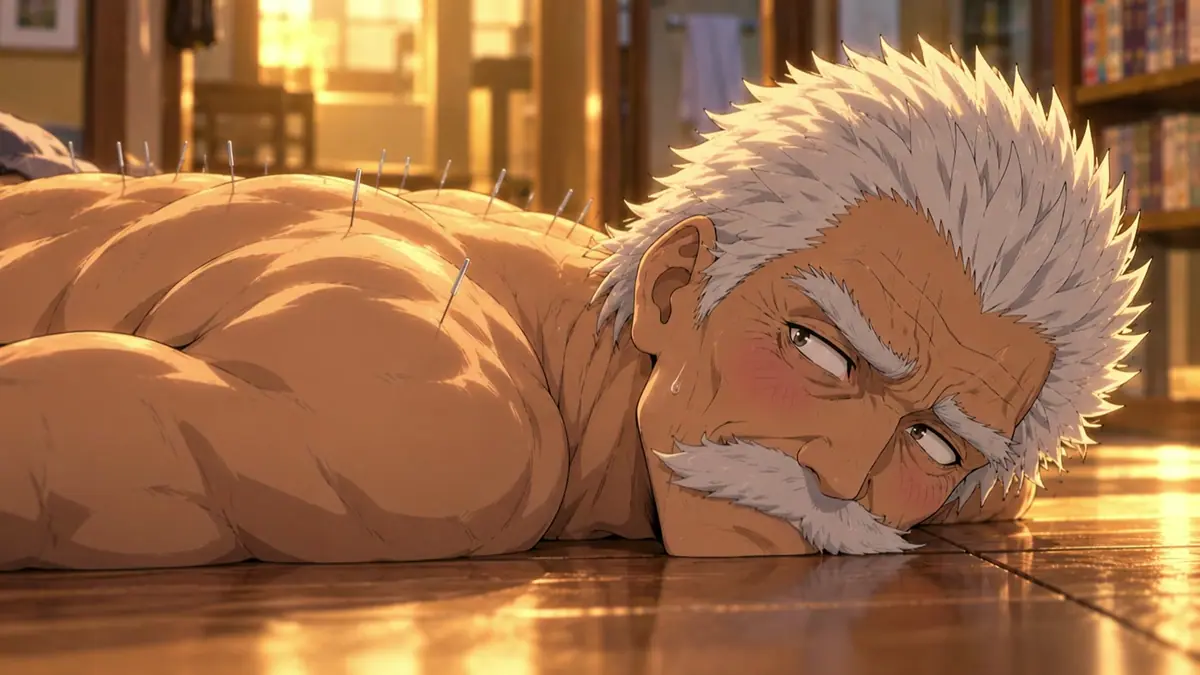
The first cut. At 0:34 Fubuki jumps from Genos's shoulder to the far doorway, and the camera swaps the two of them across the screen. At 0:40 Silverfang is shirtless with needles in his back, as in the manga (pages 160 and 162), but the wide shot two seconds earlier had dressed him in black.
None of those frames is bad on its own. The trouble is that nothing ties them together. Each one is invented fresh from a description and a reference picture, so each one invents its own room. Animation layout and film previs solved this long ago: build the place once, put everyone on a mark, choose every camera, and only then draw. This post follows that method through two scenes and 19 cuts: the Fubuki scene (pages 160–164) and the arena where the mercenaries turn (pages 190–193).
02The process, one cut at a time
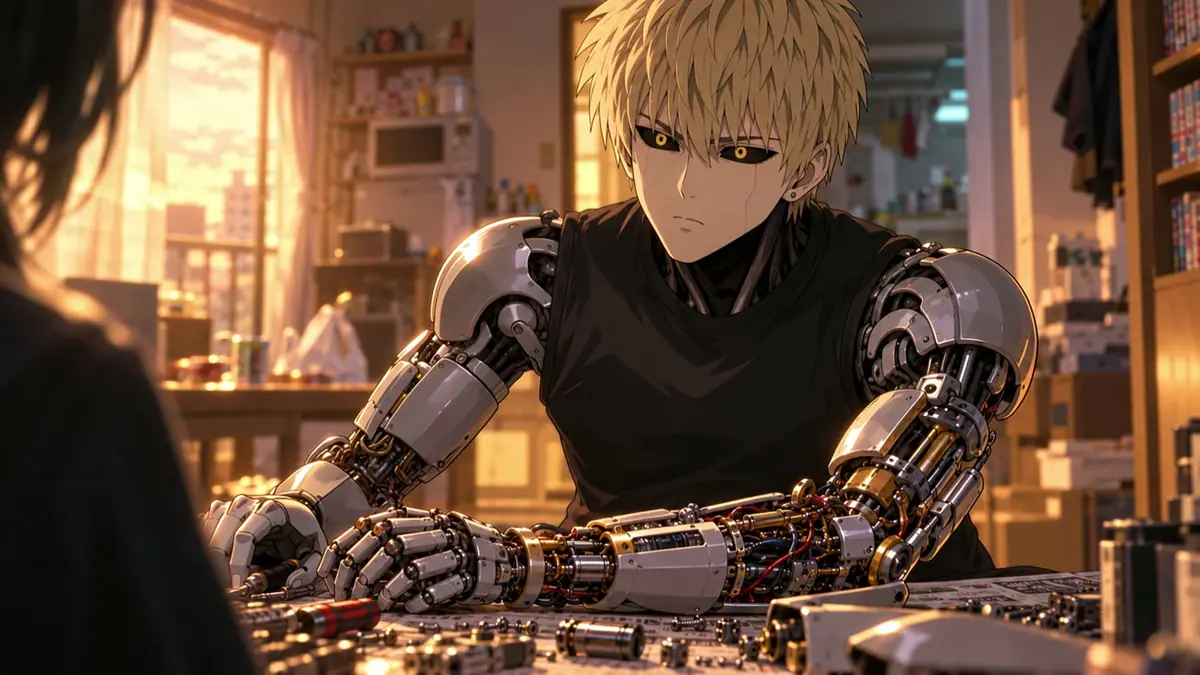
Each cut goes through eight steps. To keep it concrete, we follow one cut, 124, all the way through. In it Fubuki looks down at Genos, who kneels over his opened arm on spread newspapers and looks up at her (page 163, panel 4).
- 1The cut list
- 2The place, in metres
- 3The cast
- 4The blocking
- 5The cameras
- 6The checks
- 7The plates
- 8The paint
1The cut list
Each cut starts from our storyboard: the page and panel it adapts, what happens in it, and how long it runs. These are the 19 cuts in this test.
| Cut | Source | What happens |
|---|---|---|
| 121 | p163 panel 1 | Medium two-shot: Fubuki's back and shoulder loom in the left foreground; Saitama, sitting cross-legged on his cushion with his handheld, looks up at her. |
| 122 | p163 panel 2 | Medium close-up from Saitama's eye line, looking up: Fubuki, wide-eyed, throws her hands out as she lays it all out. |
| 123 | p163 panel 3 | Medium, side on: Fubuki stands on the left jabbing a finger down; Saitama flops onto his side on the right and props his head on his hand. |
| 124 | p163 panel 4 | Medium over Fubuki's shoulder (her black hair soft in the right foreground, so Genos stays on her left as in cut 123): Genos, kneeling over his parts, looks up from his opened arm. |
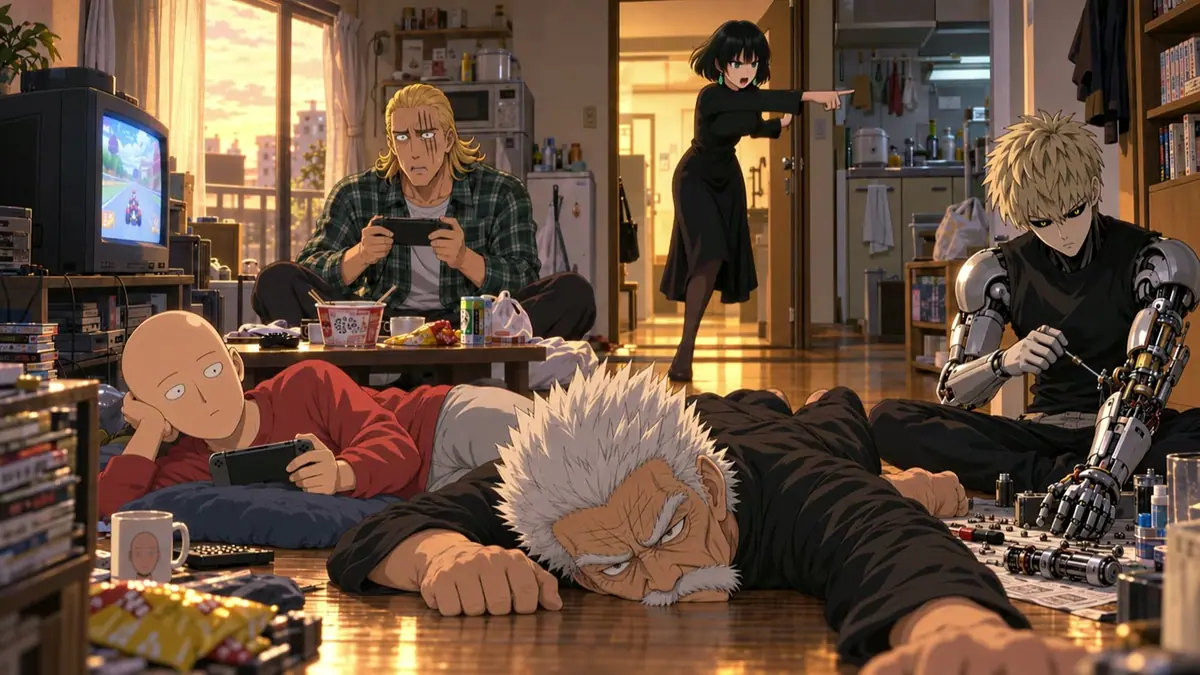
| 125 | p164 panel 1 | Full shot from low on the floor at the back of the room: Fubuki, the kitchen doorway behind her, swings round and points across the crowded room; Silverfang's white head in the right foreground. |
| 126 | p164 panel 2 | Close-up at floor level: Silverfang, face-down on the boards, chin on his forearms, explains; the needles in his back catch the light. |
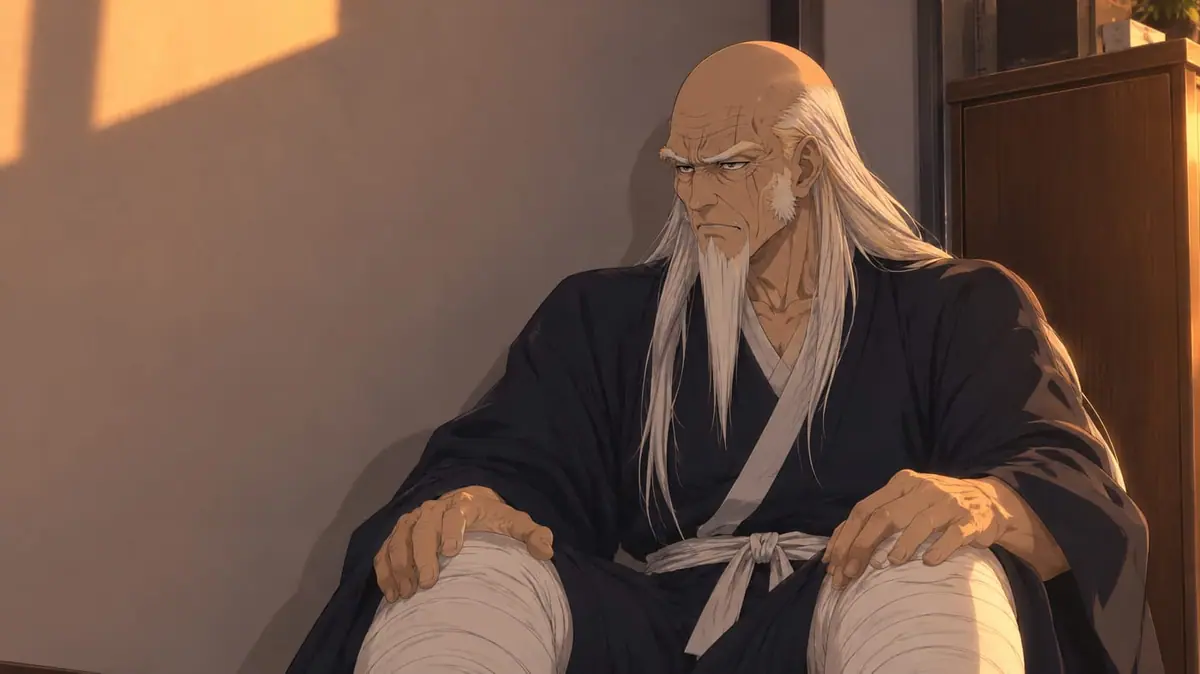
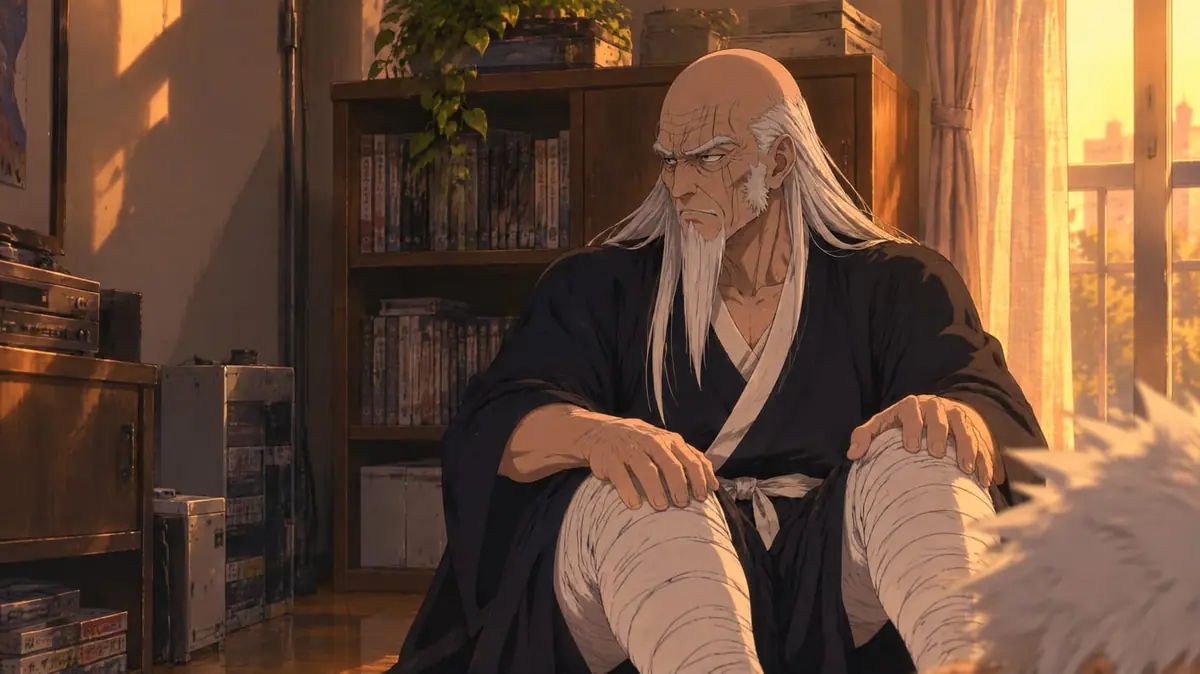
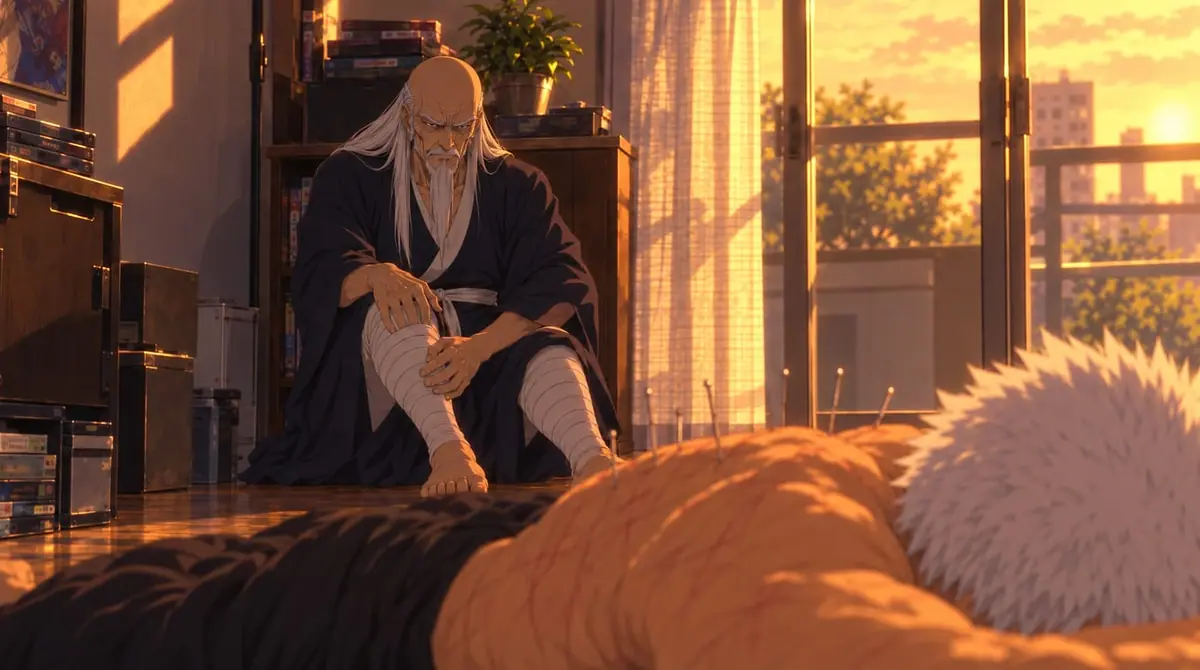
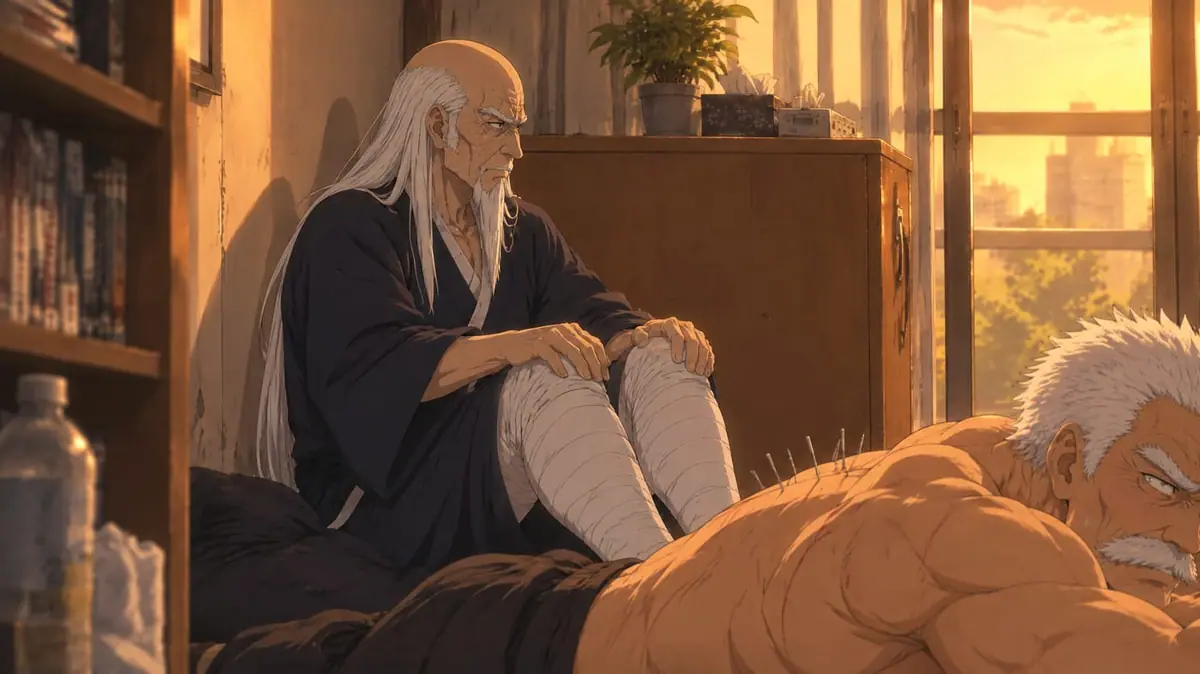
| 127 | p164 panel 3 | Medium: Bomb sits in the corner rubbing his bandaged knees; Silverfang's spiky white hair in the right foreground. |
| 128 | p164 panels 4-5 | Medium close-up: Fubuki, her anger gone, lowers her eyes, sobered; the kitchen doorway soft behind her. |
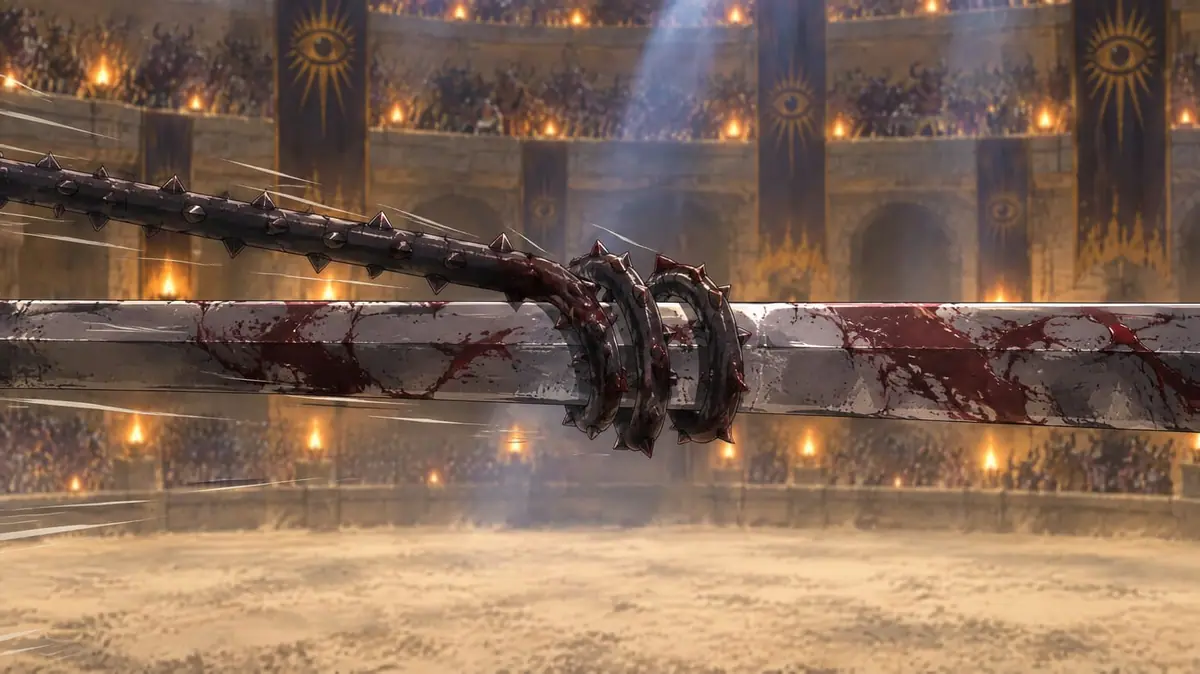
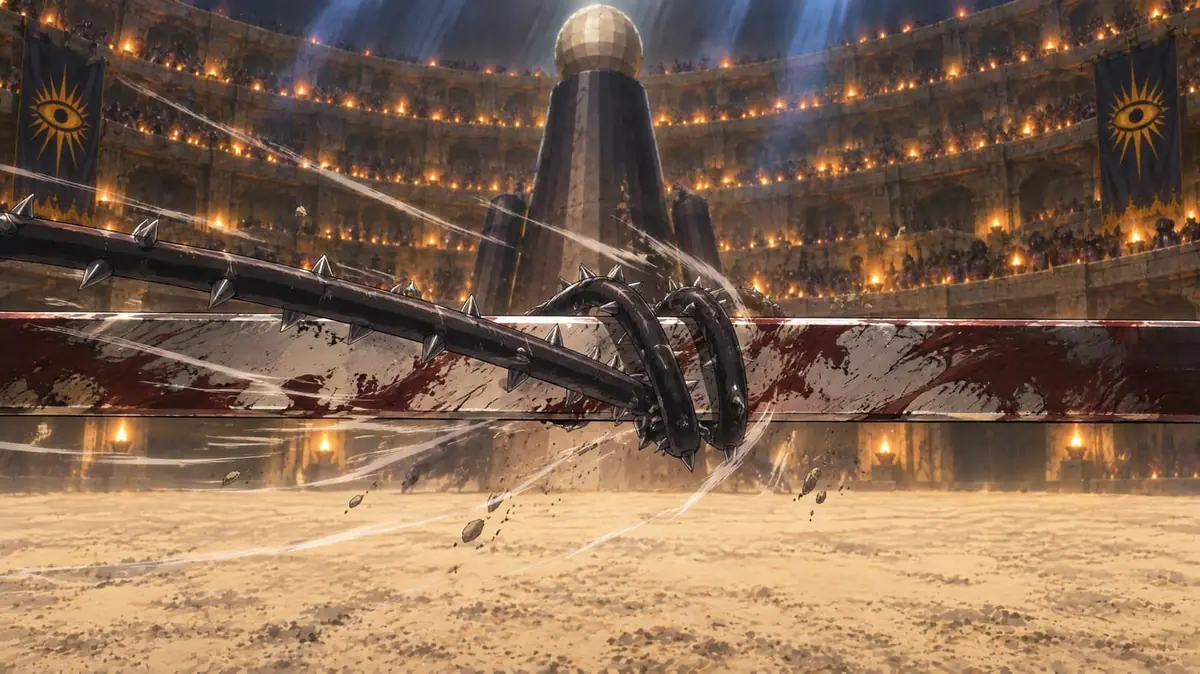
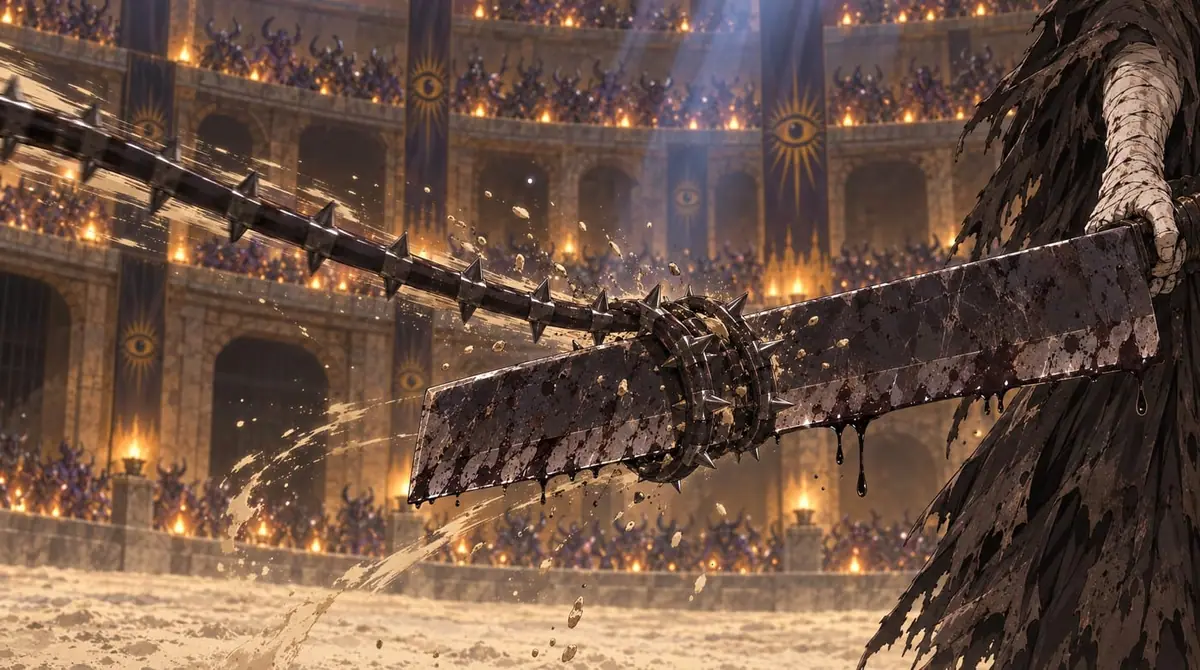
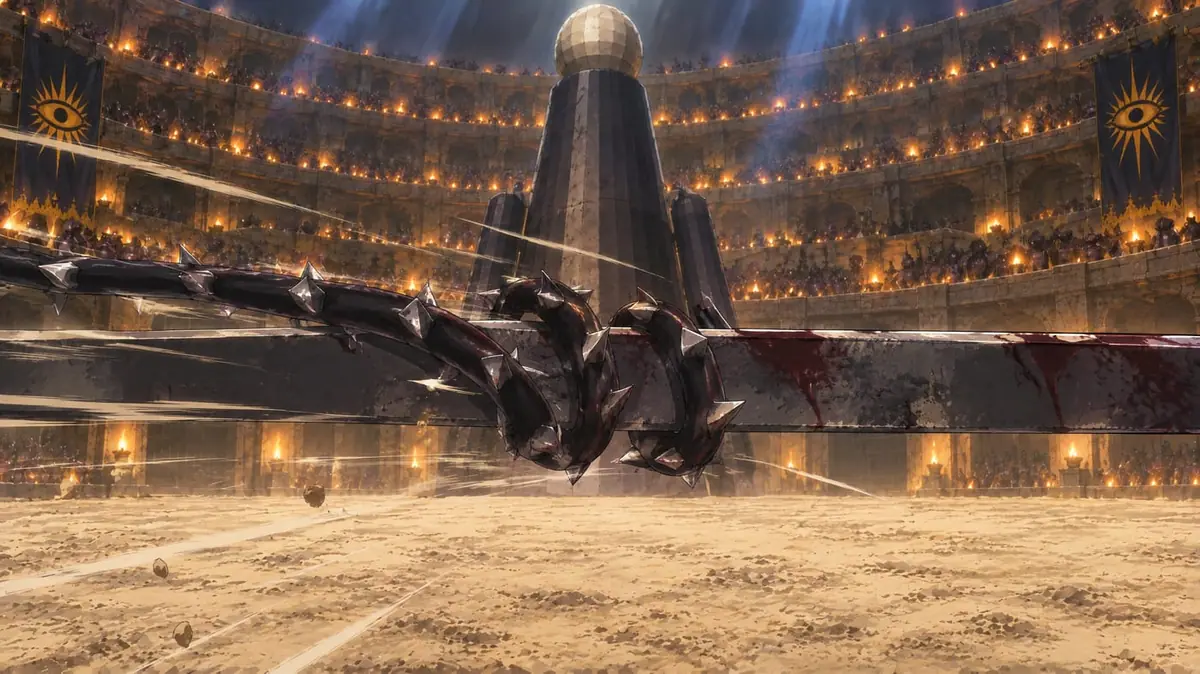
| 67 | p190 panel 6 | Insert: a spiked whip lashes across the frame from the left and snaps round the blade. |
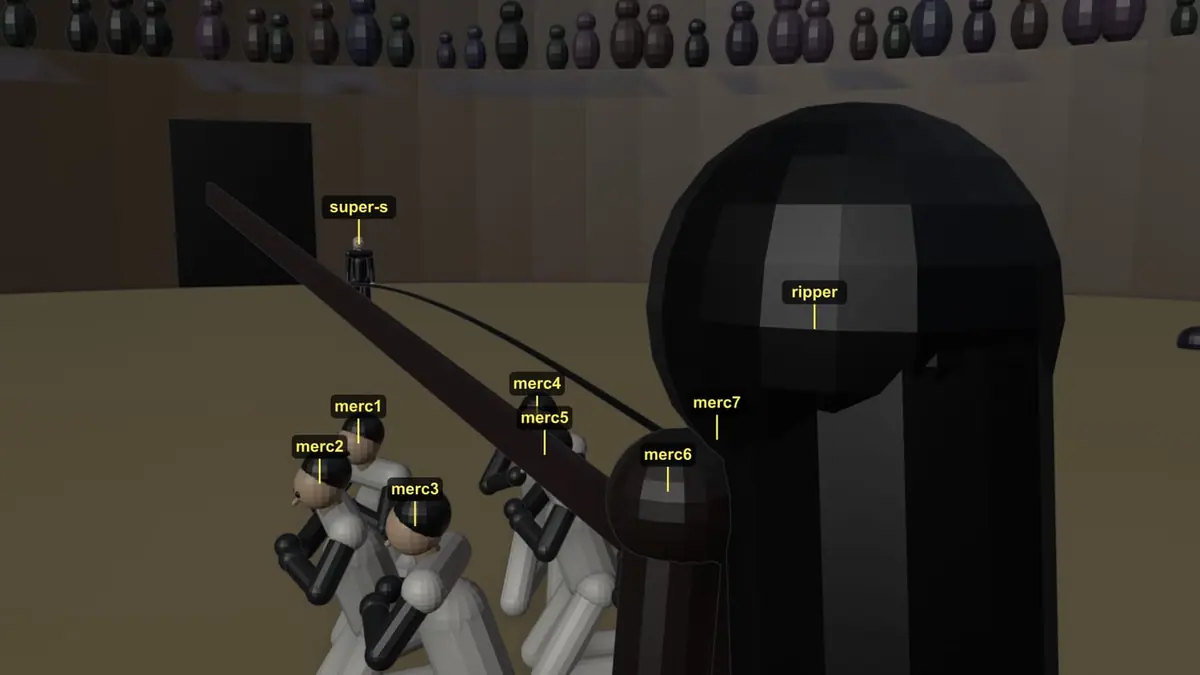
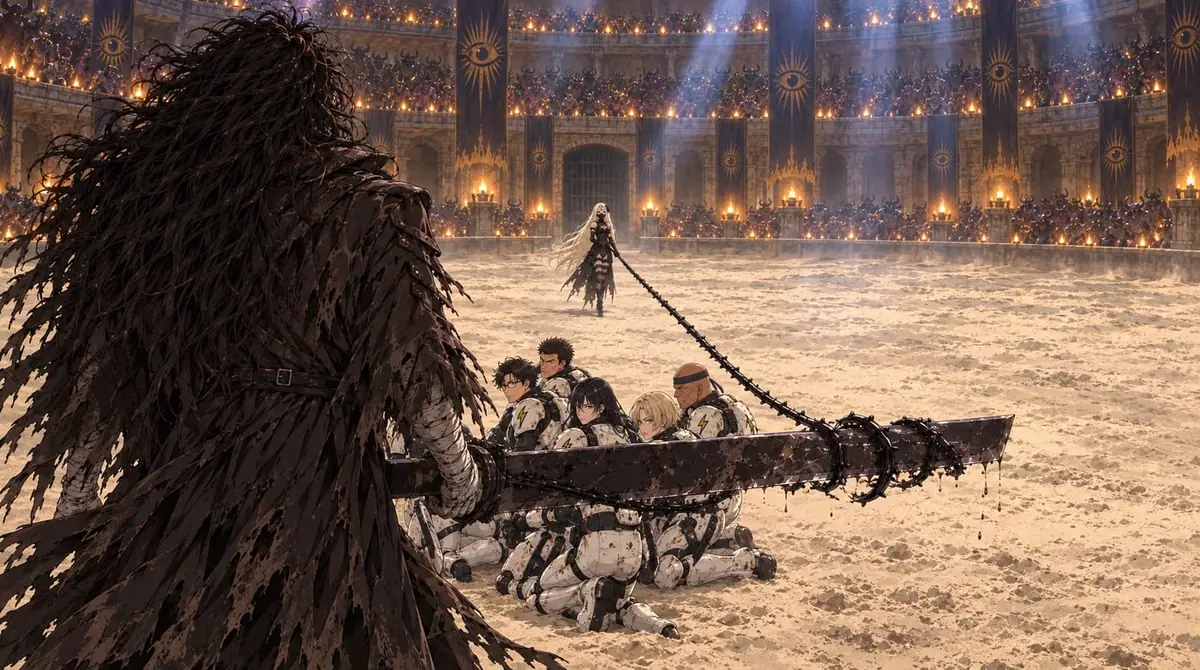
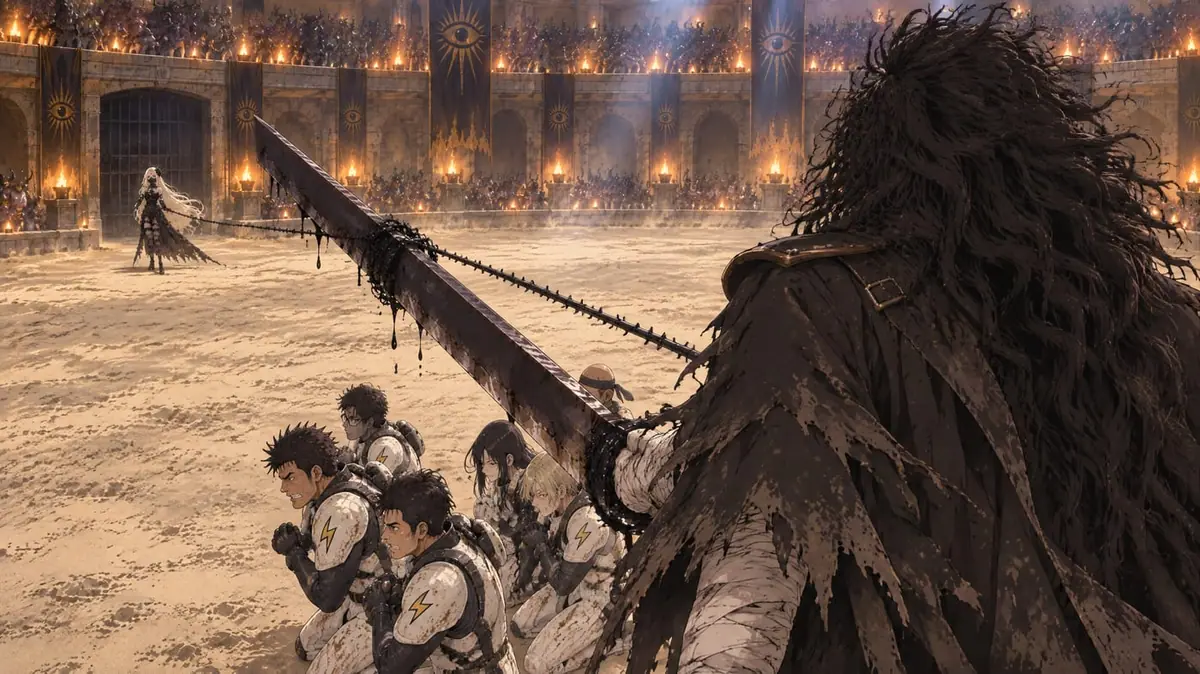
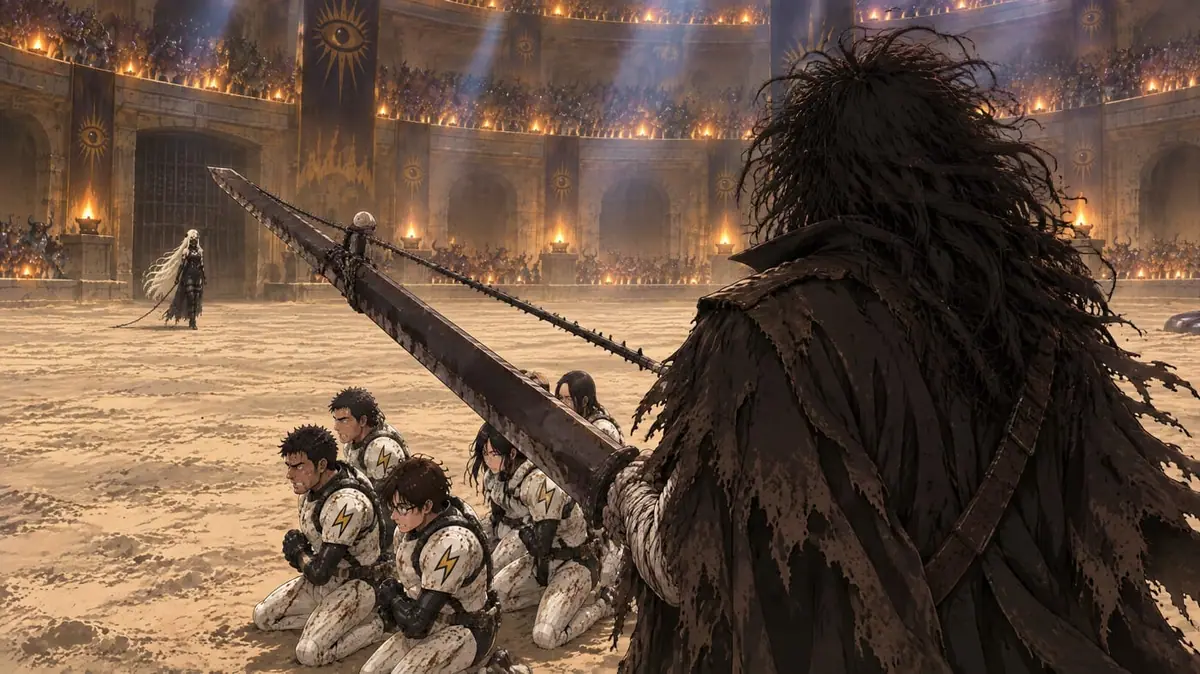
| 68 | p191 panel 1 | Wide, from behind the Ripper's shoulder: the whip has coiled round his blade and yanks it aside; far behind, at the west gate, the tall blonde woman holds the handle. |
| 69 | p191 panel 2 | Full shot, low angle, slow tilt up: Super S strides toward camera across the sand, hair swaying, the whip pulled taut between her gloved hands. |
| 70 | p191 panel 2 (inset) | Close-up: her eyes curve into a smile above the respirator mask. |
| 71 | p192 panel 1 | Medium from behind the Ripper, tilting up: he lifts his head toward Gyoro-Gyoro on her ledge high on the south wall. |
| 72 | p192 panel 2 | Wide, high angle over Gyoro-Gyoro's shoulder: down on the sand Super S (left), the huddled captives, the Ripper and G5 (right); Orochi's huge claws rest at the top edge of frame. |
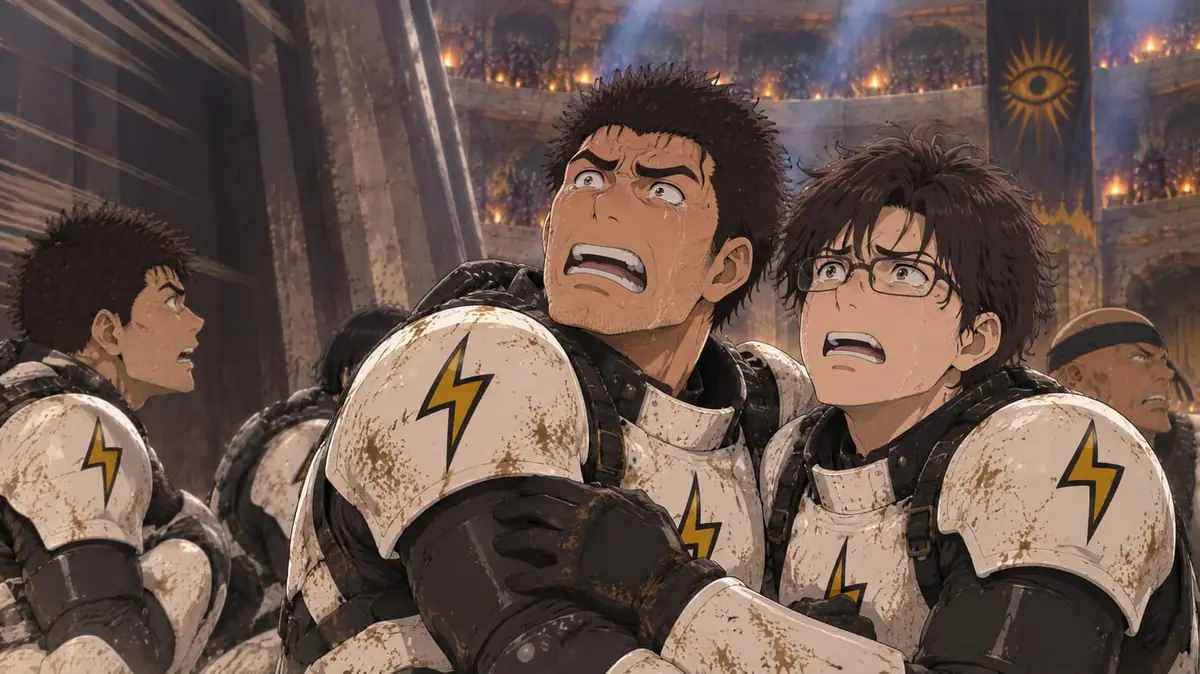
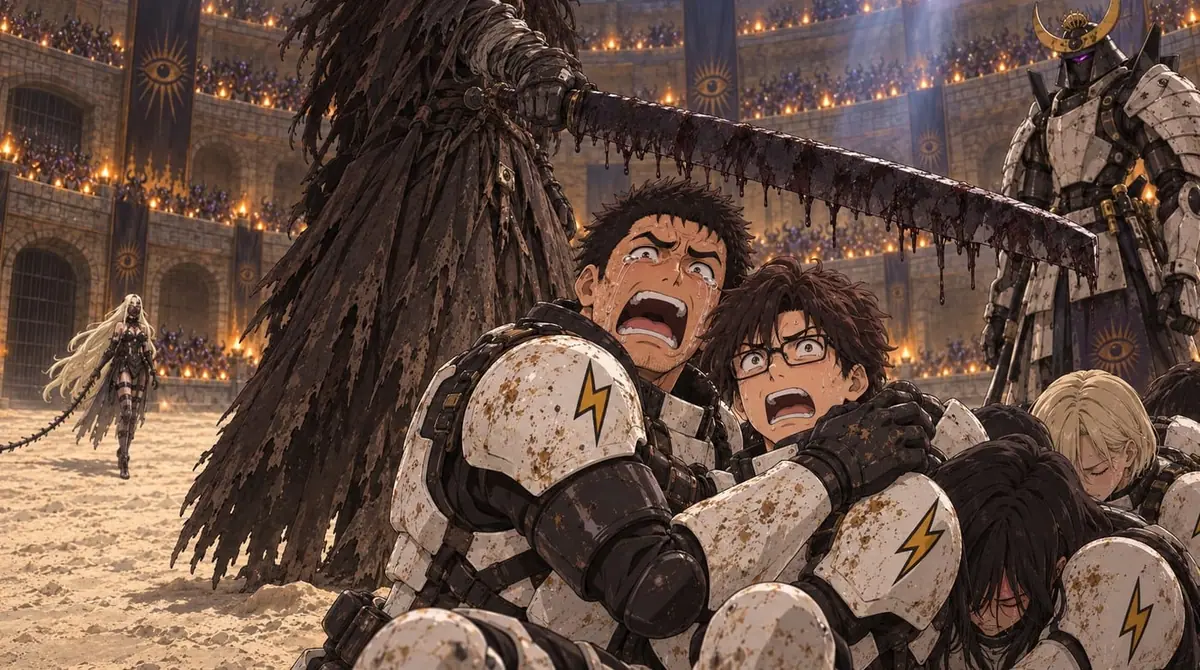
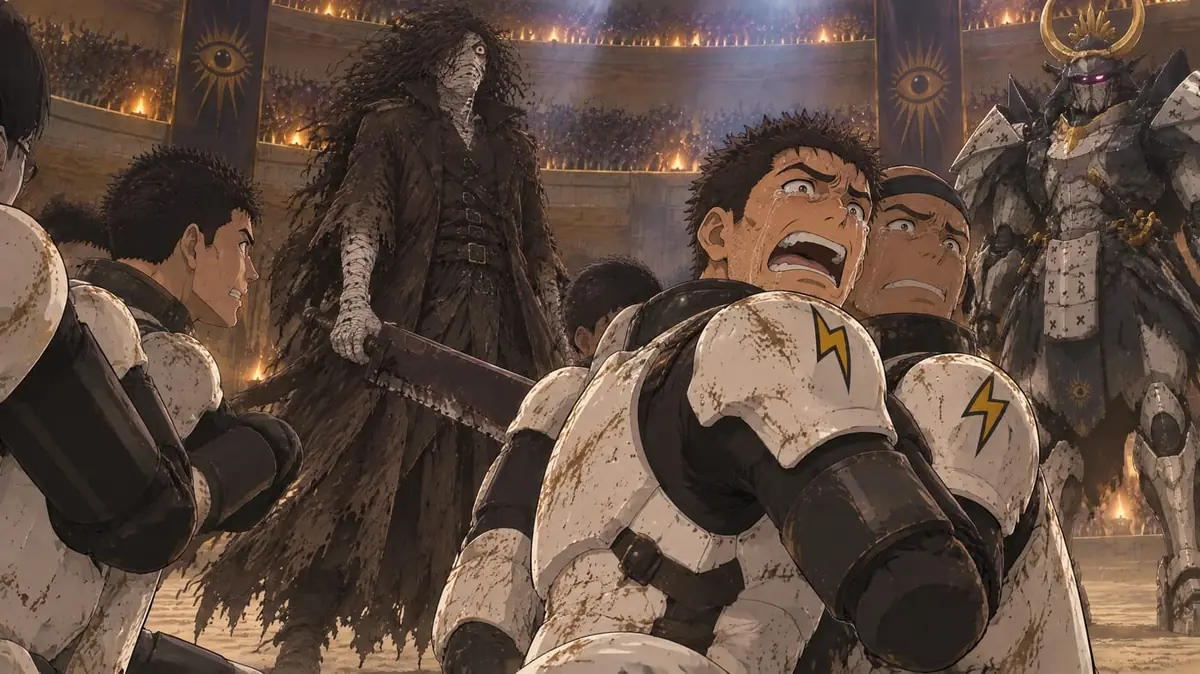
| 73 | p192 panel 3 | Medium: two of the mercenaries clutch each other and plead upward in panic. |
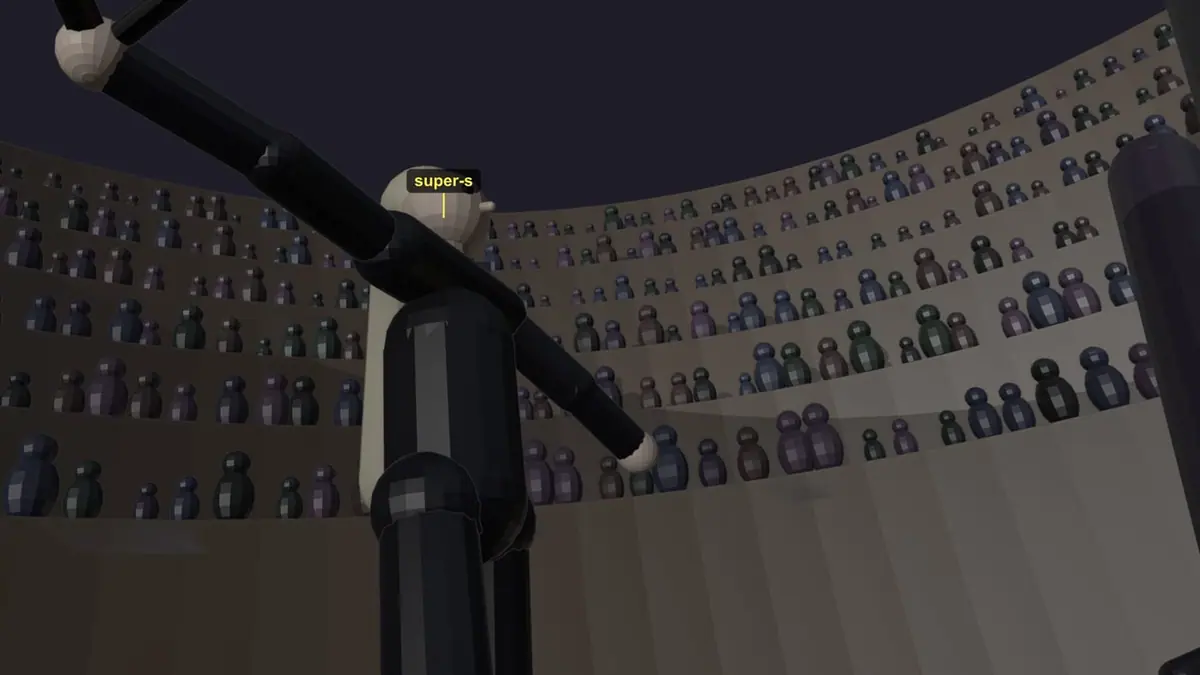
| 74 | p192 panel 4 | Full shot, the camera whipping with the lash: Super S spins on one heel and cracks the whip in a huge arc over the whole huddle. |
| 75 | p193 panel 1 | Extreme close-up: a mercenary's pupil warps into a glowing heart; he chokes. |
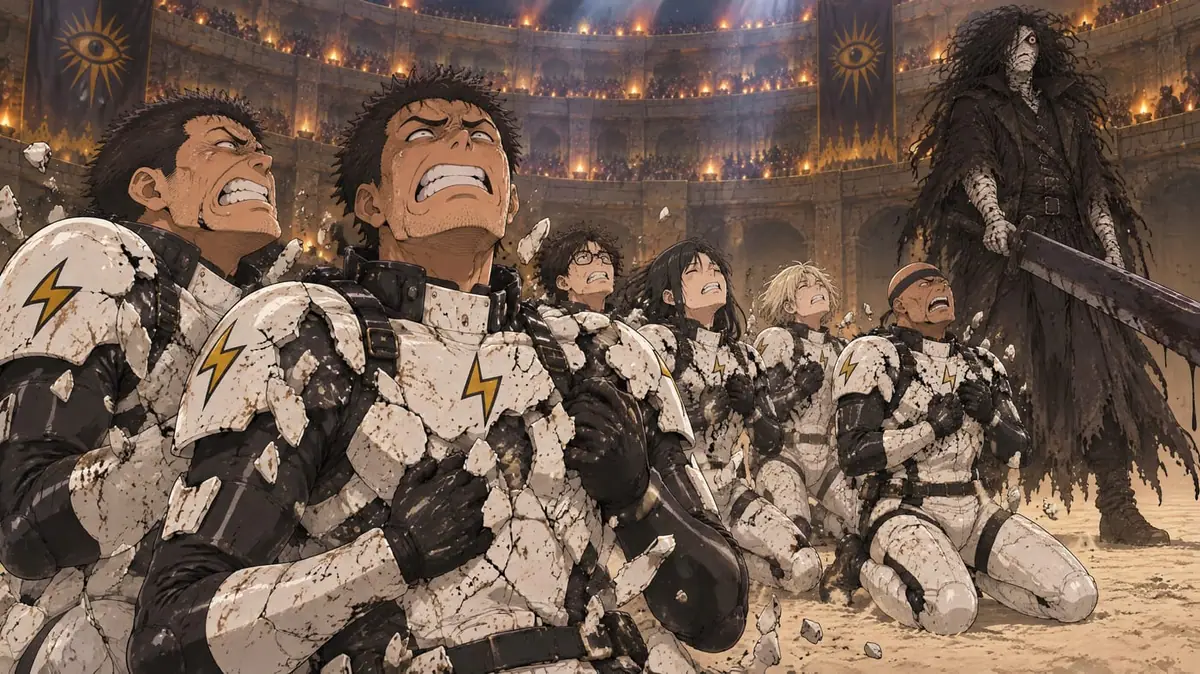
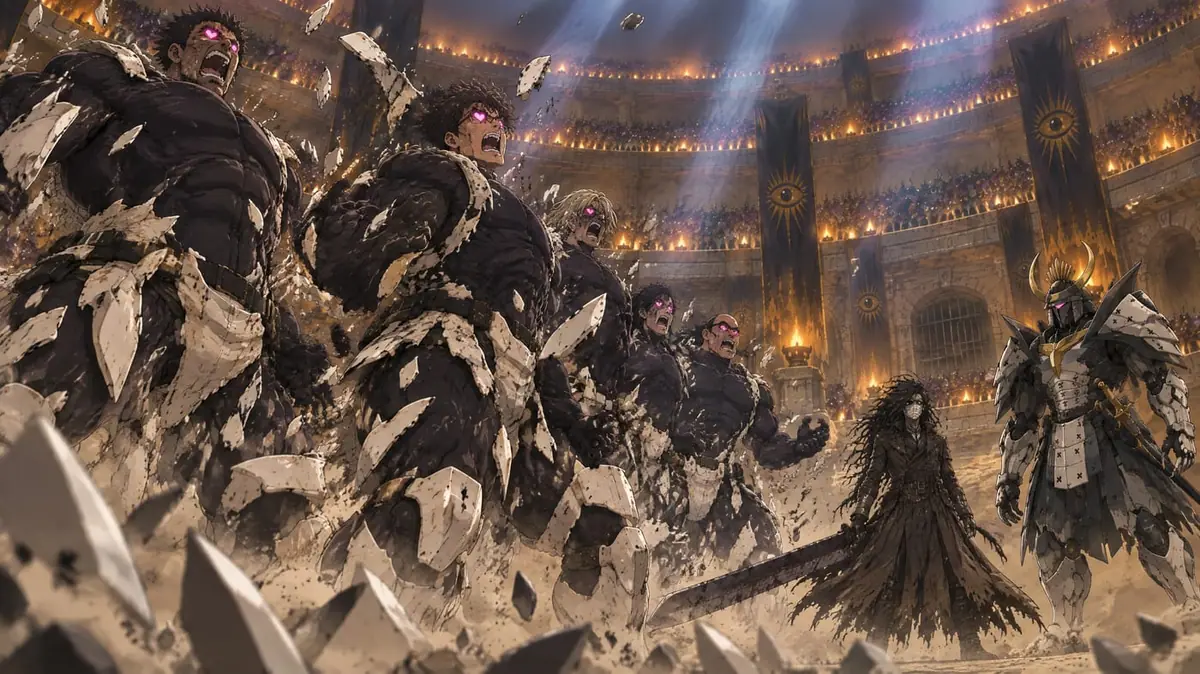
| 76 | p193 panel 2 | Medium, handheld shake: their suits crack and splinter as their bodies convulse. |
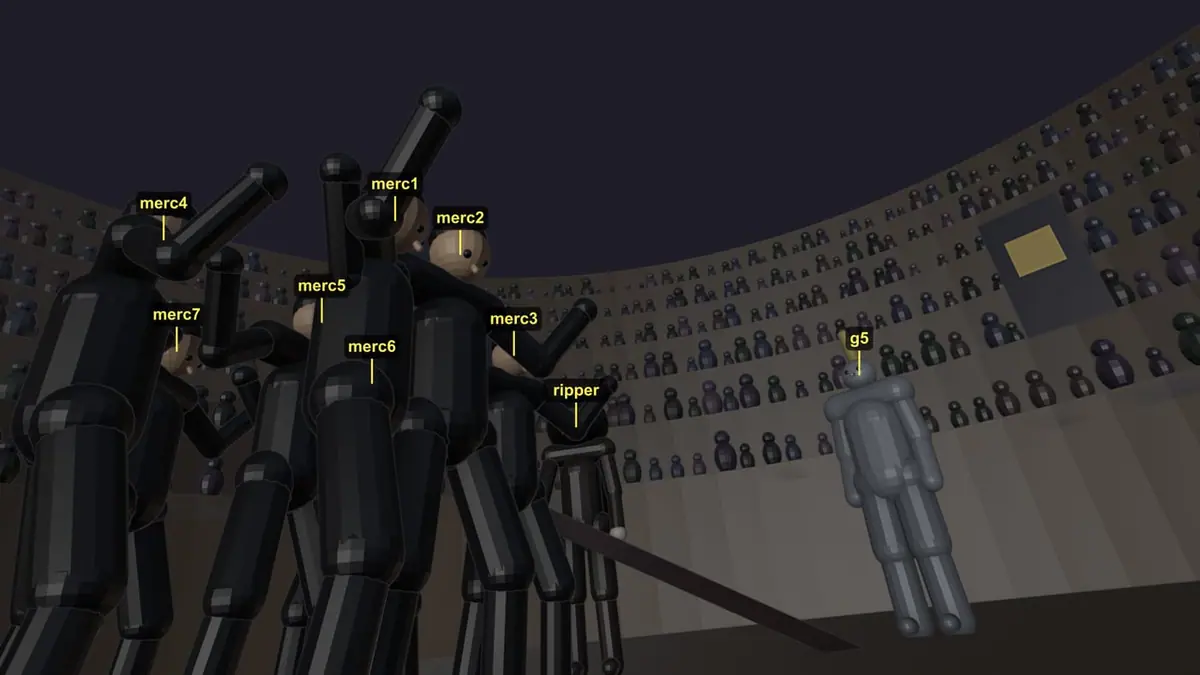
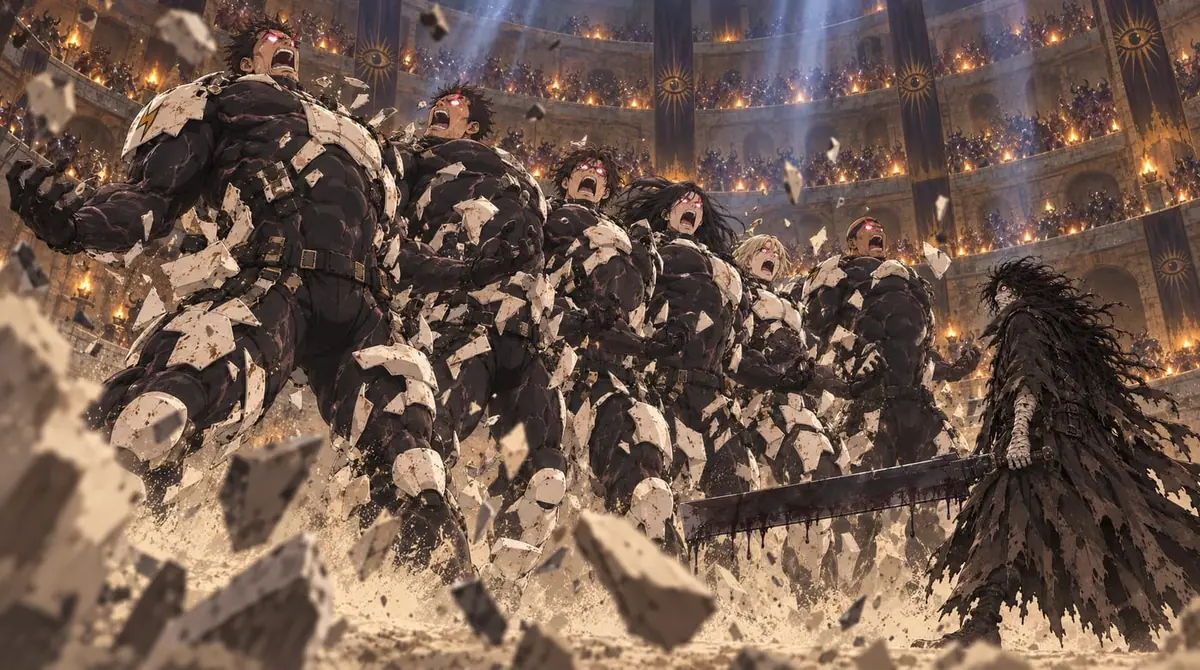
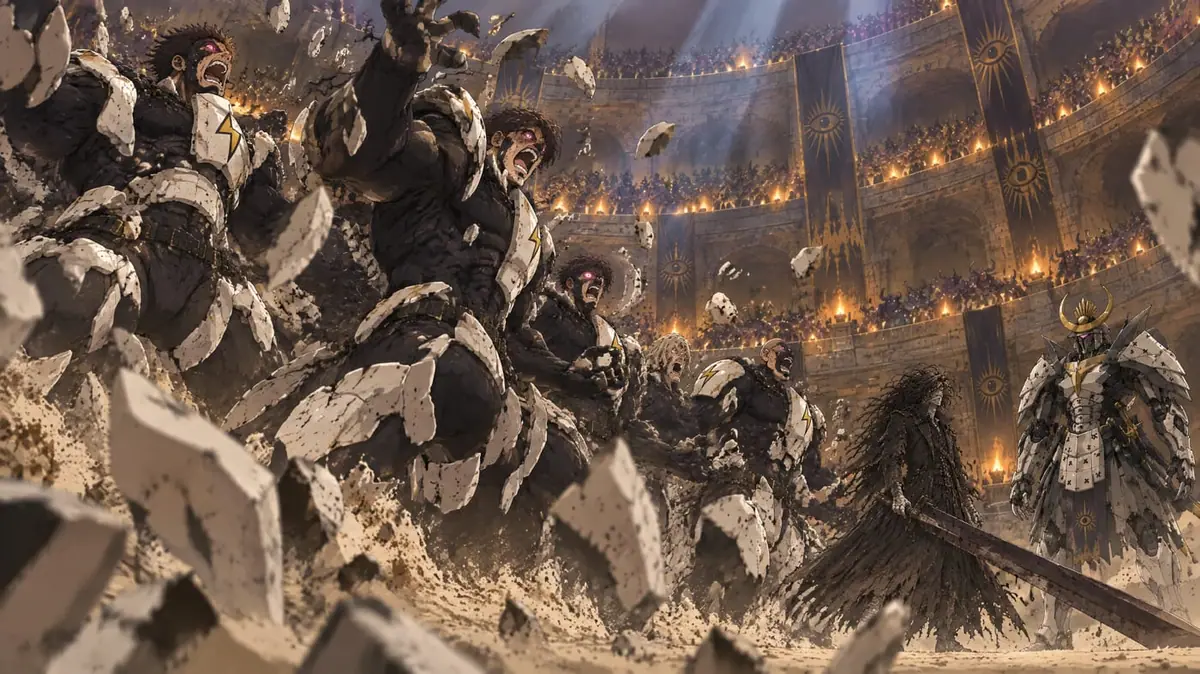
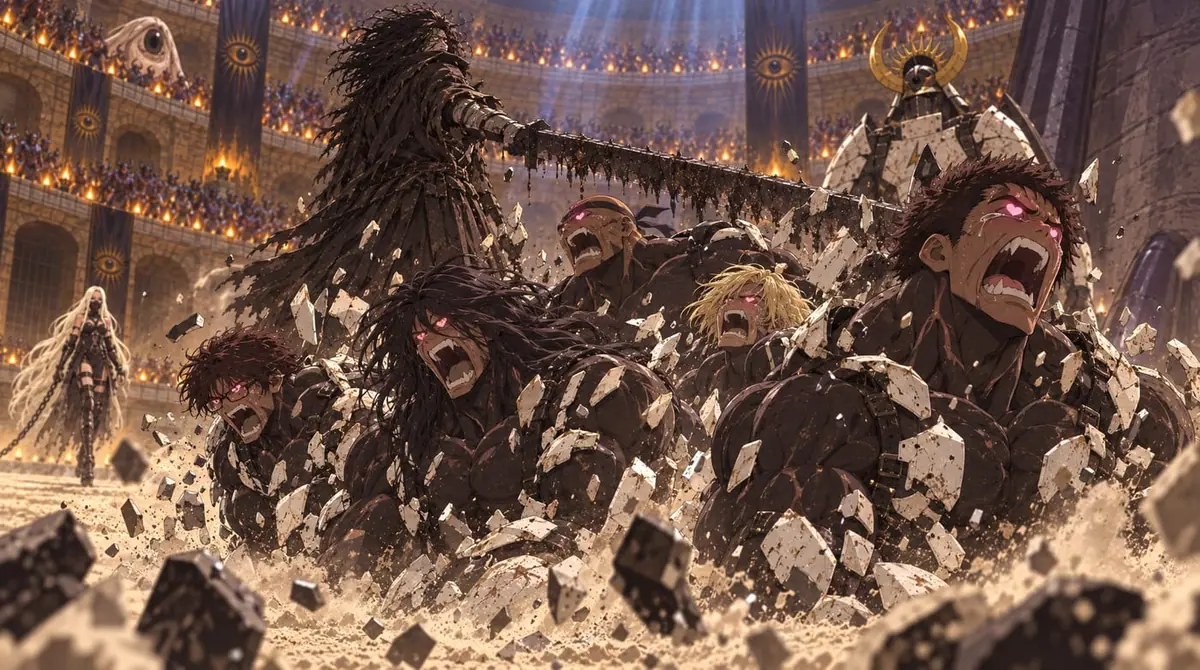
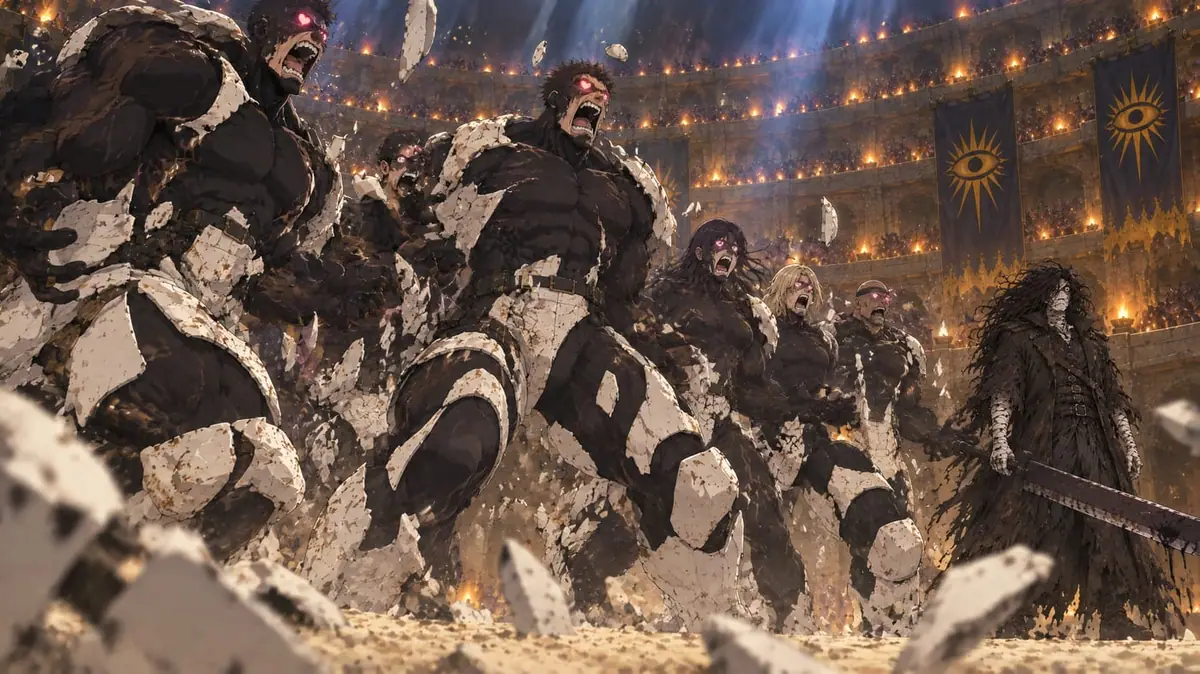
| 77 | p193 panel 3 | Wide, debris flying past the lens: they burst up as hulking black brutes and roar, shards of white armour flying. |
2The place, in metres
Each set is built once from the manga's establishing panel, out of boxes, wall panels with holes for doors and windows, rings and tiers.
- The apartment is 3.6 by 4.5 metres. The balcony door and the low sun are at one end, and the kitchen doorway is at the other. The TV wall, shelves, closet and a bookshelf corner sit between them.
- The arena is a pit of sand 56 metres across inside tiers of balconies packed with monsters. It has a gate on one side, Gyoro-Gyoro's ledge on another, and a seated colossus whose claws rest on the sand.
Everyone gets a mark and a facing. Below, everyone is seen from above, with the camera of cut 124 drawn as a wedge.
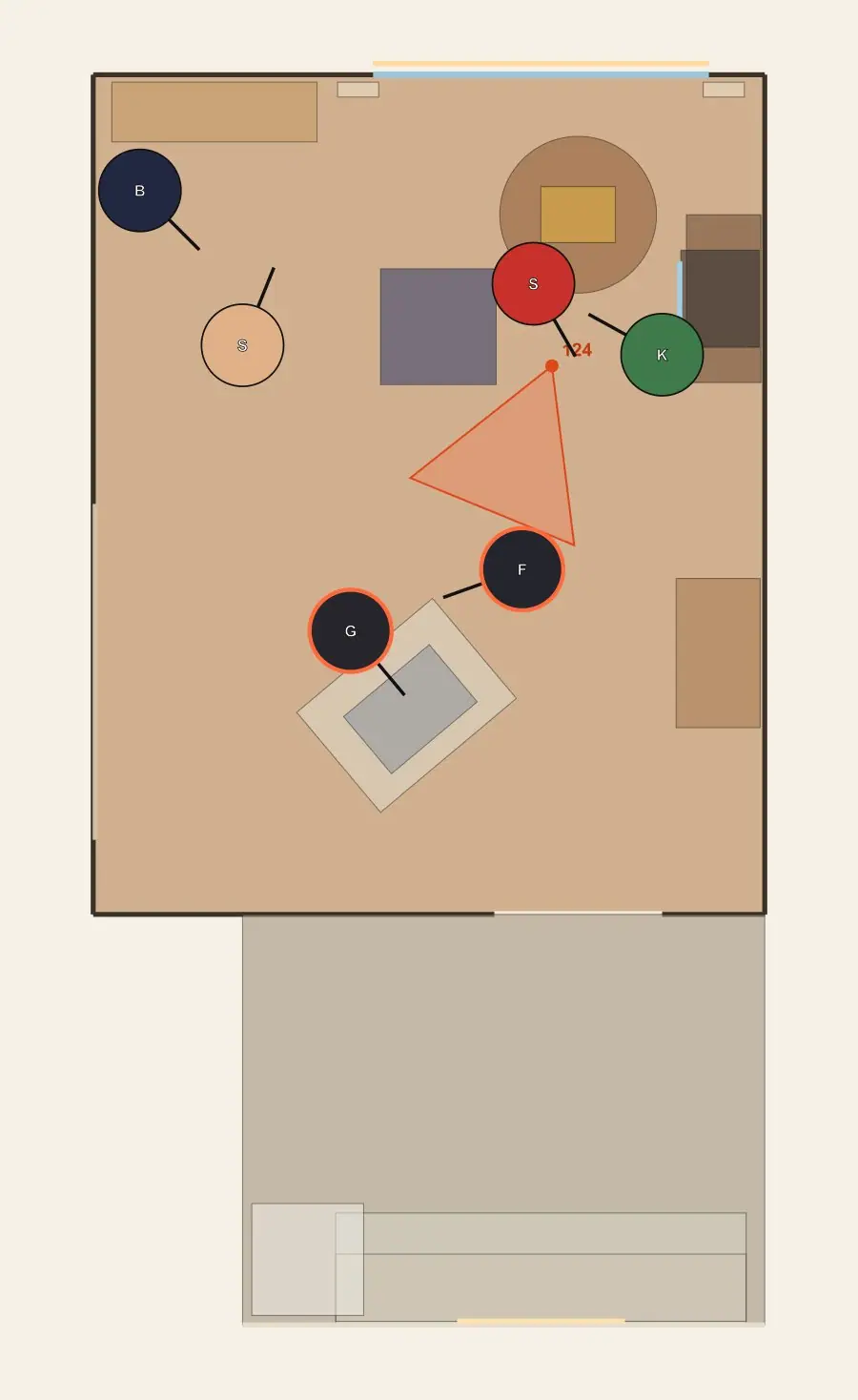 Plan, cut 124
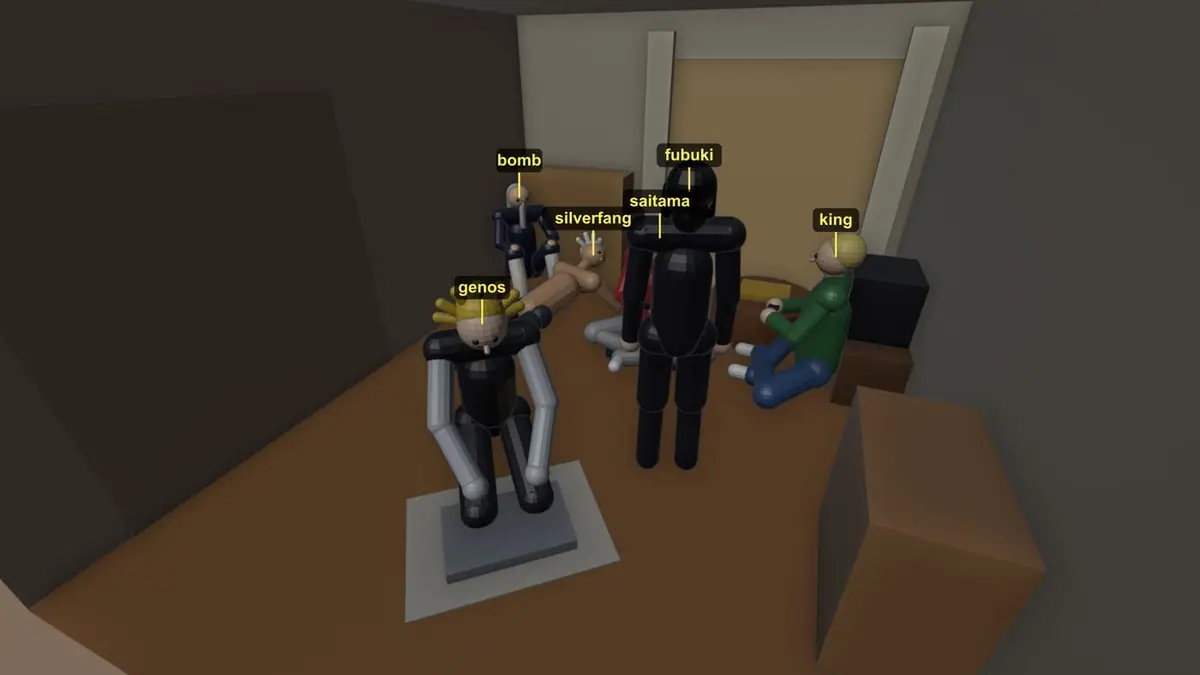 The room in clay
The apartment from above and from the kitchen doorway. Six people: Fubuki just inside, Genos over his parts near her, Saitama on his cushion, King beside him, Silverfang face down along the left wall, and Bomb in the corner by Silverfang's head.
3The cast
Each character gets one model sheet in the outfit they wear in that scene, drawn in the film's look. Every painted frame of the scene is given the same sheets, which is what stops costumes from changing between cuts. In the blocking, each character is a jointed mannequin painted in their costume colours, so the painter can tell who is who.
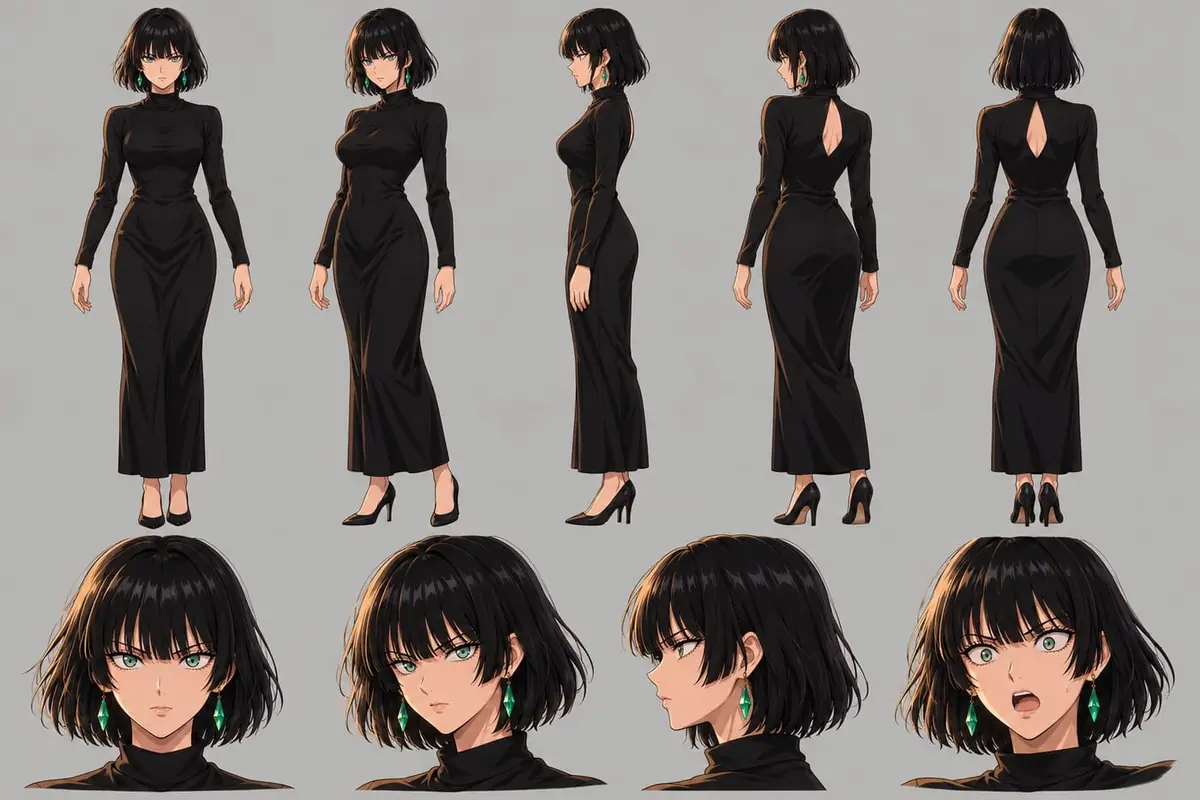 Fubuki
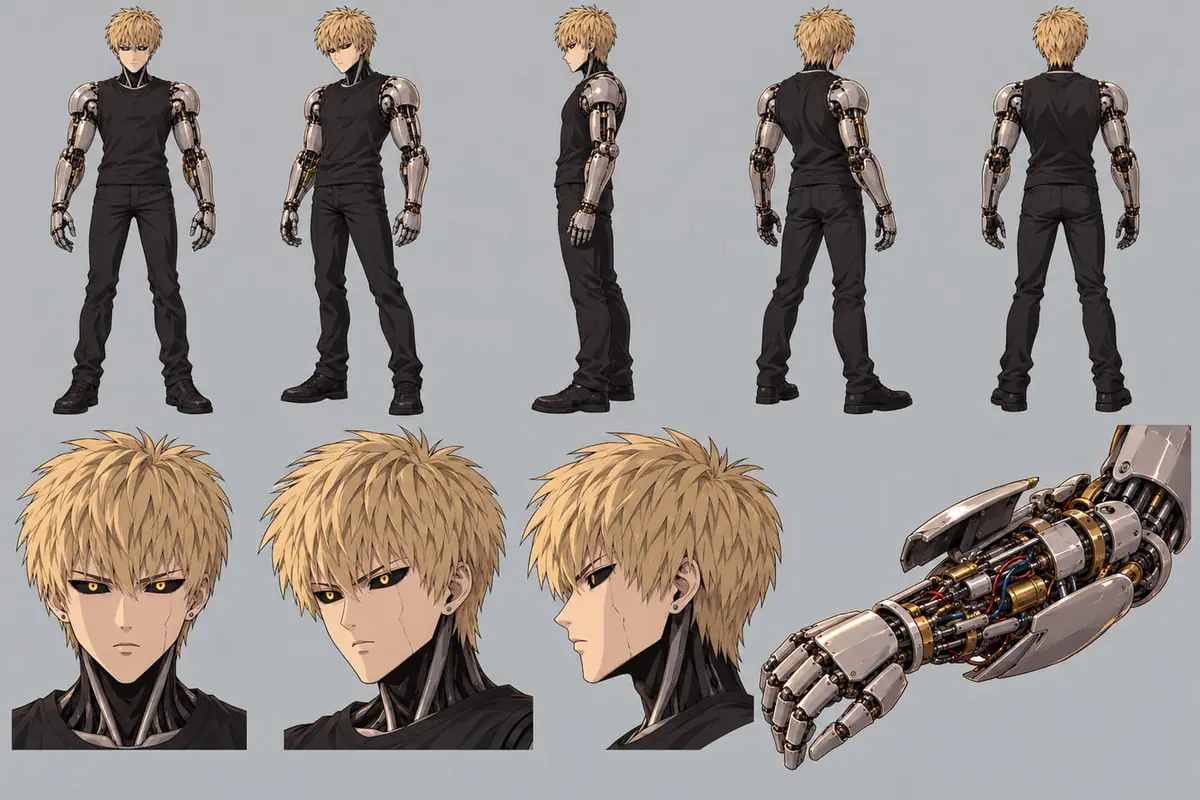 Genos
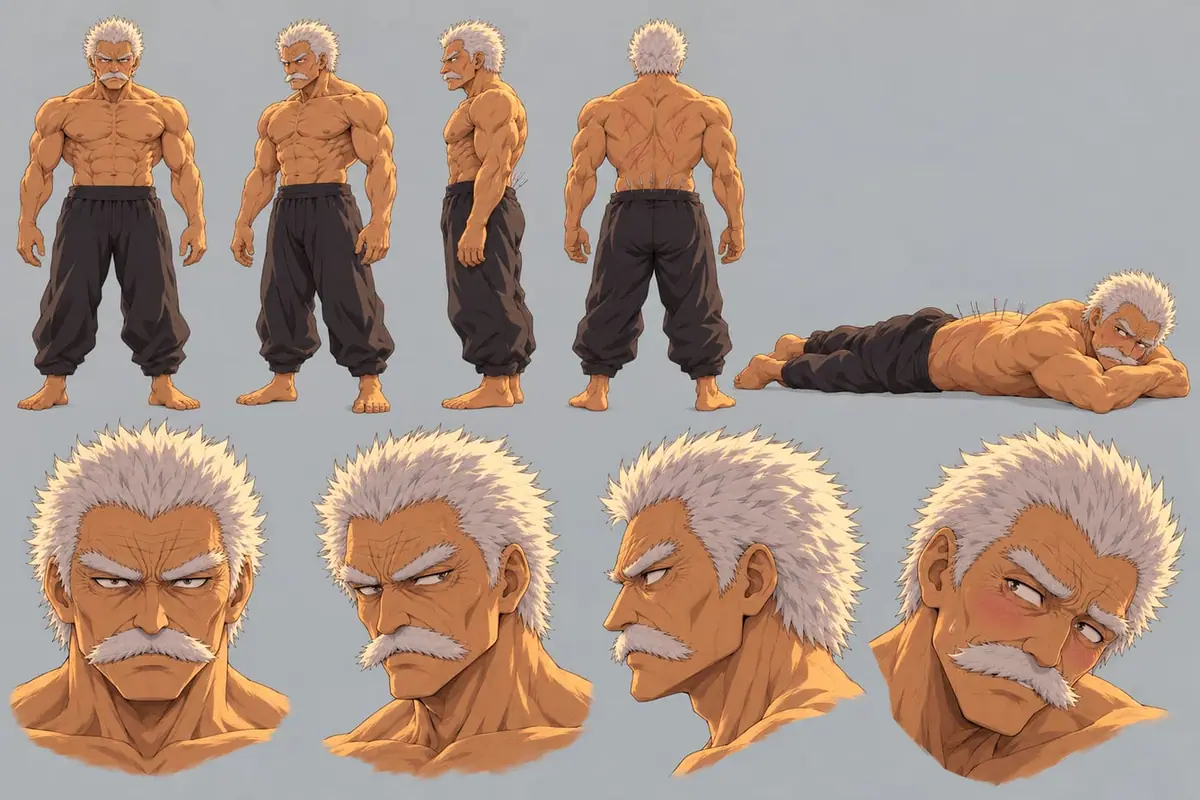 Silverfang
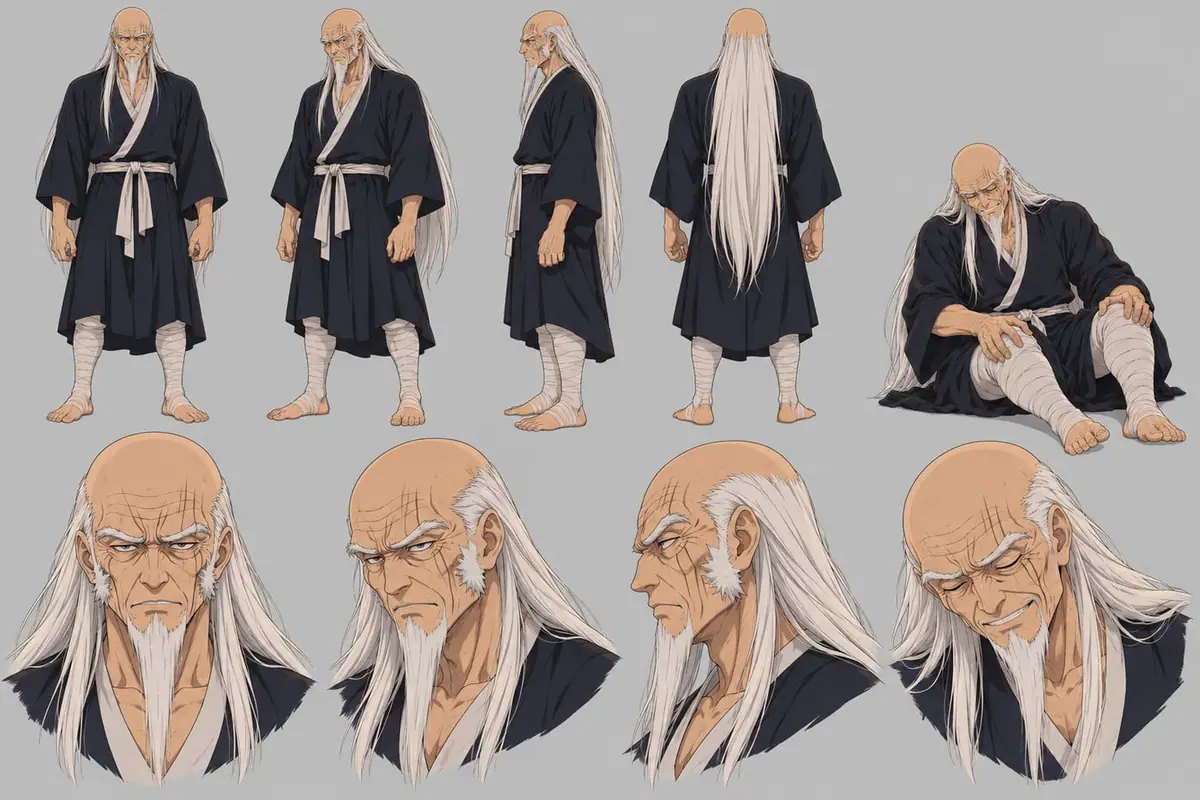 Bomb
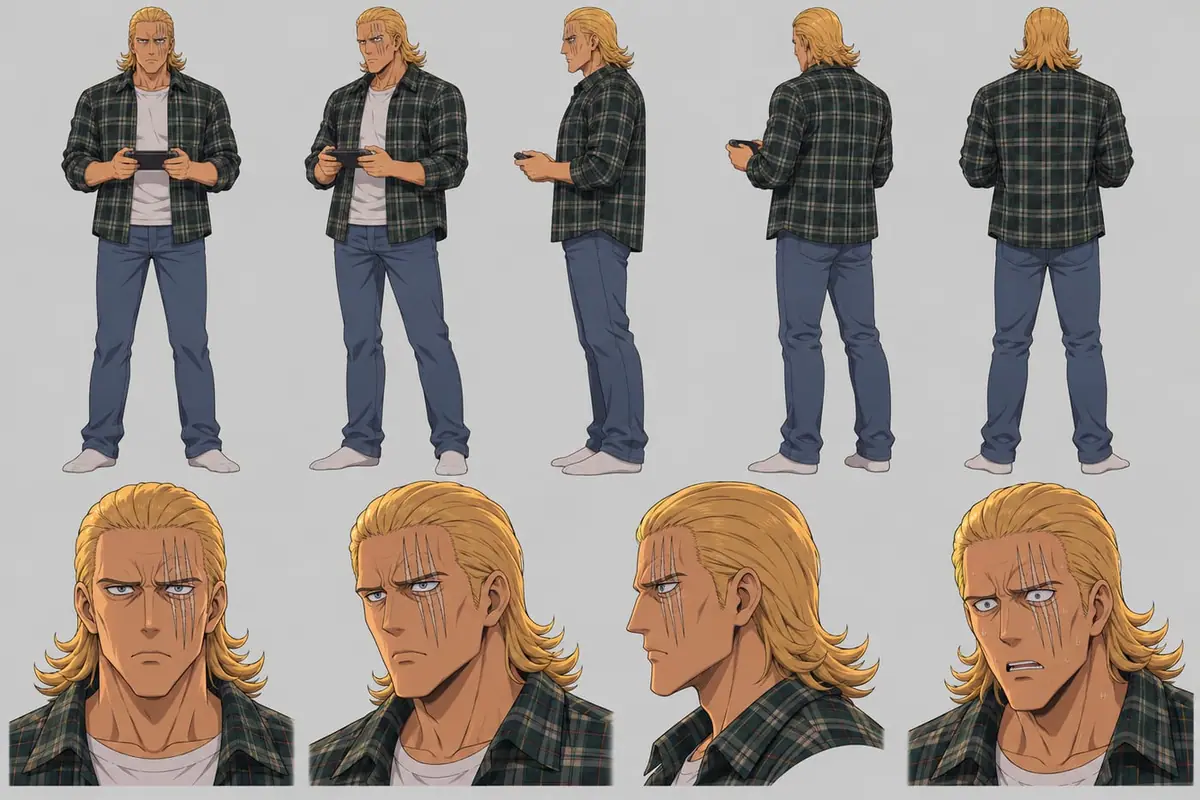 King
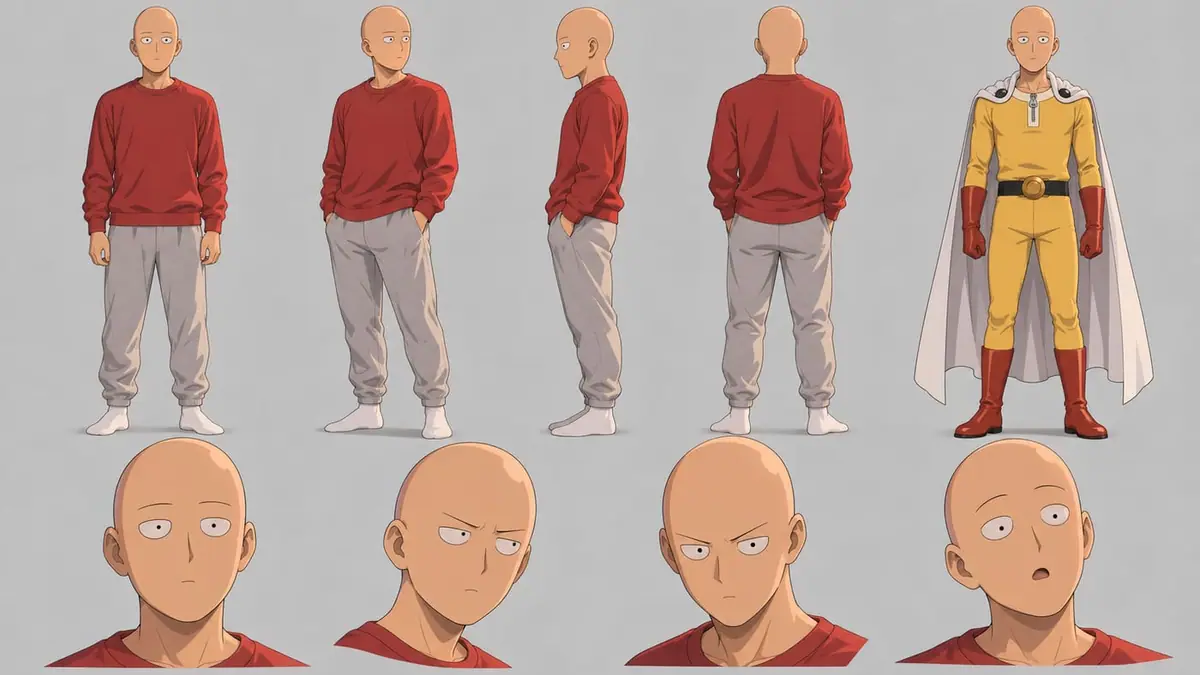 Saitama
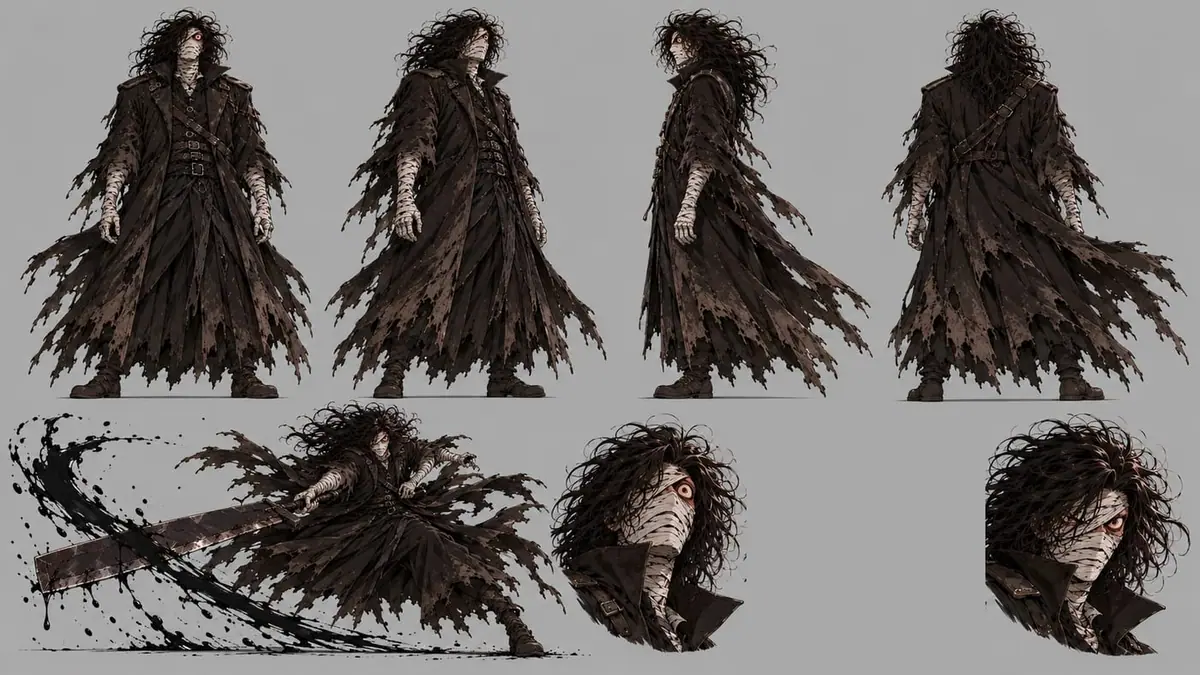 The Ripper
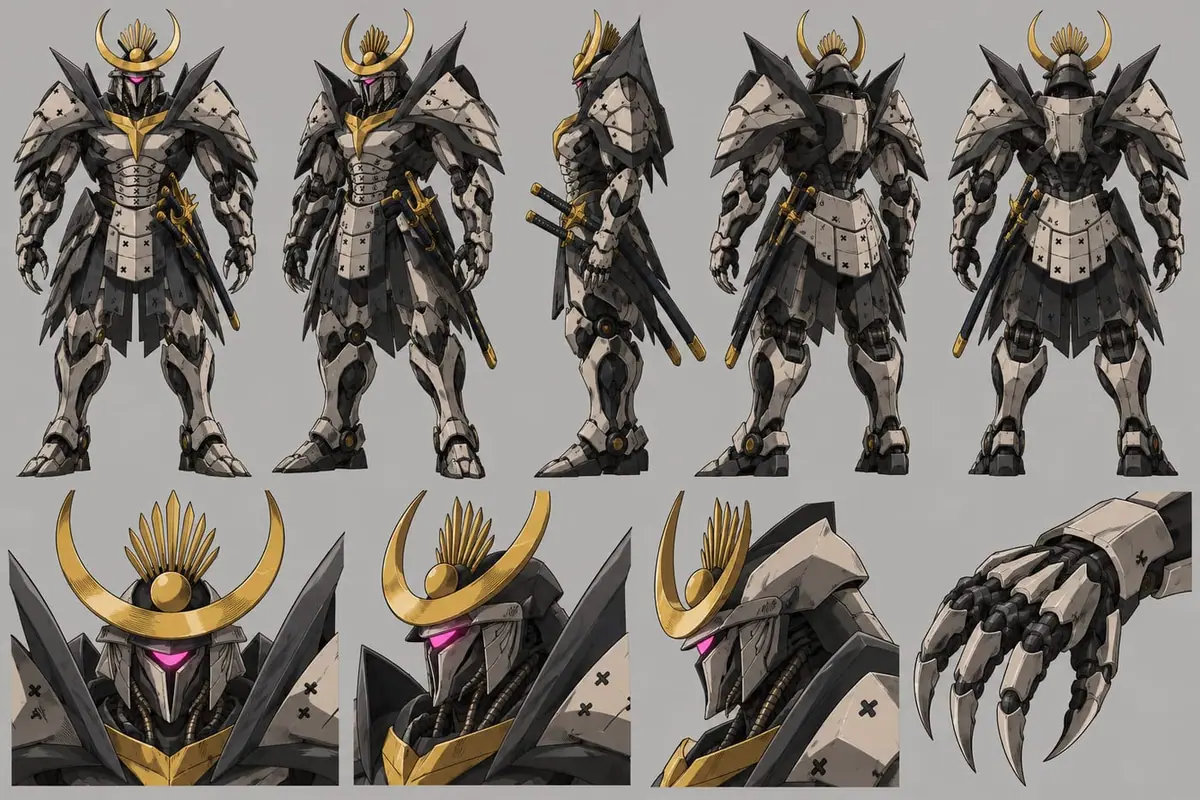 G5
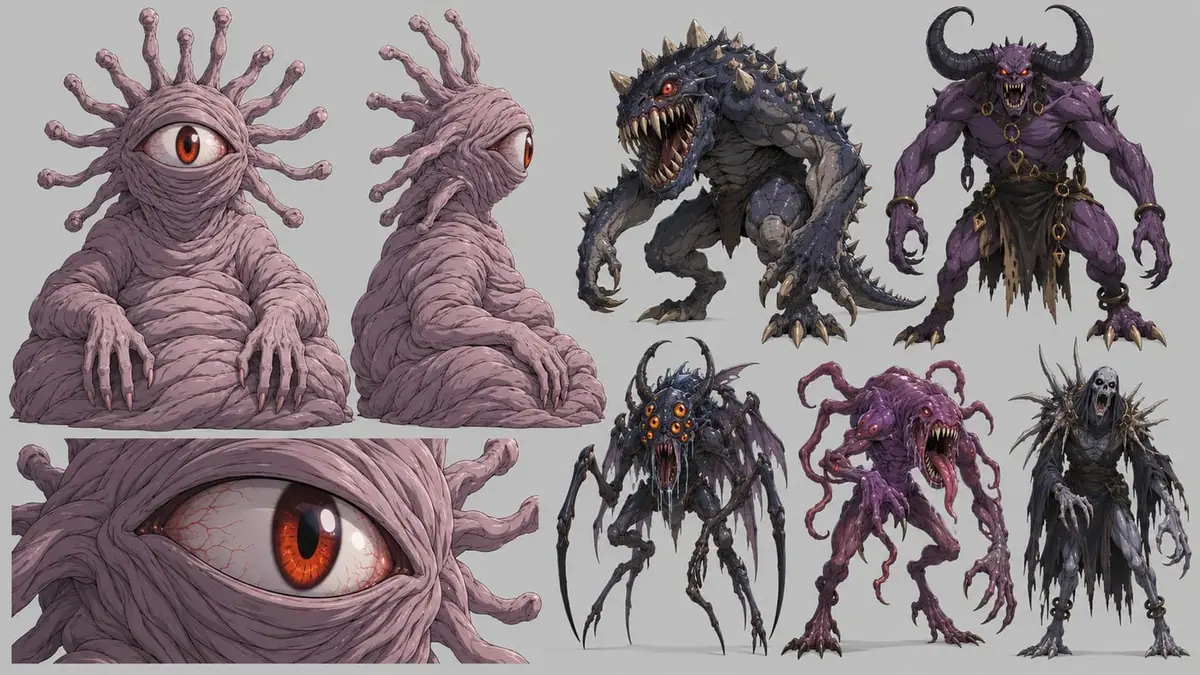 Gyoro-Gyoro
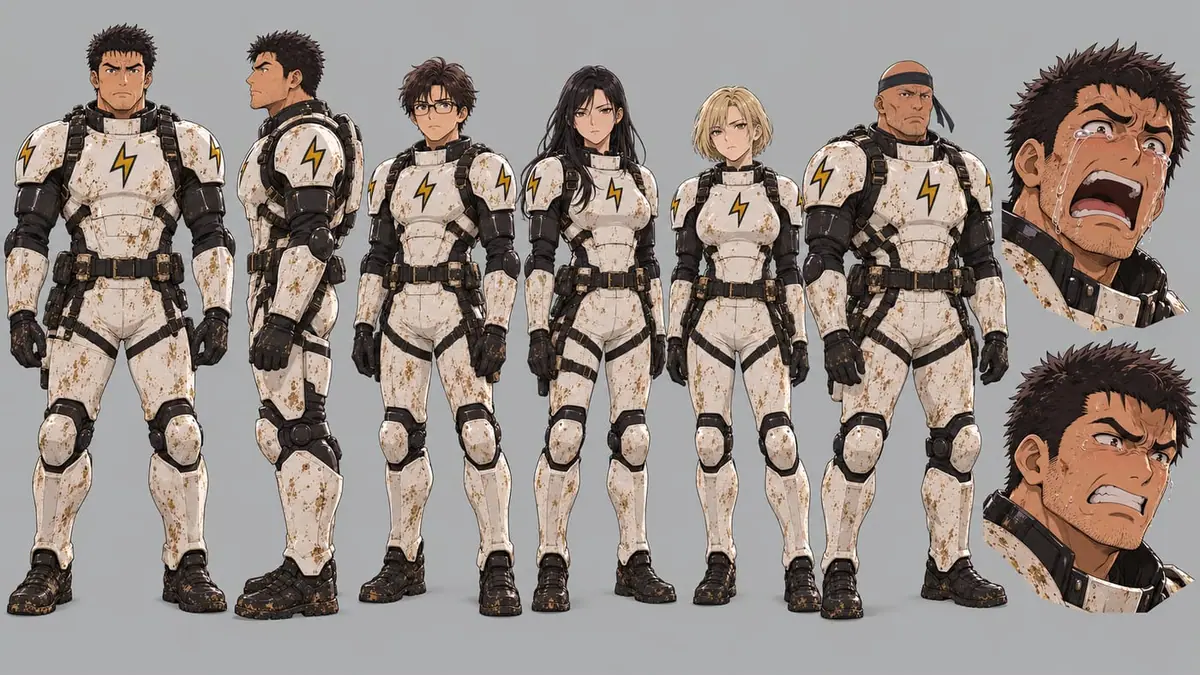 Mercenaries
The model sheets for both scenes. Super S has none. OpenAI refused the sheet drawn from her official art, flagging the input, so her own painted frames from the film are her reference. The Ripper never shows a mouth, even when he talks (page 195), so one head on his sheet was painted out. The board had been given the uncorrected sheet, and in cut 76 both A and D painted him a mouth. The board now uses the corrected sheet, and no frame of the second staging gives him a mouth.
4The blocking and the master
With everyone on their marks, we paint one master frame of each scene, the whole place at the moment it starts. Every other frame of the scene takes its look, palette and light from it.
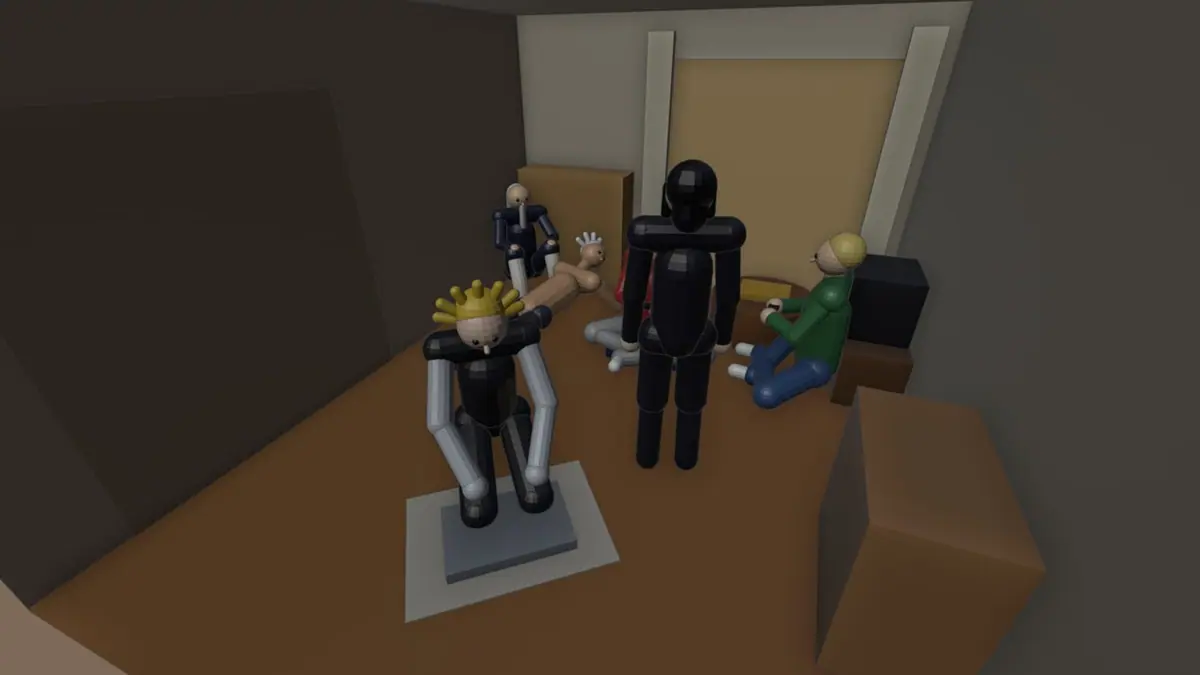 Blocking
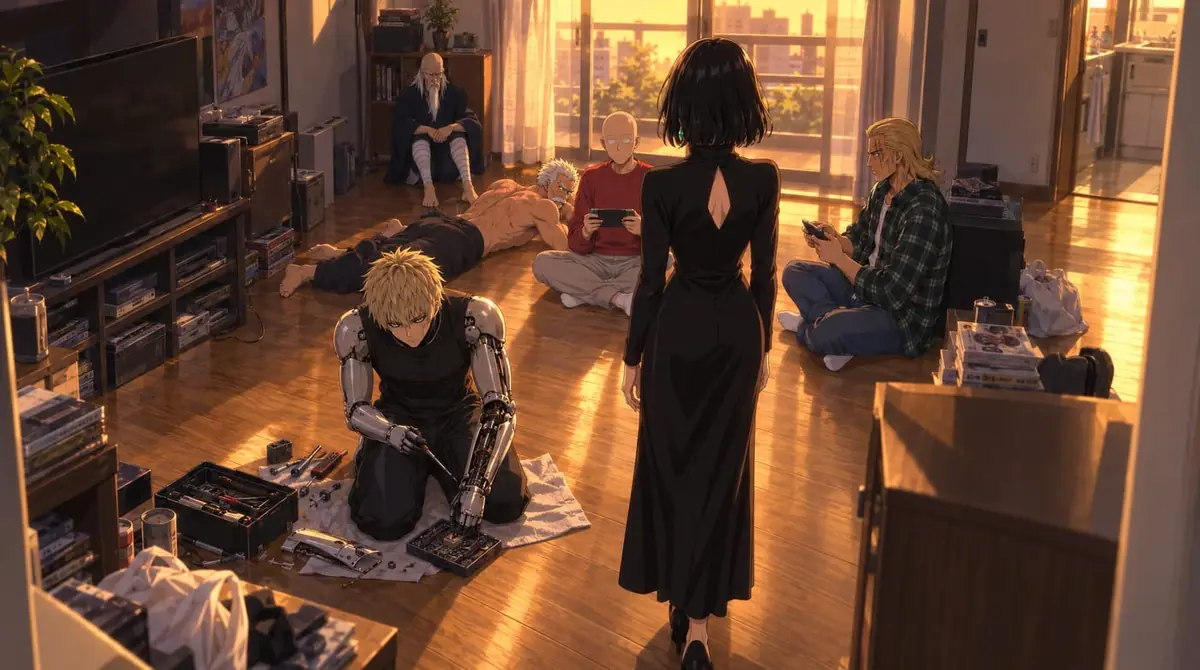 Painted master
The apartment's master: the clay, and the same camera painted.
5The cameras
Each camera is written the way a storyboard artist would say it, and a small solver turns that into a position, an aim and a lens. Cut 124 was written as "medium, over Fubuki's shoulder, on Genos's head, from 0.7 m back, 32 mm". Blender renders a cut in about three seconds, at no cost.
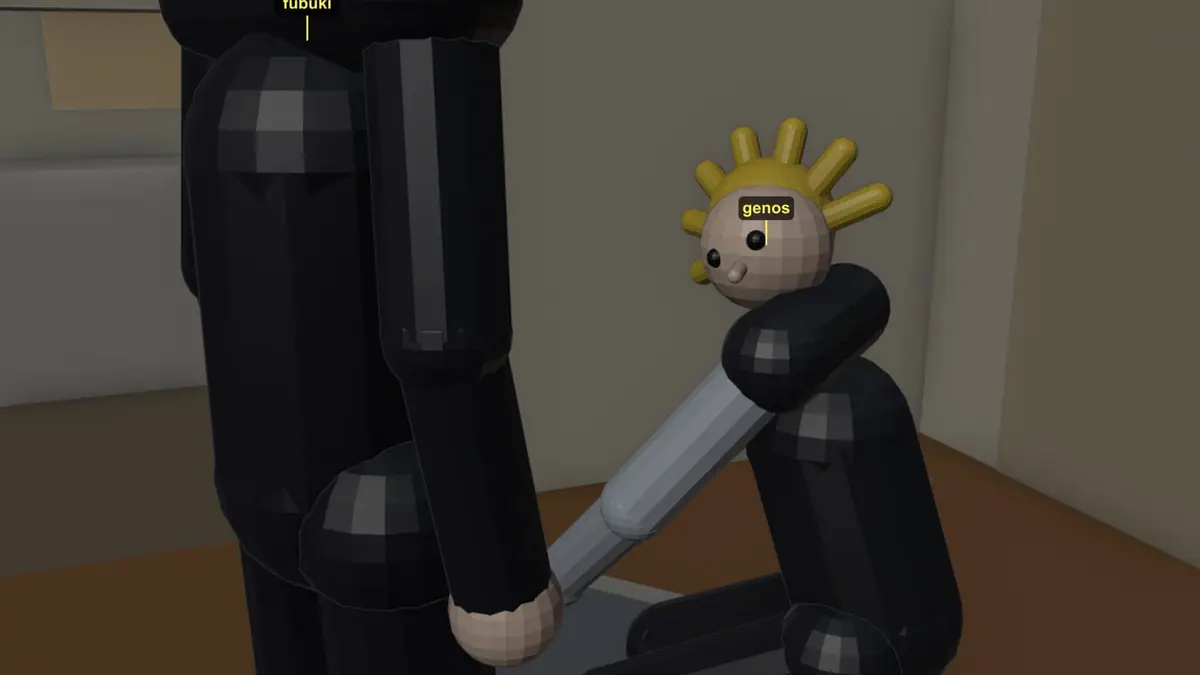 Cut 124, first stagingPainted (D)
Cut 124 as first staged, and painted from that staging. Keep this frame in mind. Section 06 explains what is wrong with it.
6The checks
Because the blocking is real 3D, we know where every head lands in every frame, and how far everyone is from the camera. So the rules of composition can be checked before anything is painted.
The first eight rules come from our composition study, which drew on cinematography, anime layout and the Madhouse first season. On the first staging they caught two real line crossings, from 123 to 124 and from 71 to 72, before any money was spent. The last three were added after this test, for reasons section 06 explains.
7The plates
Painting from the clay alone gave rooms that were too bare: grey boxes came back as cardboard, and blank walls stayed blank. So each set is also painted empty, once, from a handful of cameras. These are the plates. Each cut is then painted with the plate whose camera is closest to its own.
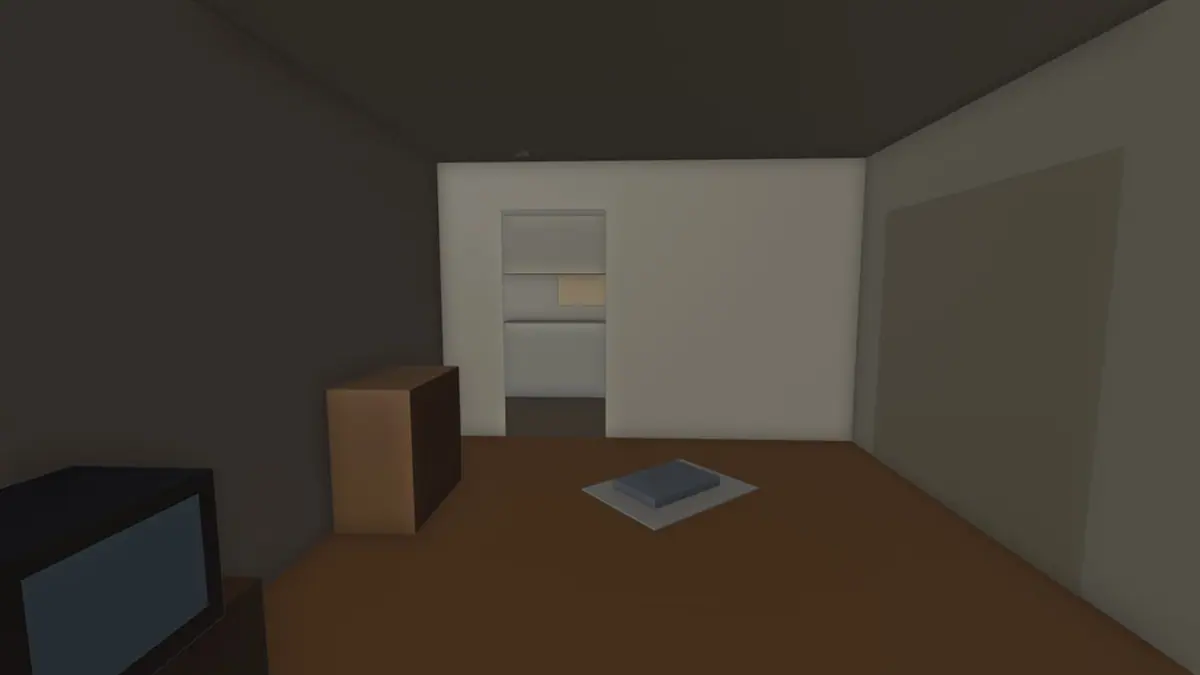 Plate, clay
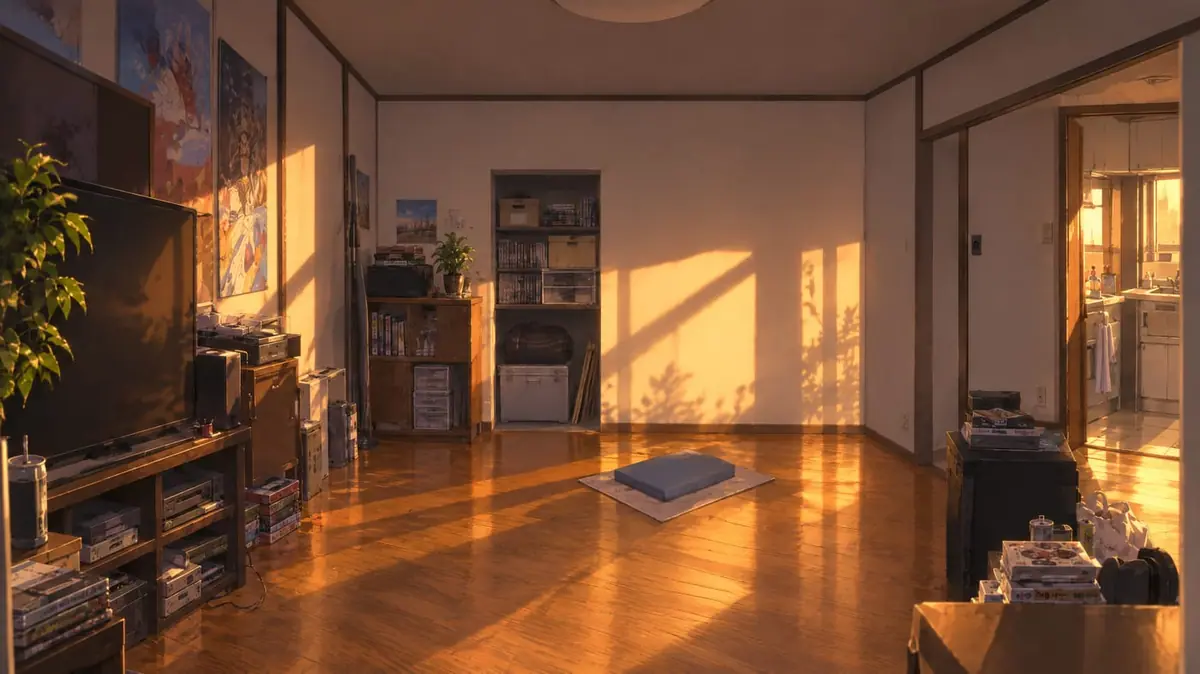 Plate, painted
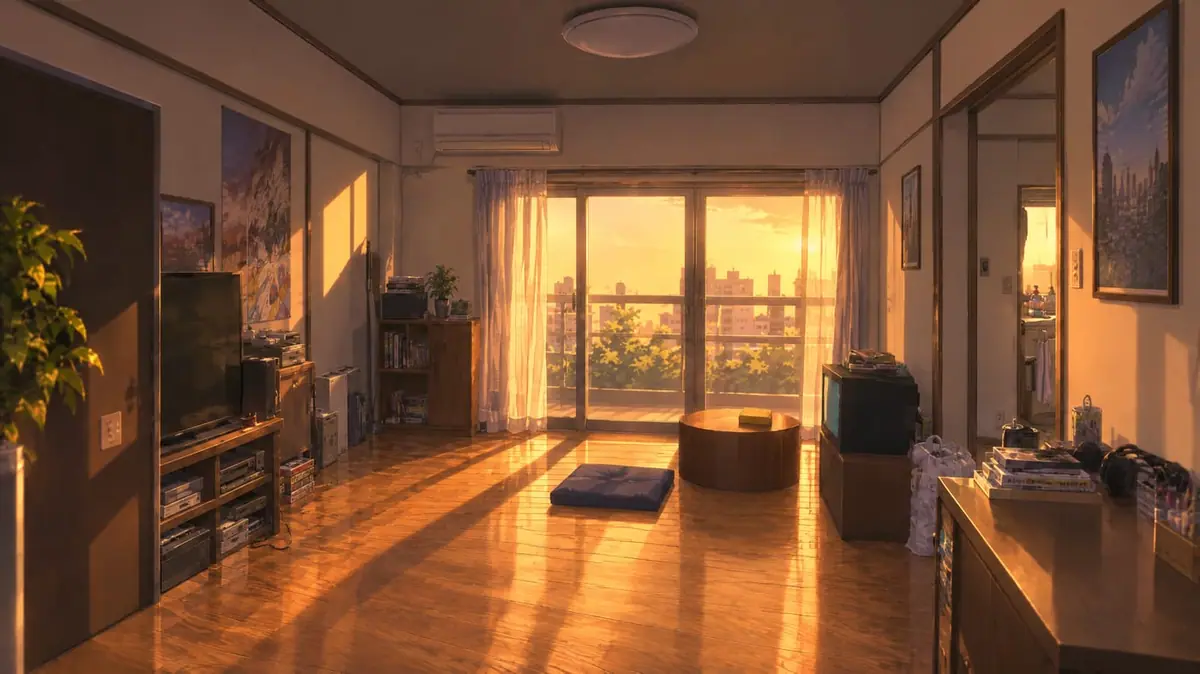
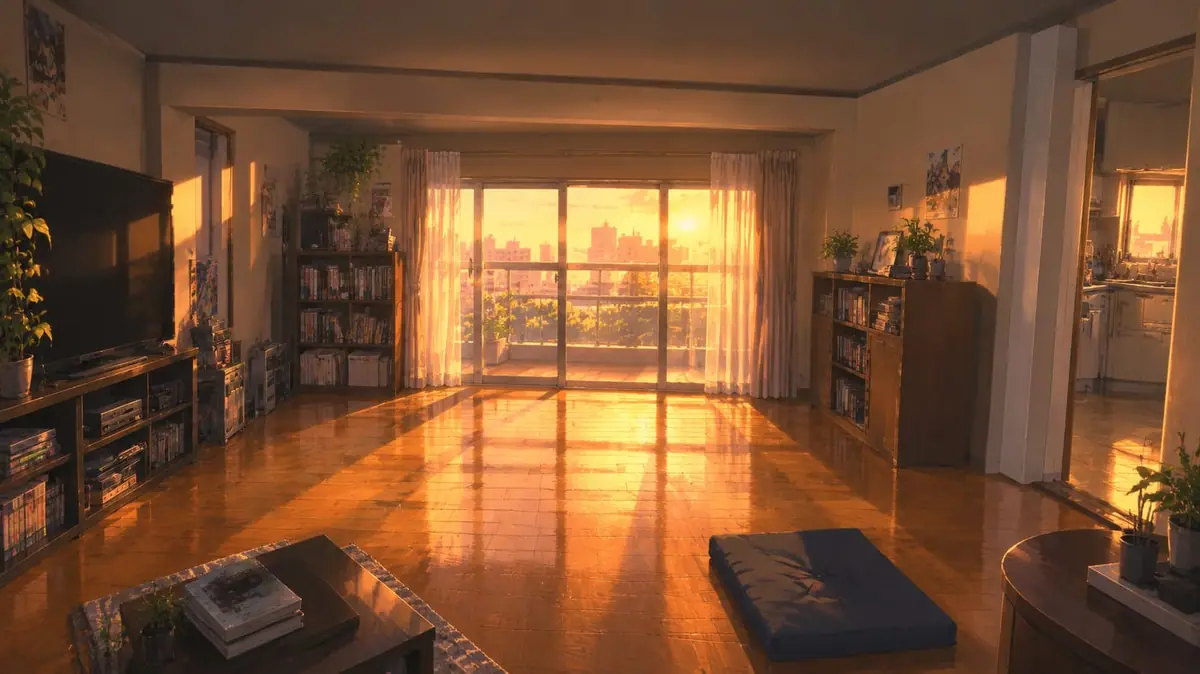
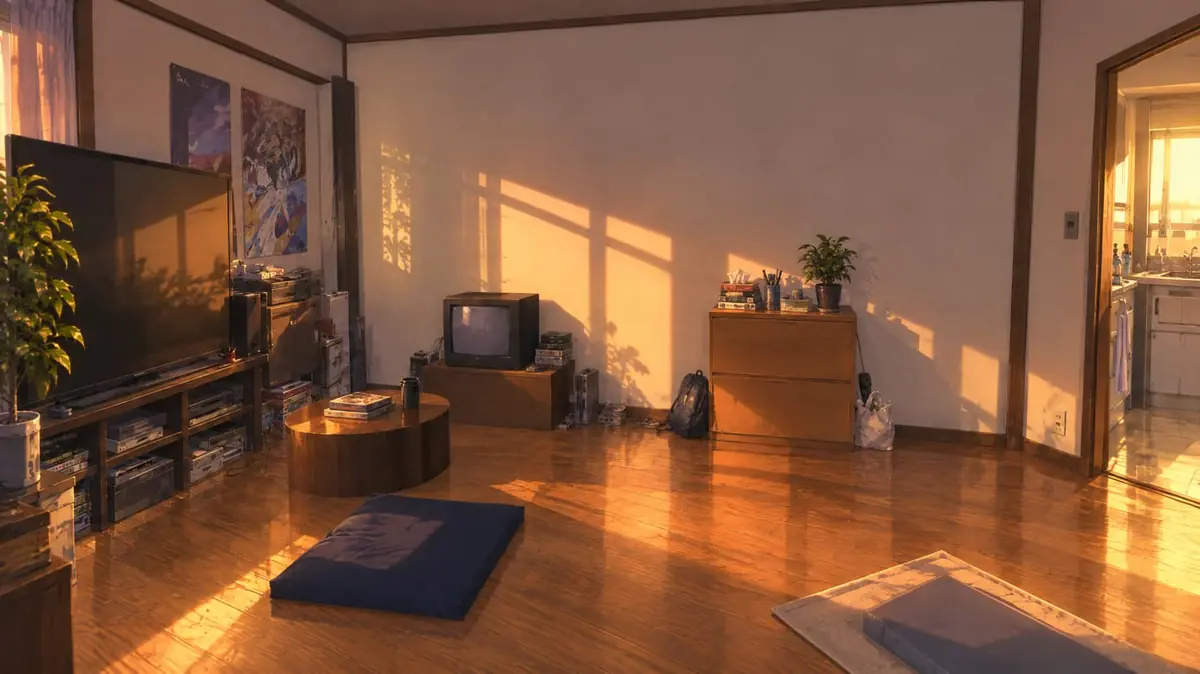
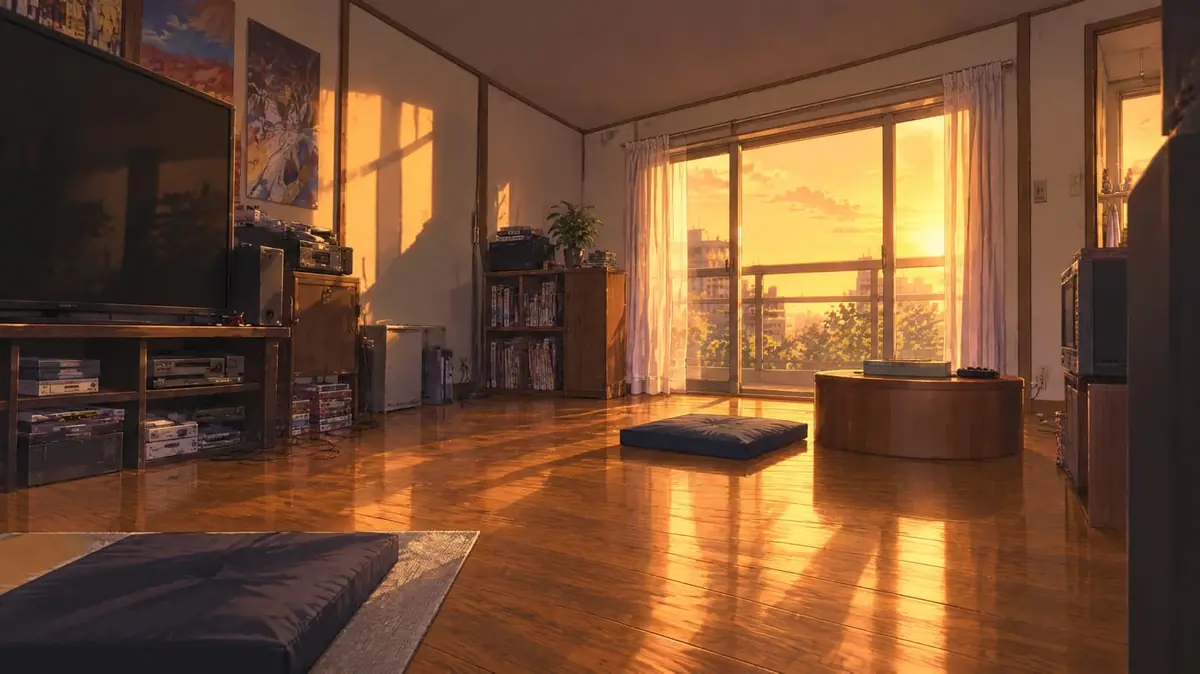
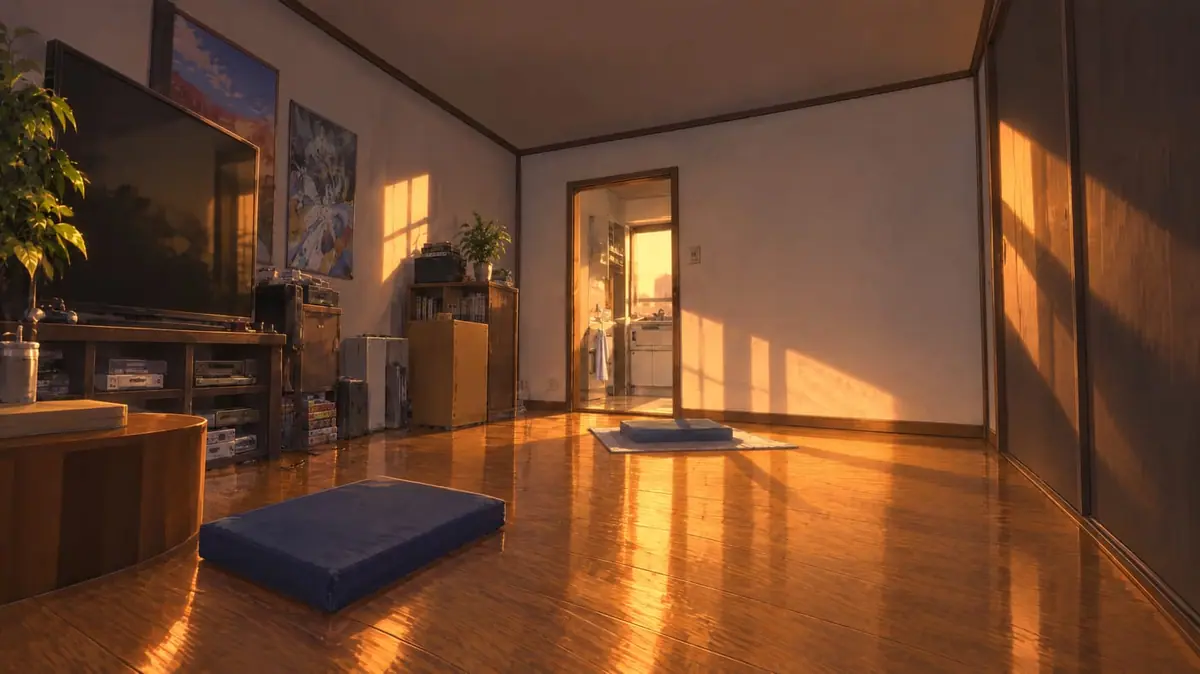
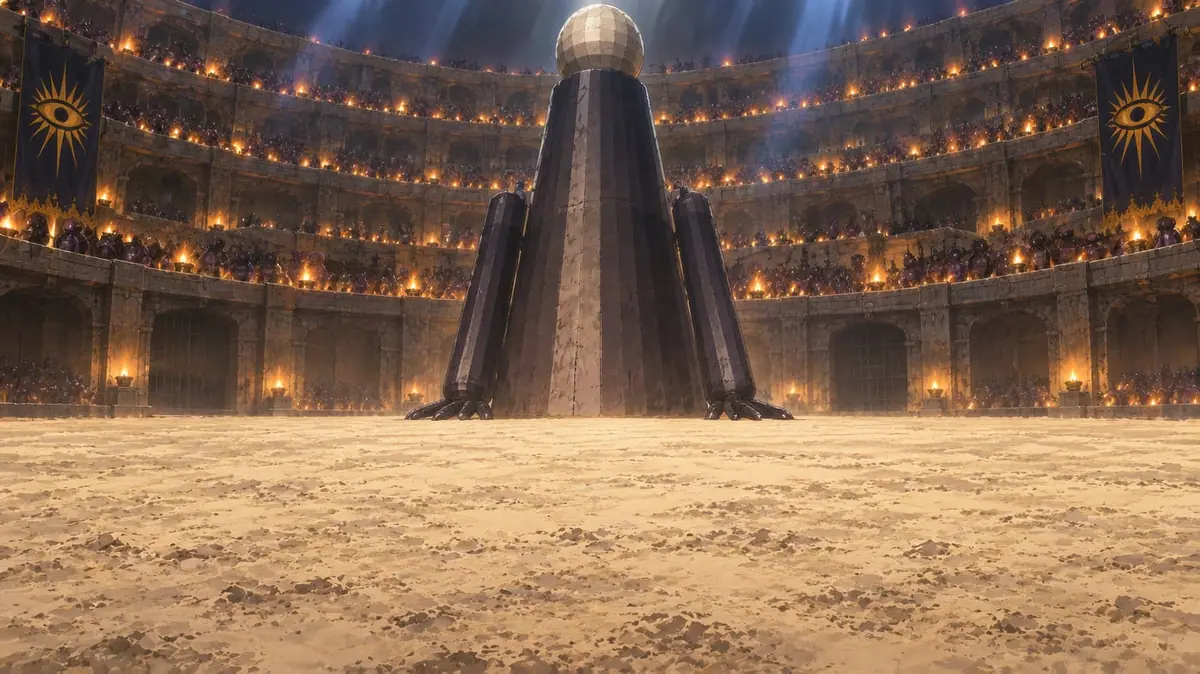
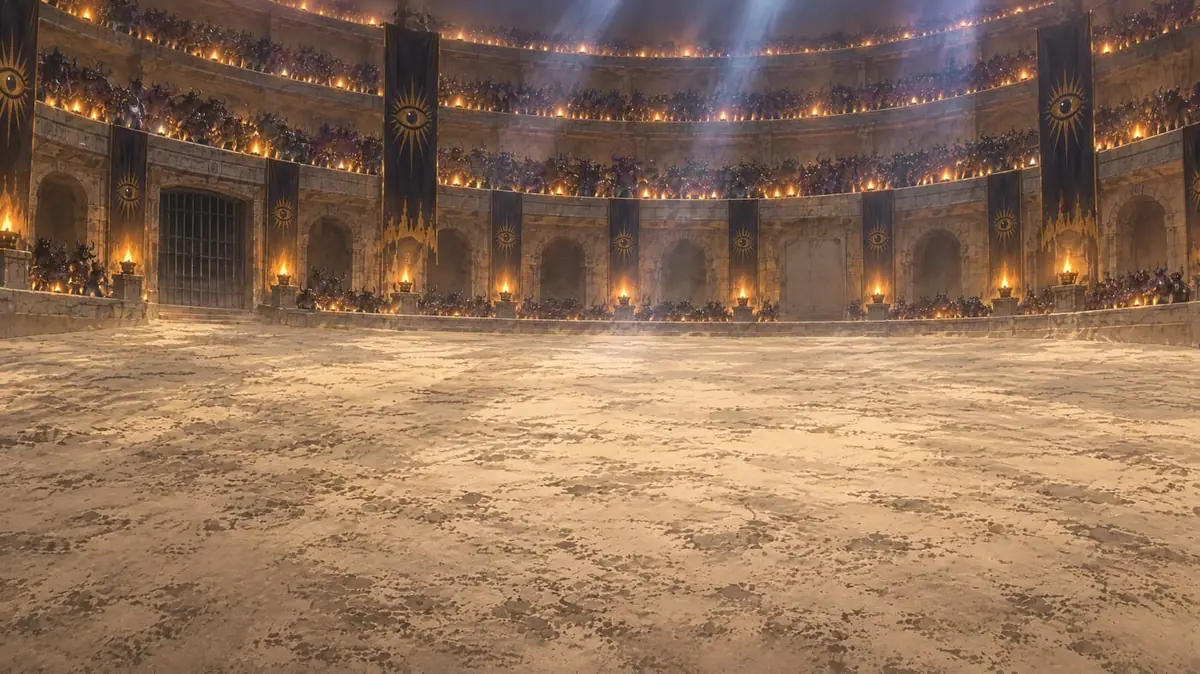
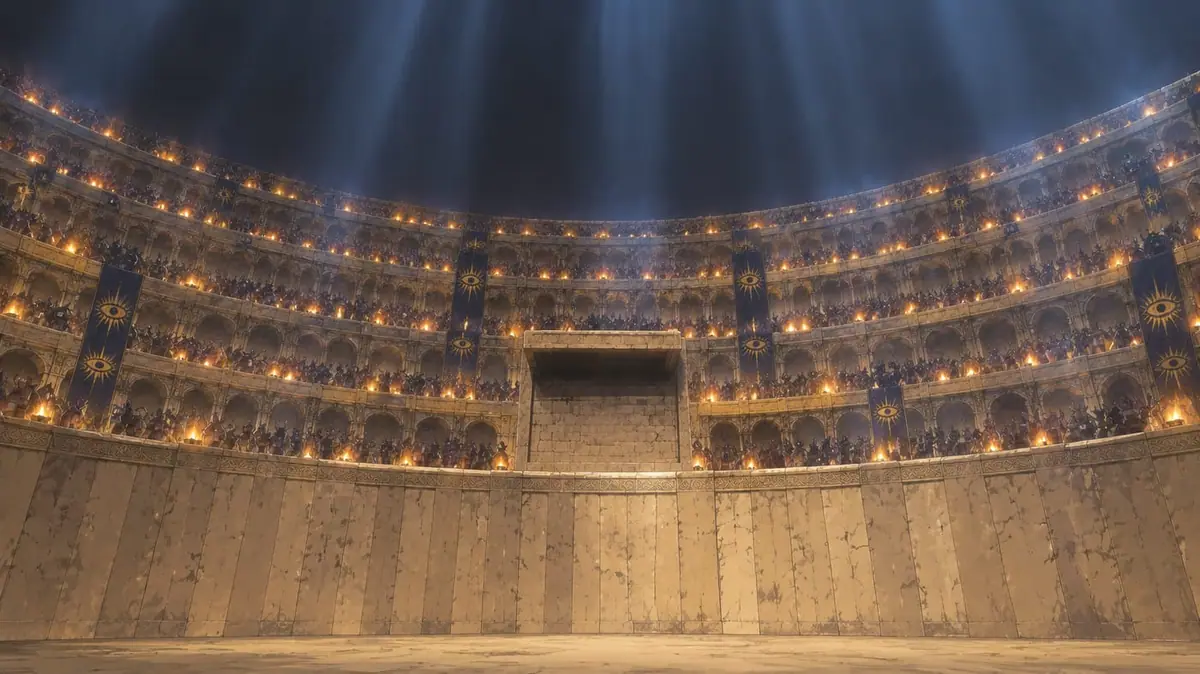
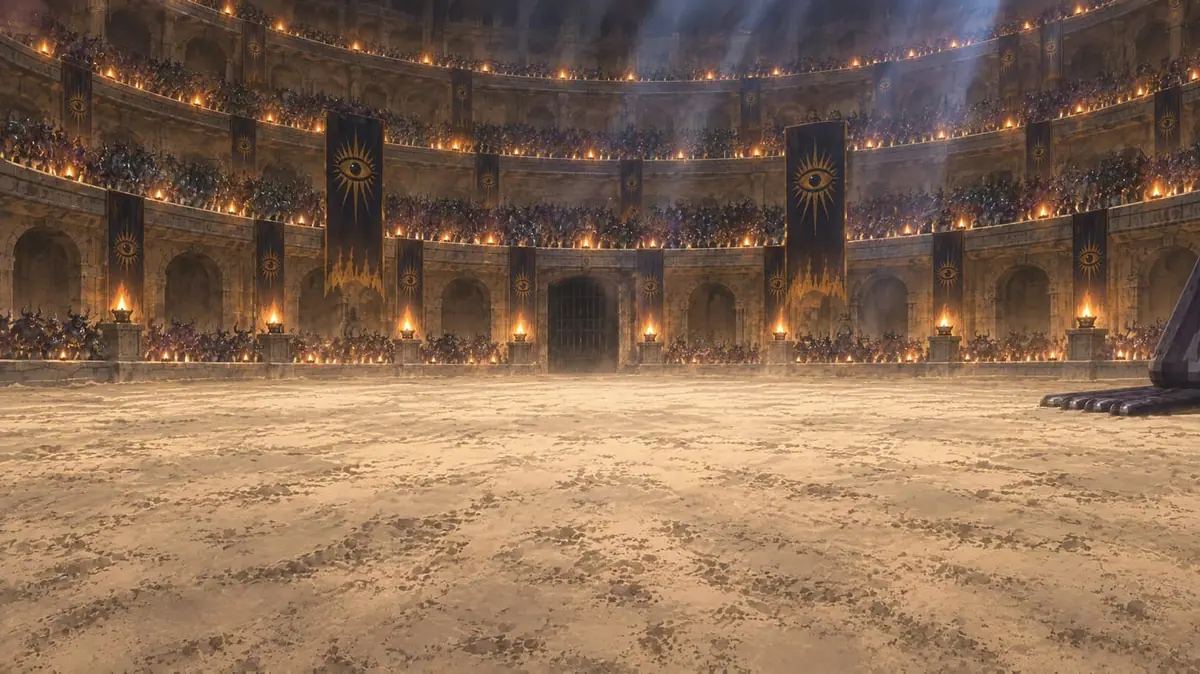
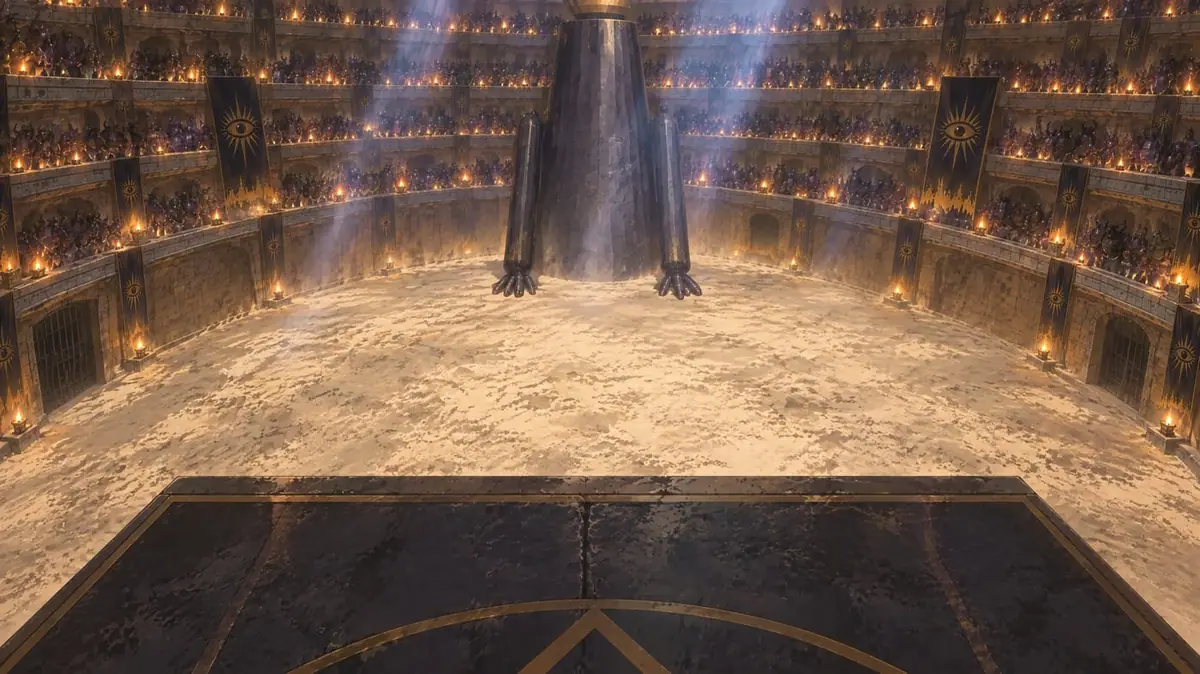
Cut 124 uses the plate looking toward the kitchen doorway (top). Below are all eleven plates for both sets, at $0.05 each.
8The paint
GPT Image 2.5's edit mode repaints the blocking as a finished anime frame. For cut 124 it is given five pictures: the blocking, the nearest plate, the master, and the two model sheets of the people in the shot. It is also given a description read off the blocking. That description says, left to right, who is near or far, which way each person faces, their pose, the camera angle, and the side the light comes from.
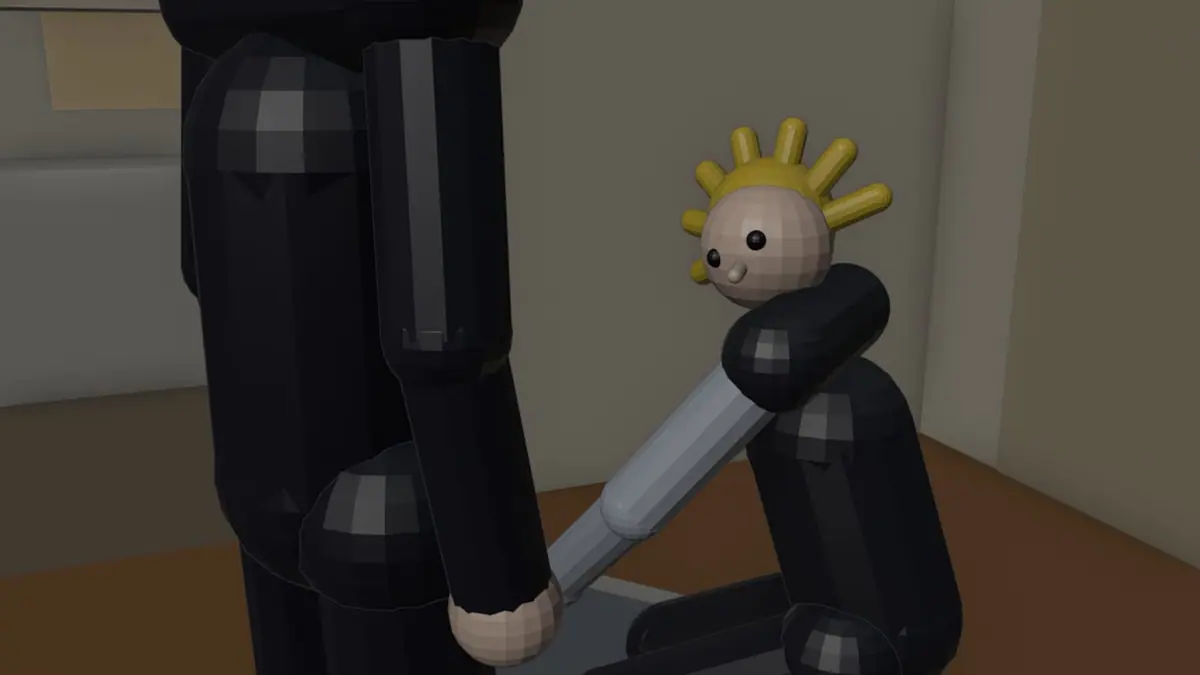 1 · Blocking2 · Plate3 · Master45Cut 124
What the painter is given for cut 124, and what comes back. It runs through our price router, which picks the cheapest provider that works: Kie at $0.05 a frame, with fal as the fallback.
03Four ways to paint a cut
Every method gets the same model sheets and the same master. They differ only in the first images.
| Method | The painter sees | Placement comes from |
|---|---|---|
| A · From the clay | The blocking, the master, the sheets | The blocking |
| B · Chained | The previous painted frame, the master, the sheets | Words only |
| D · Hybrid | The blocking, the nearest plate, the master, the sheets | The blocking |
| Plates | The empty set, painted once per wall from the master | (nobody in them) |
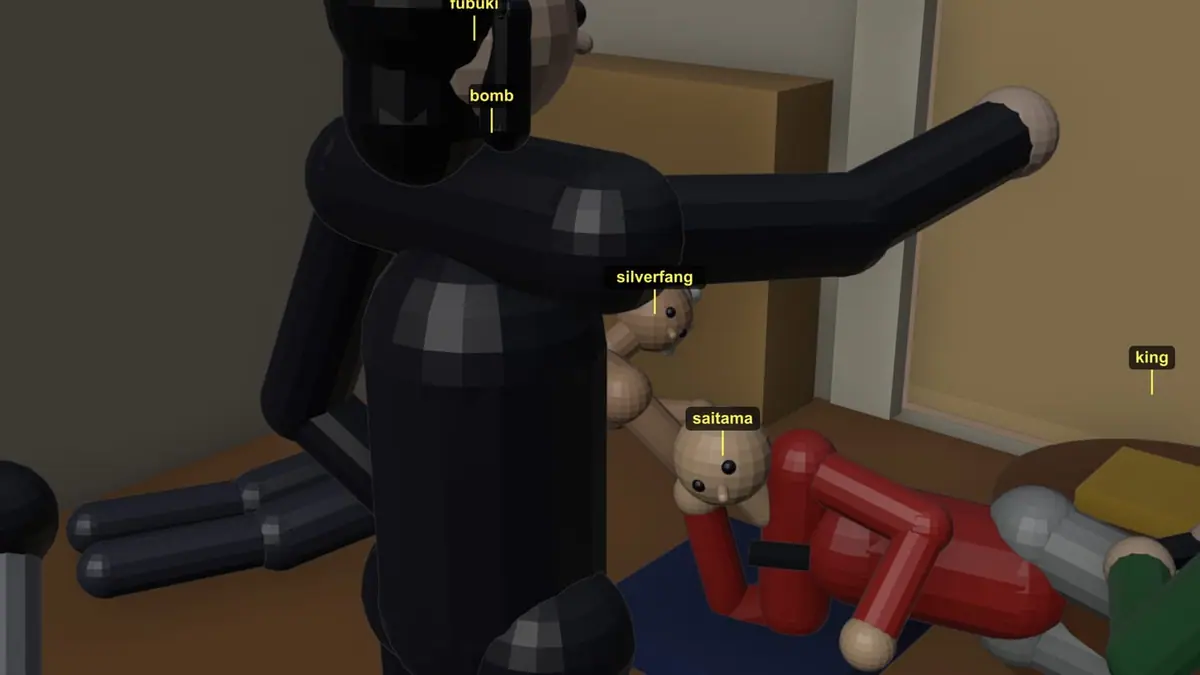 Blocking
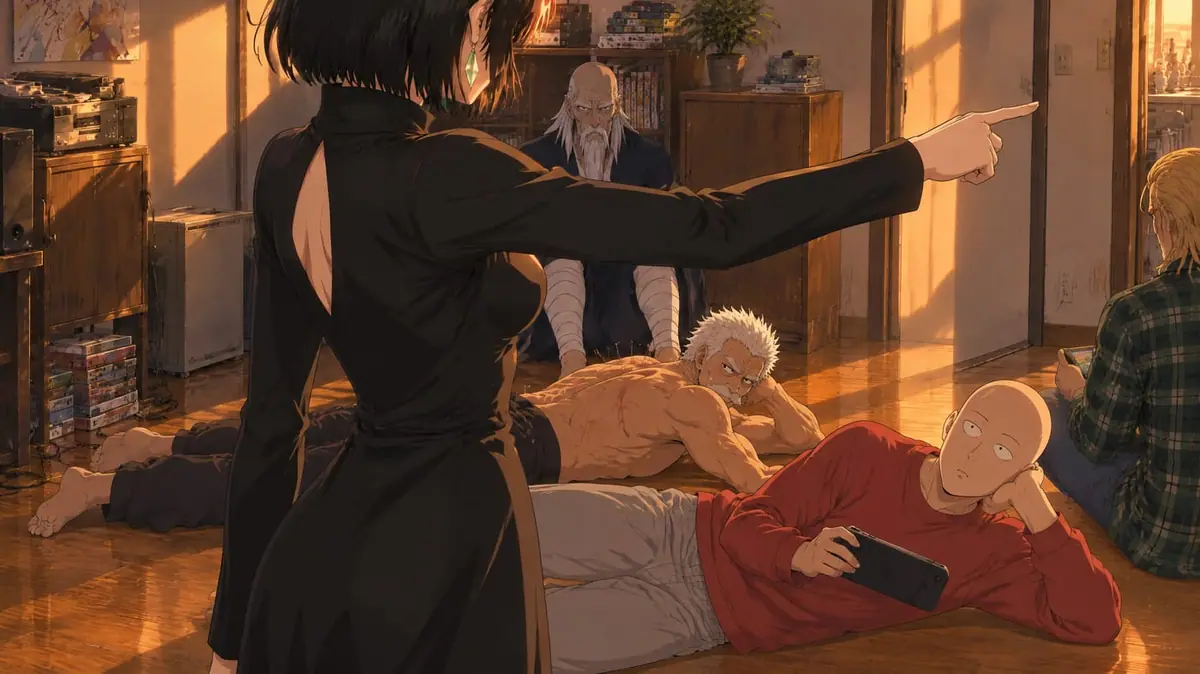
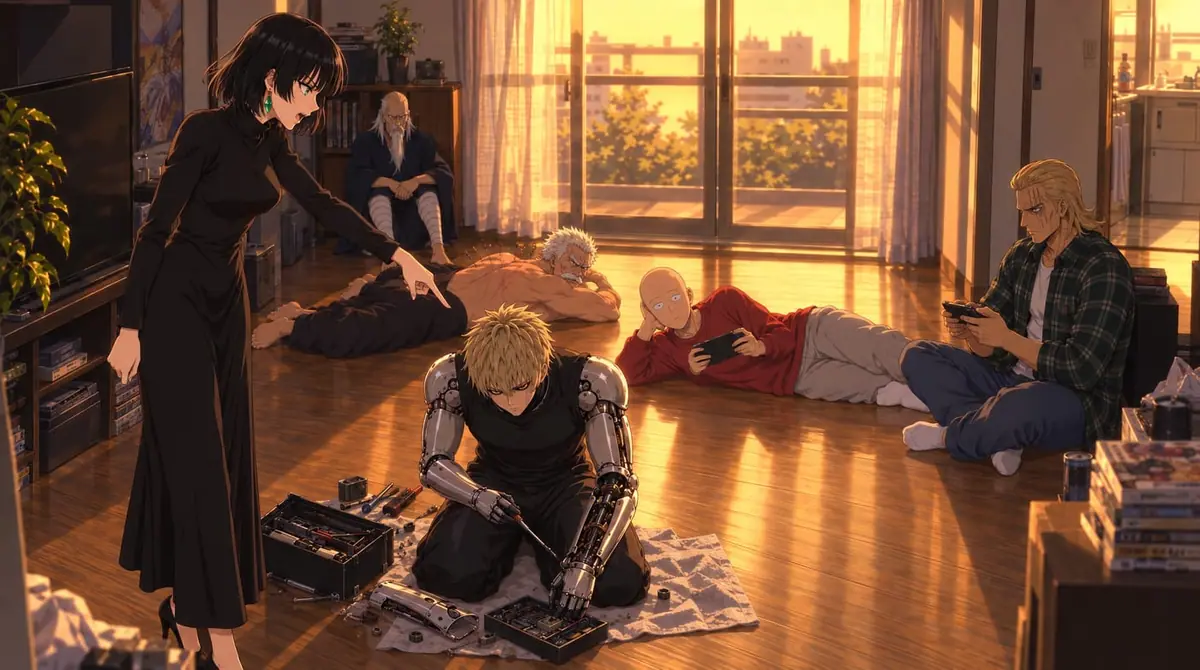
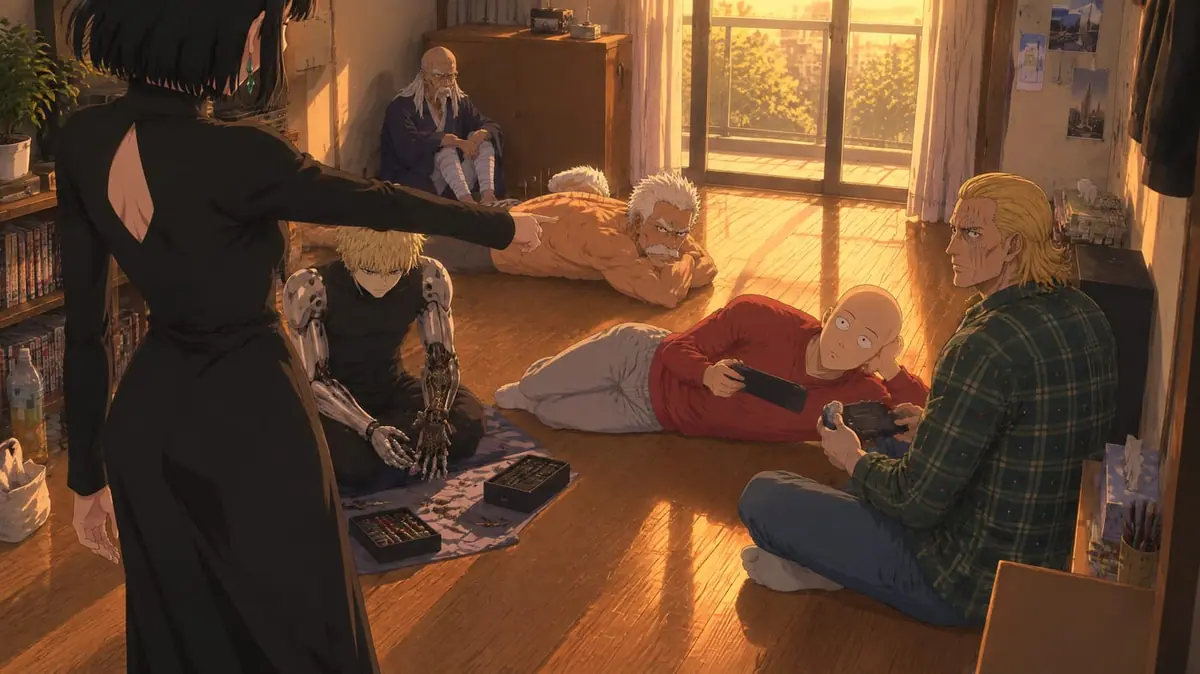
Cut 123, switched between methods on the same spot. Five people are in this shot. The hybrid keeps all five where the blocking put them. Painting from the clay alone keeps only Fubuki and Saitama. Chaining keeps everyone but rearranges them: Genos moves to the middle of the floor, Saitama ends up next to King, and Fubuki moves to the TV wall.
04Every cut, every method
The full board. Each row is one cut. The first five columns come from the first staging: its blocking, method A on the first cameras we wrote, method A on the cameras revised after the composition study, the hybrid, and the chained frame. The last column is the hybrid repainted from the second staging (section 08). Click any frame to see it large, and use the arrow keys to step through a row.
Fubuki finds the room full of heroes · pages 160–164
Cut 121 p163 panel 1
Medium two-shot: Fubuki's back and shoulder loom in the left foreground; Saitama, sitting cross-legged on his cushion with his handheld, looks up at her.
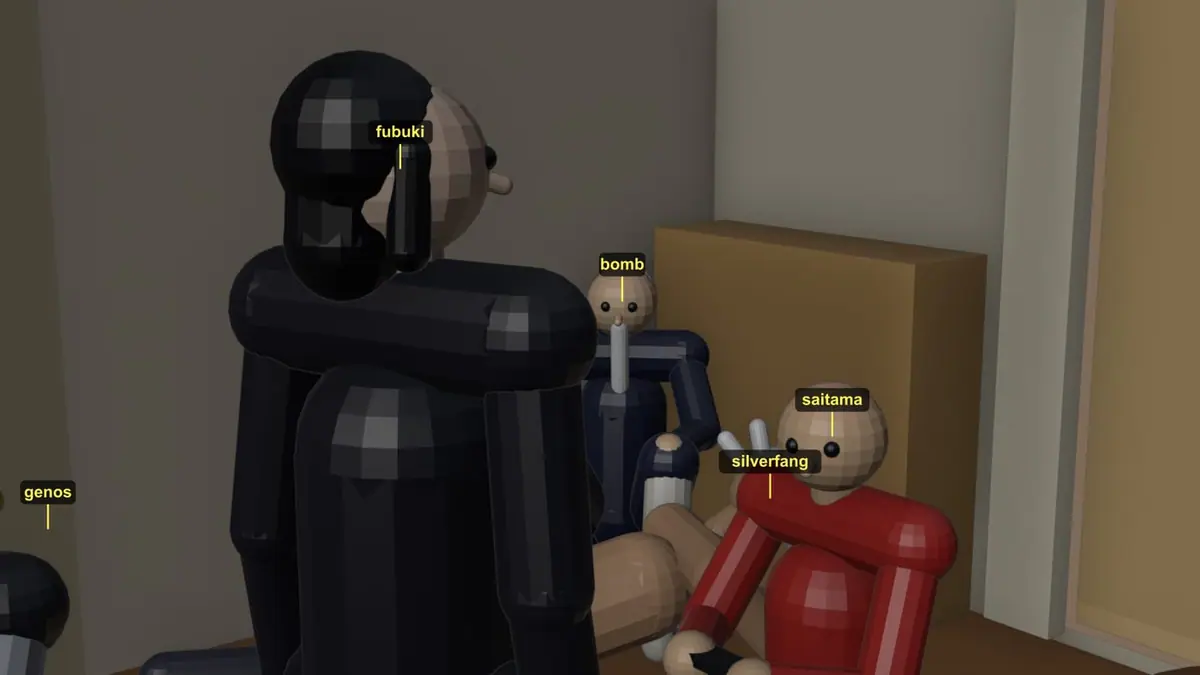 Blocking
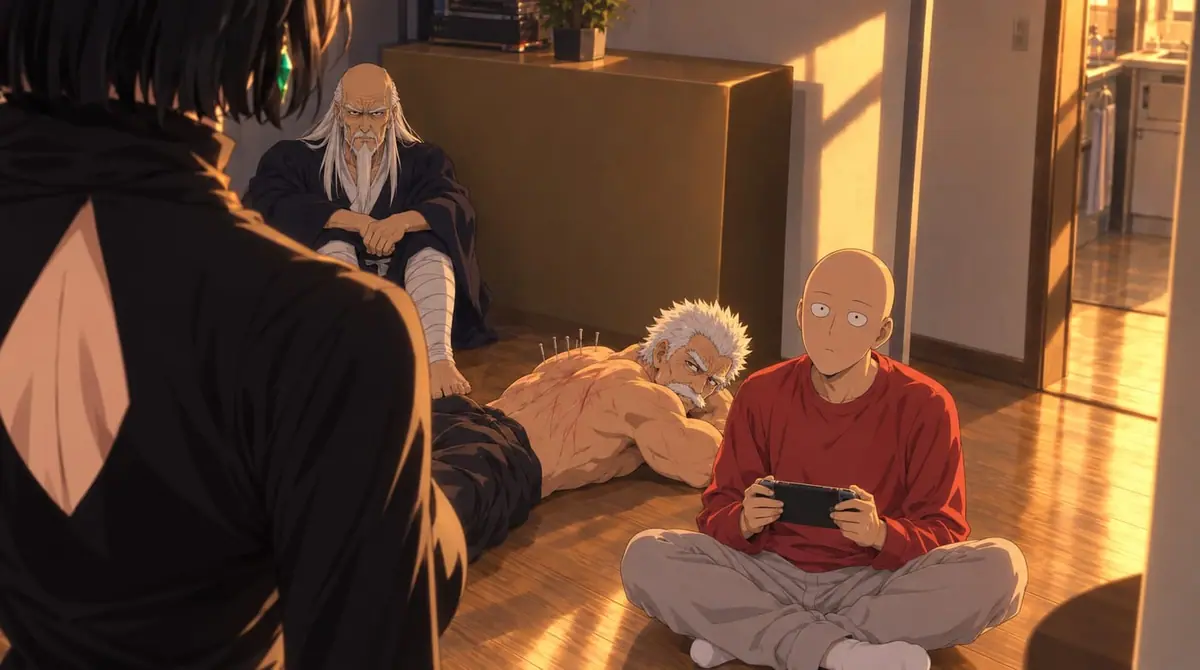 A · first cameras
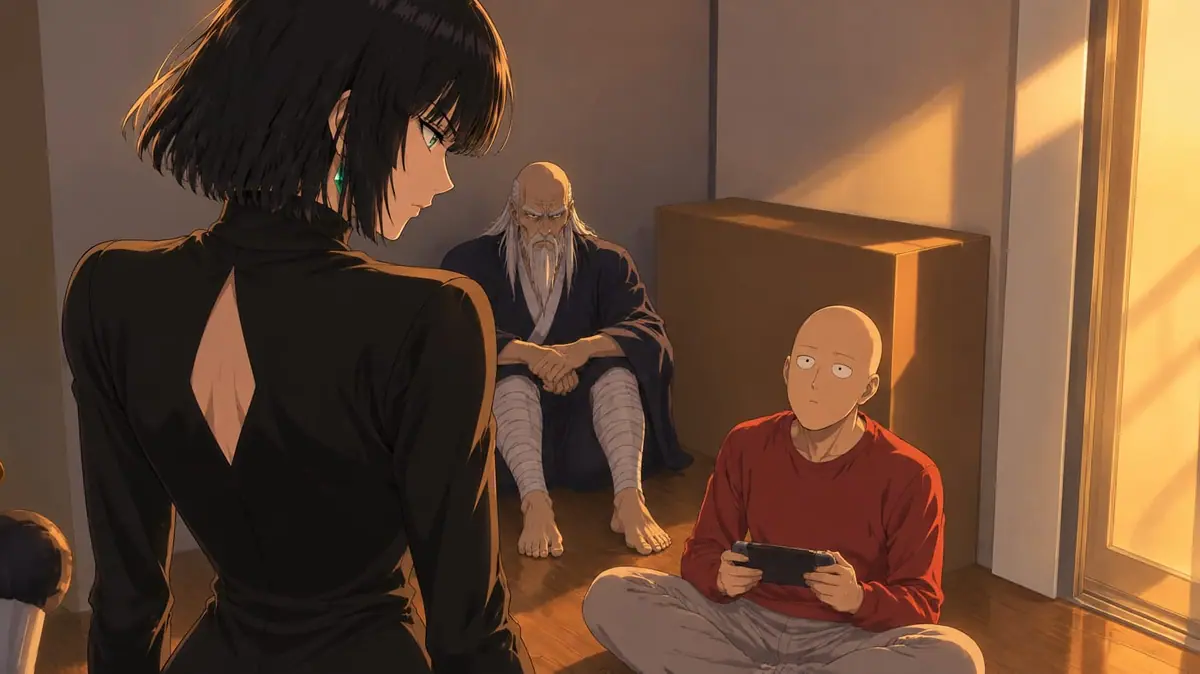 A · revised
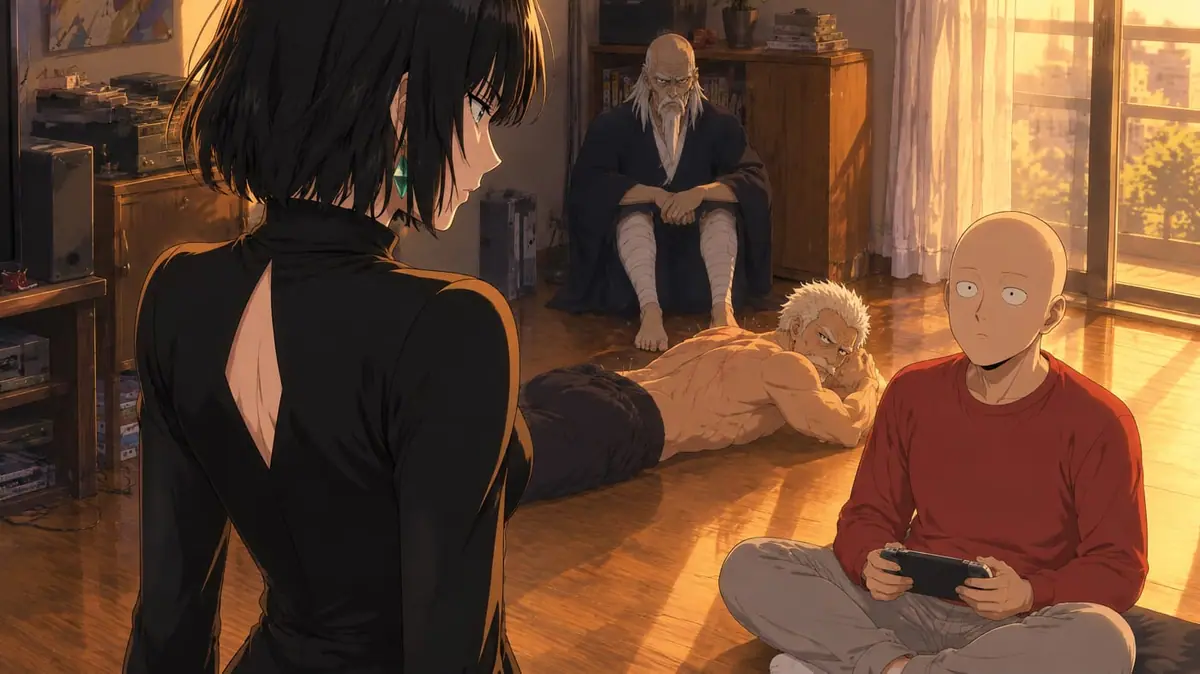 D · Hybrid
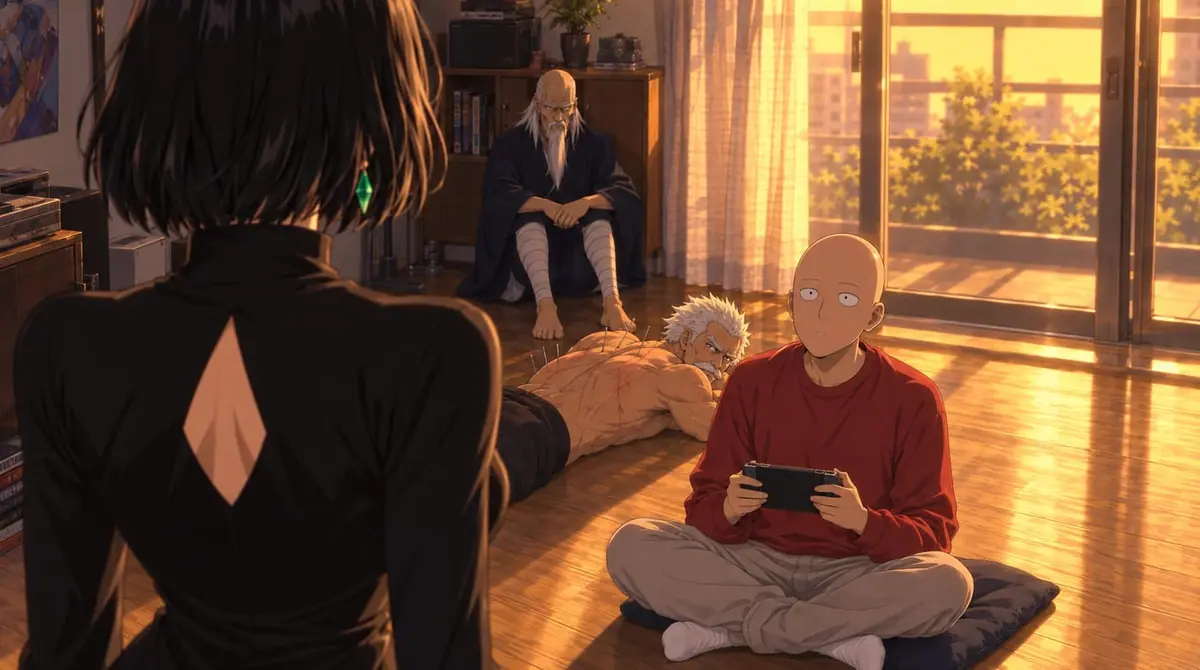 B · Chained
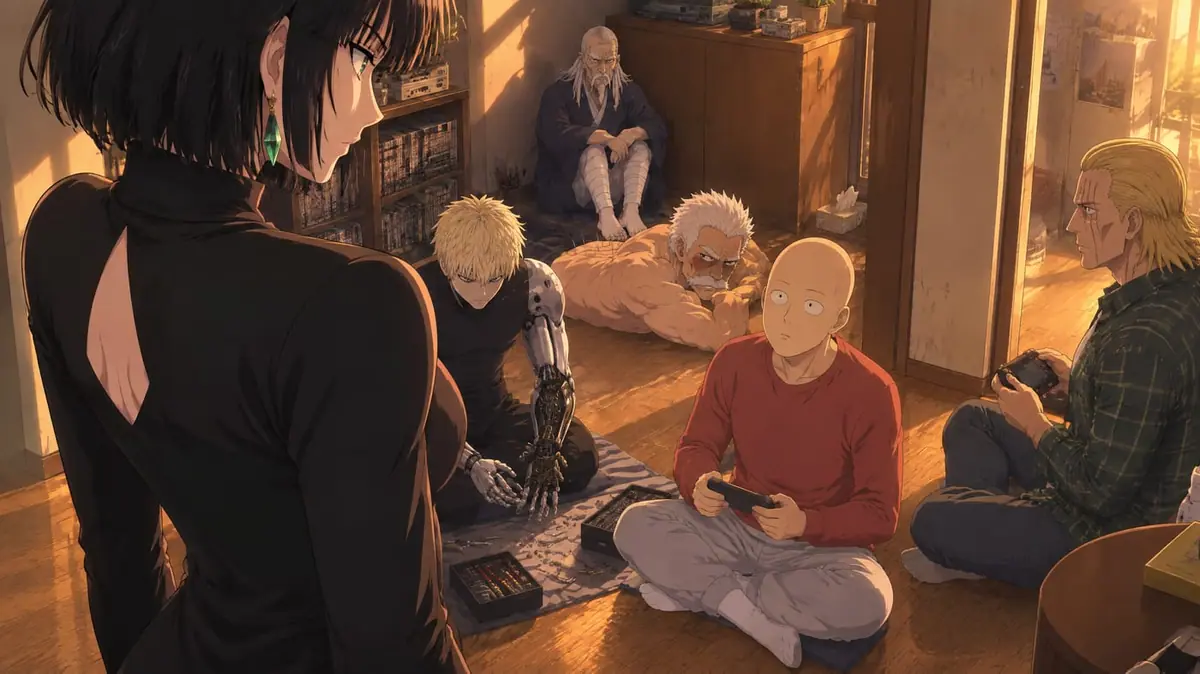 D · second staging
Cut 122 p163 panel 2
Medium close-up from Saitama's eye line, looking up: Fubuki, wide-eyed, throws her hands out as she lays it all out.
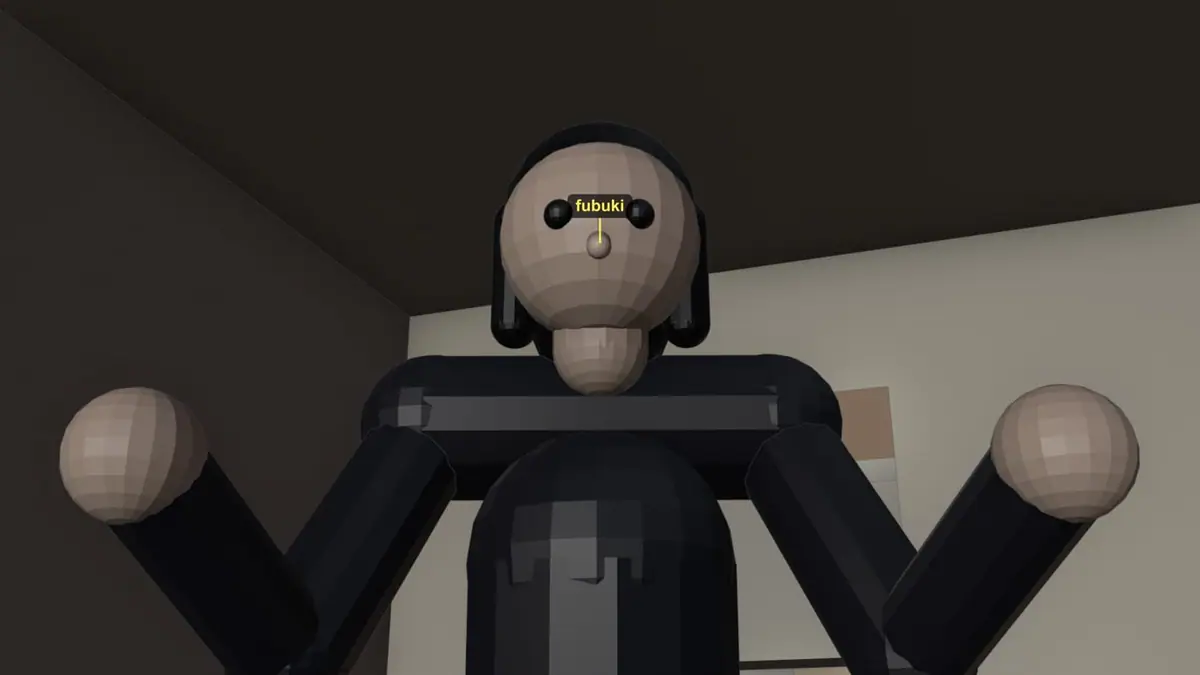 Blocking
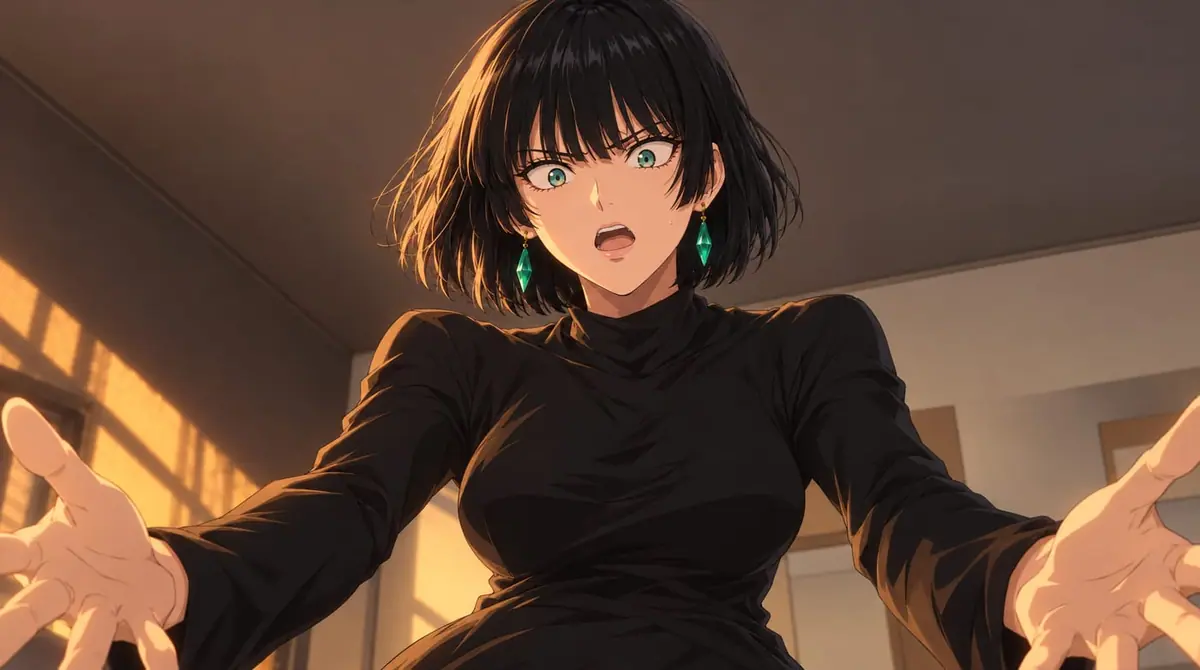 A · first cameras
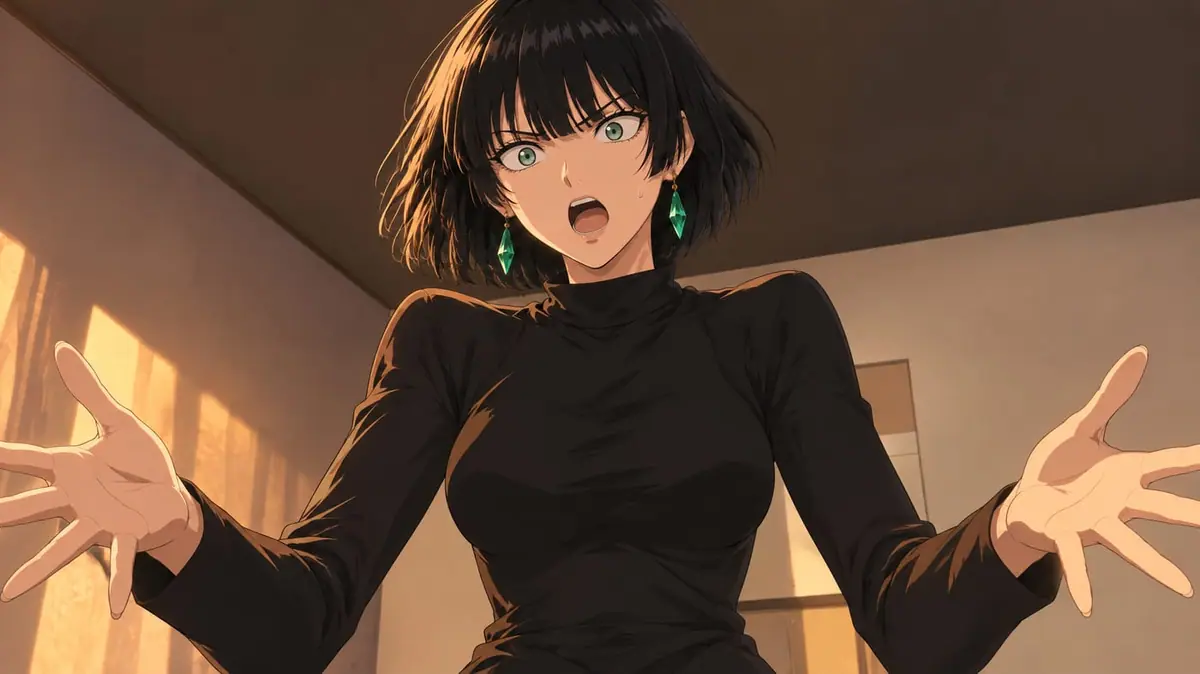 A · revised
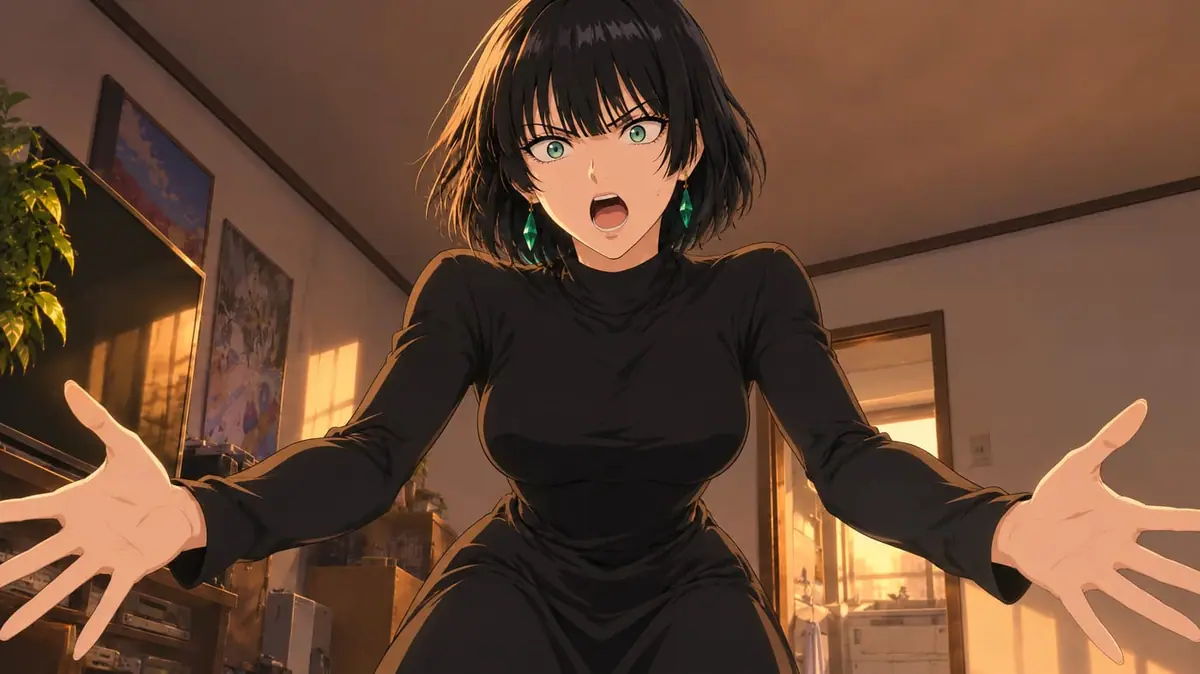 D · Hybrid
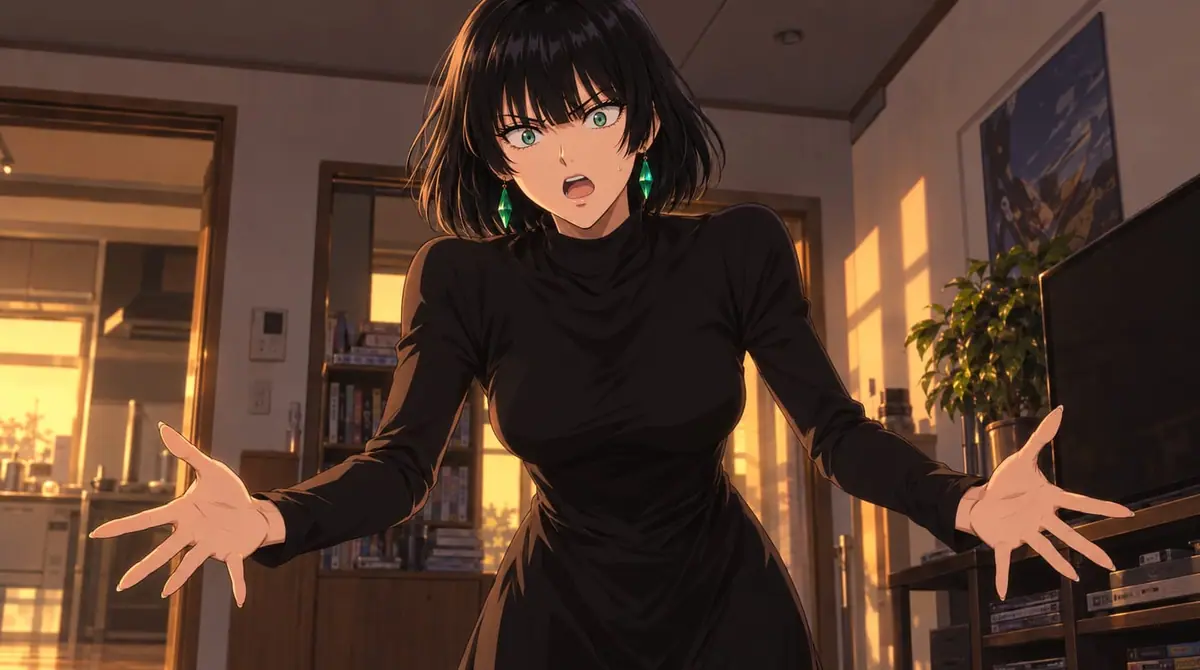 B · Chained
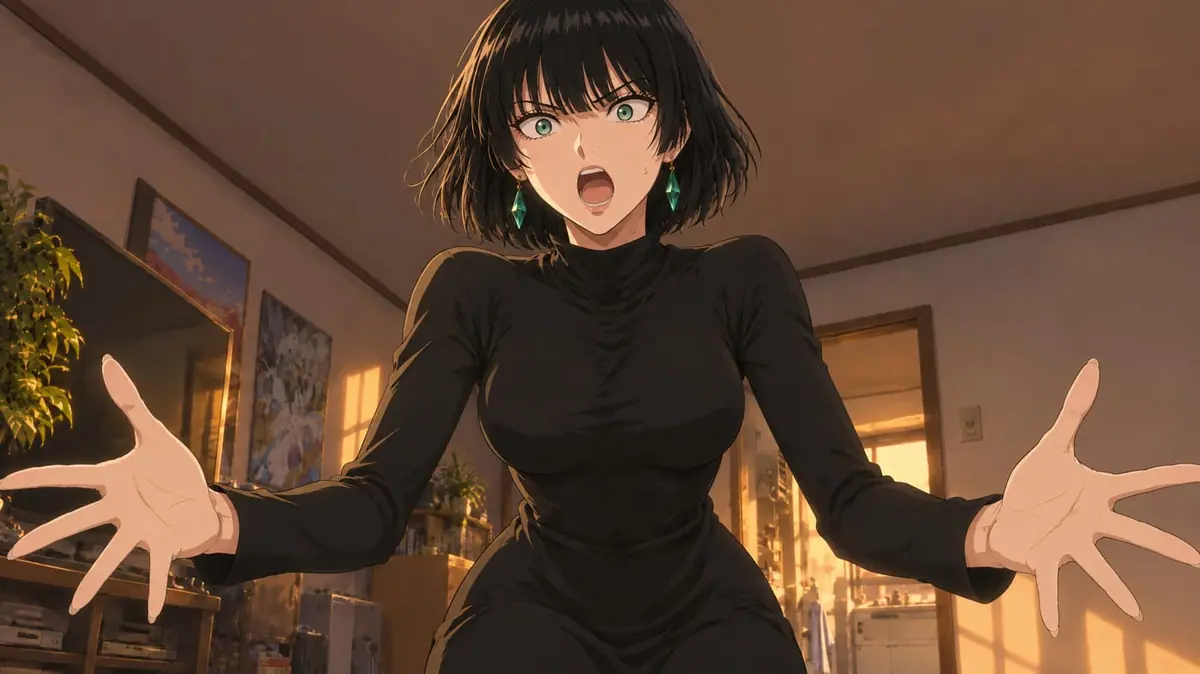 D · second staging
Cut 123 p163 panel 3
Medium, side on: Fubuki stands on the left jabbing a finger down; Saitama flops onto his side on the right and props his head on his hand.
Blocking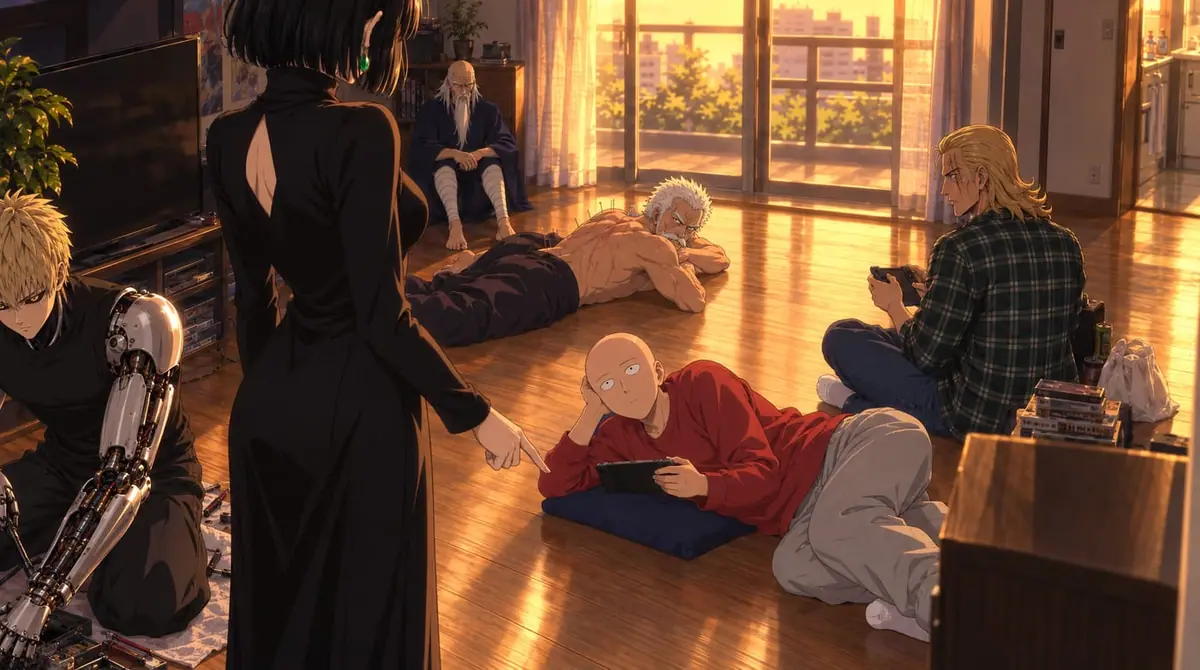 A · first cameras
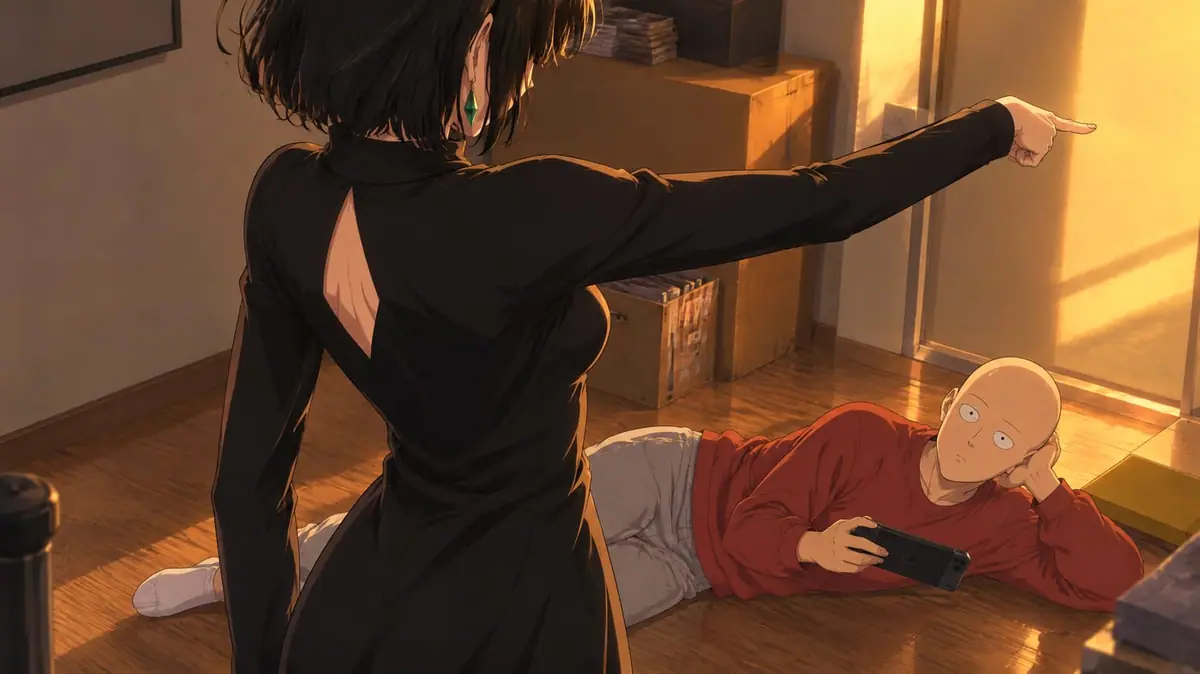 A · revised
 D · Hybrid
 B · Chained
 D · second staging
Cut 124 p163 panel 4
Medium over Fubuki's shoulder (her black hair soft in the right foreground, so Genos stays on her left as in cut 123): Genos, kneeling over his parts, looks up from his opened arm.
Blocking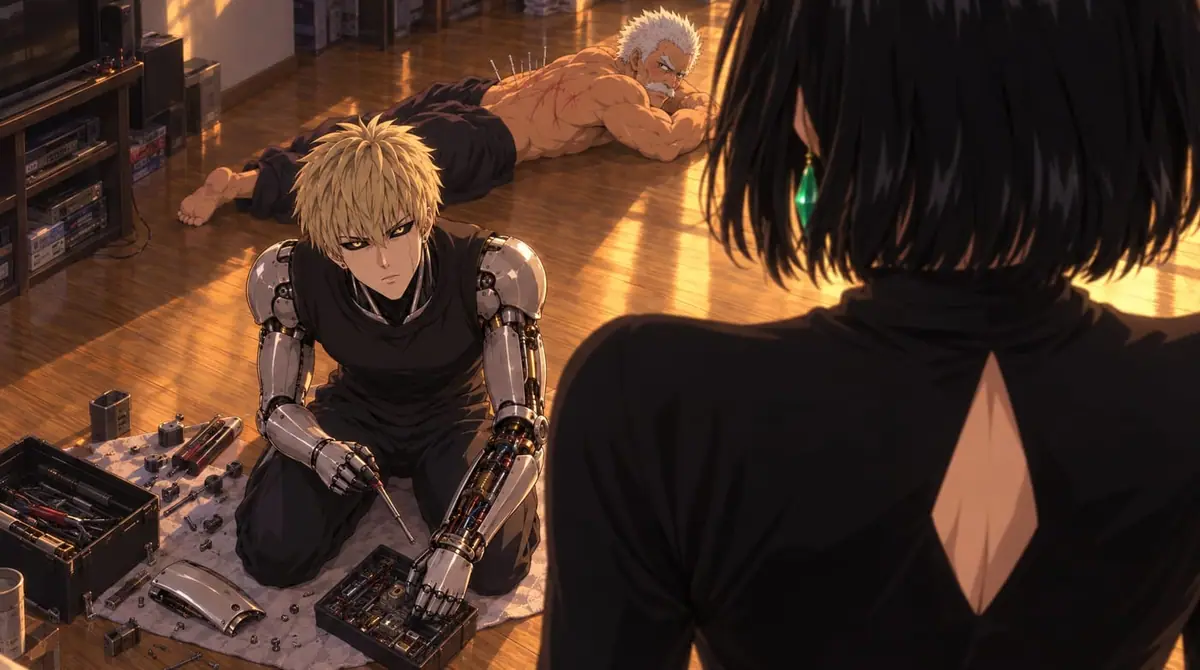 A · first cameras
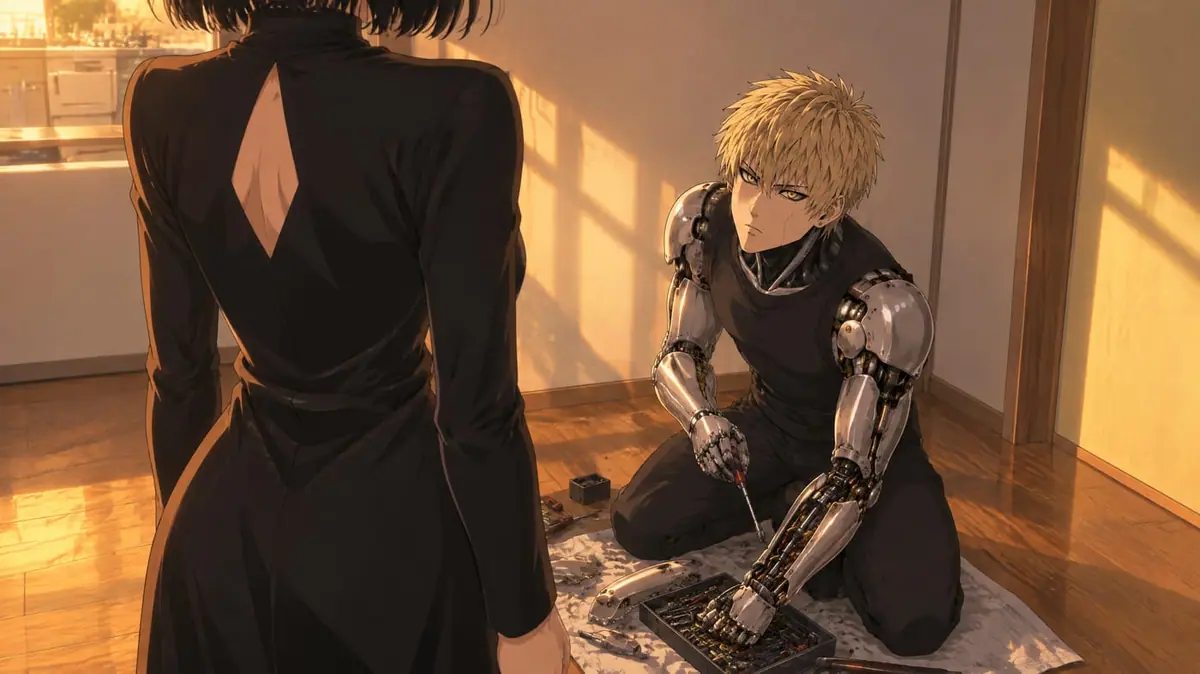 A · revisedD · Hybrid
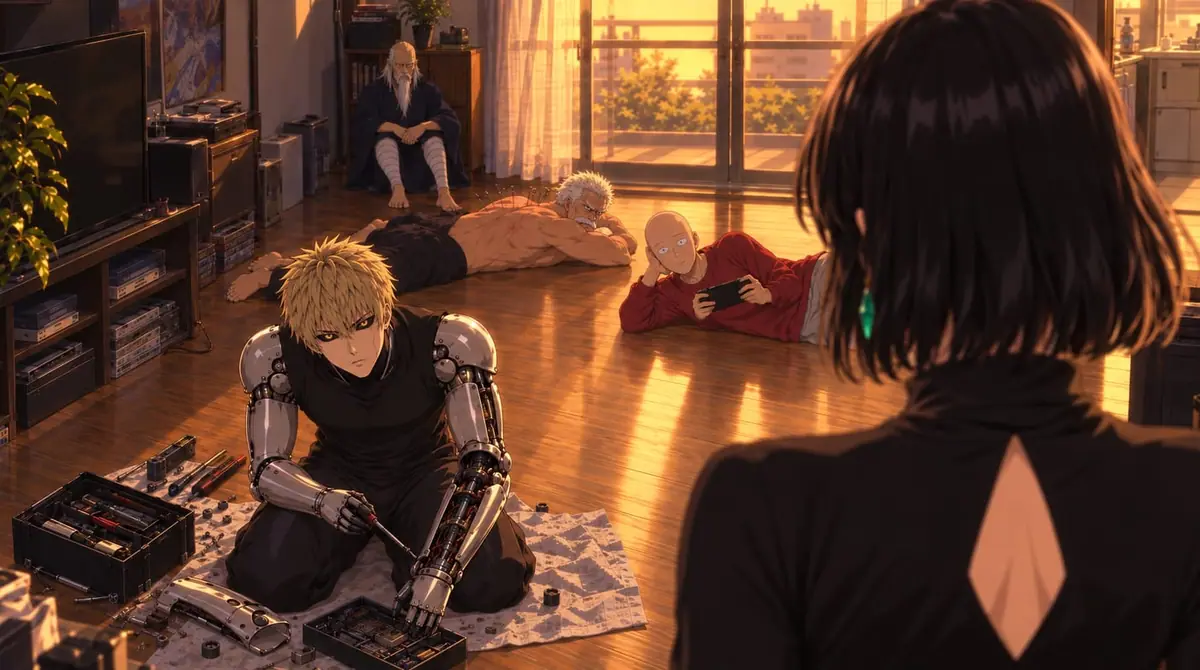 B · ChainedD · second staging
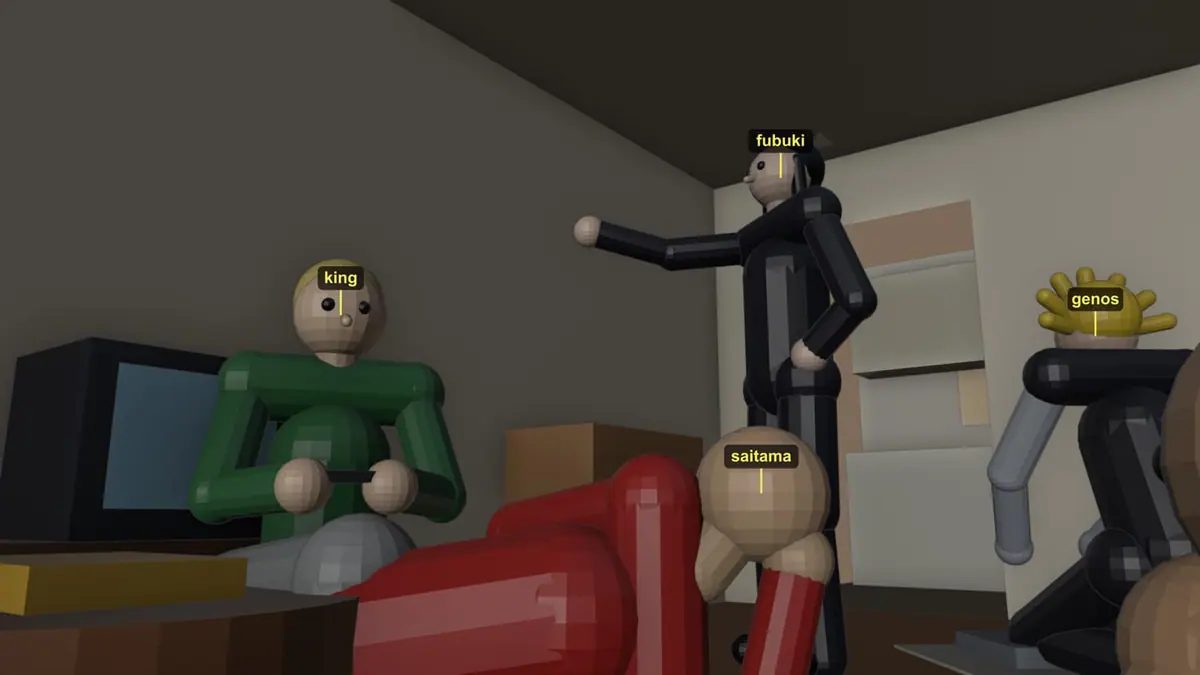
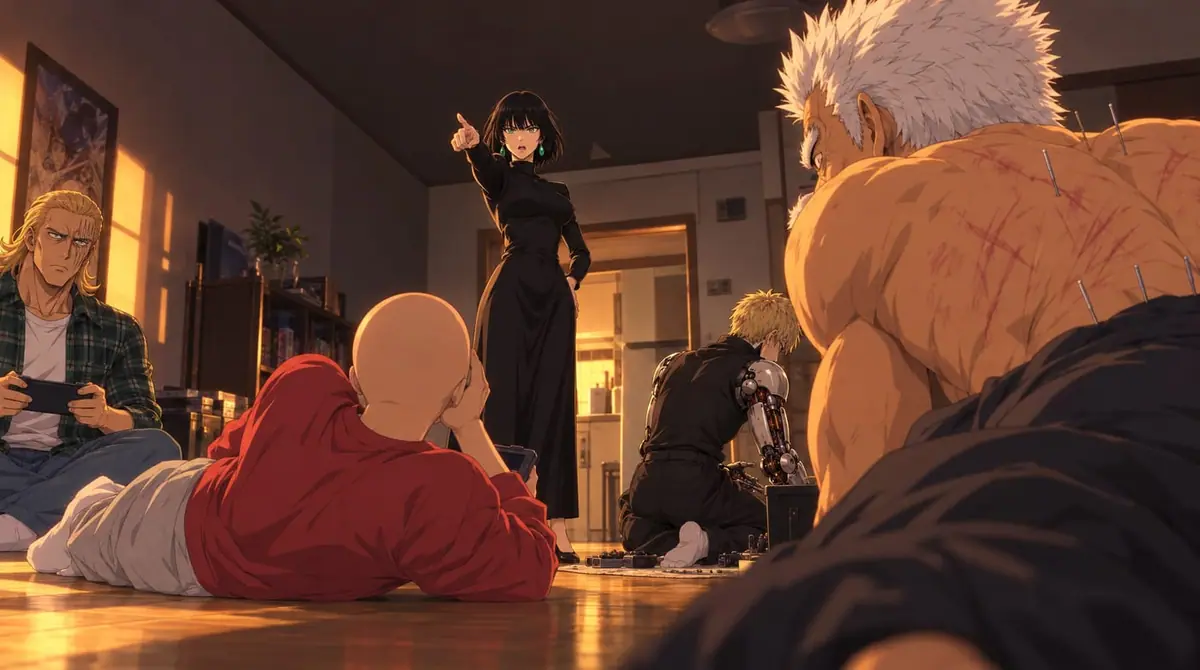
Cut 125 p164 panel 1
Full shot from low on the floor at the back of the room: Fubuki, the kitchen doorway behind her, swings round and points across the crowded room; Silverfang's white head in the right foreground.
 Blocking
 A · first cameras
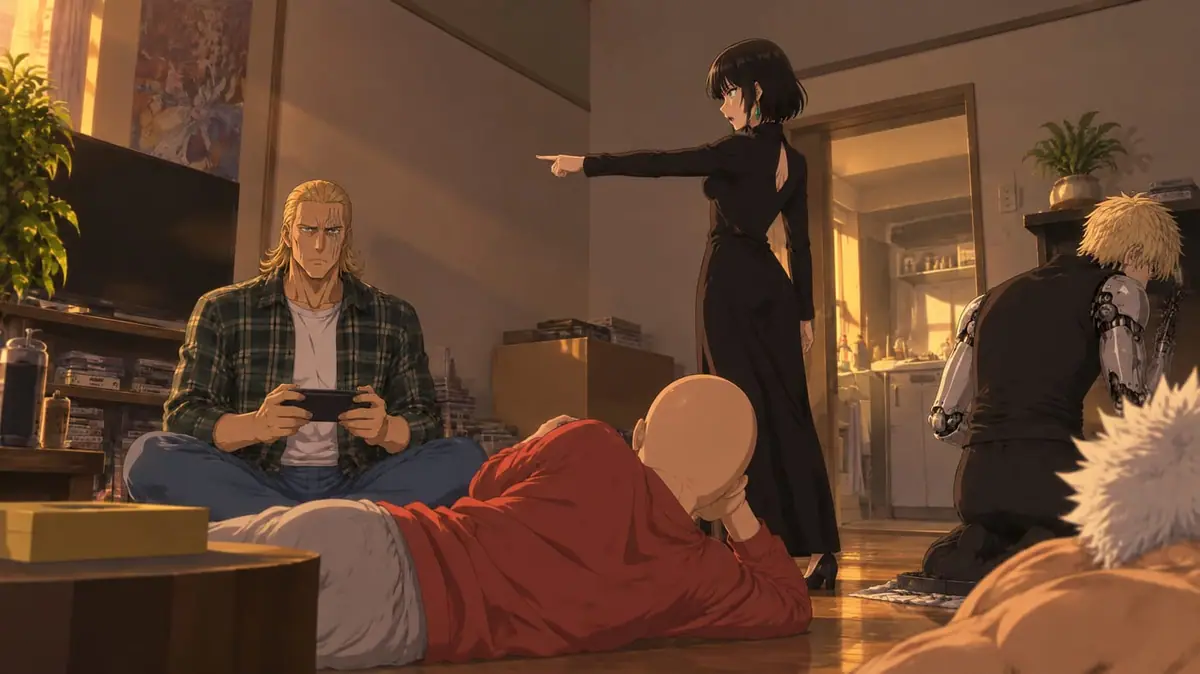 A · revised
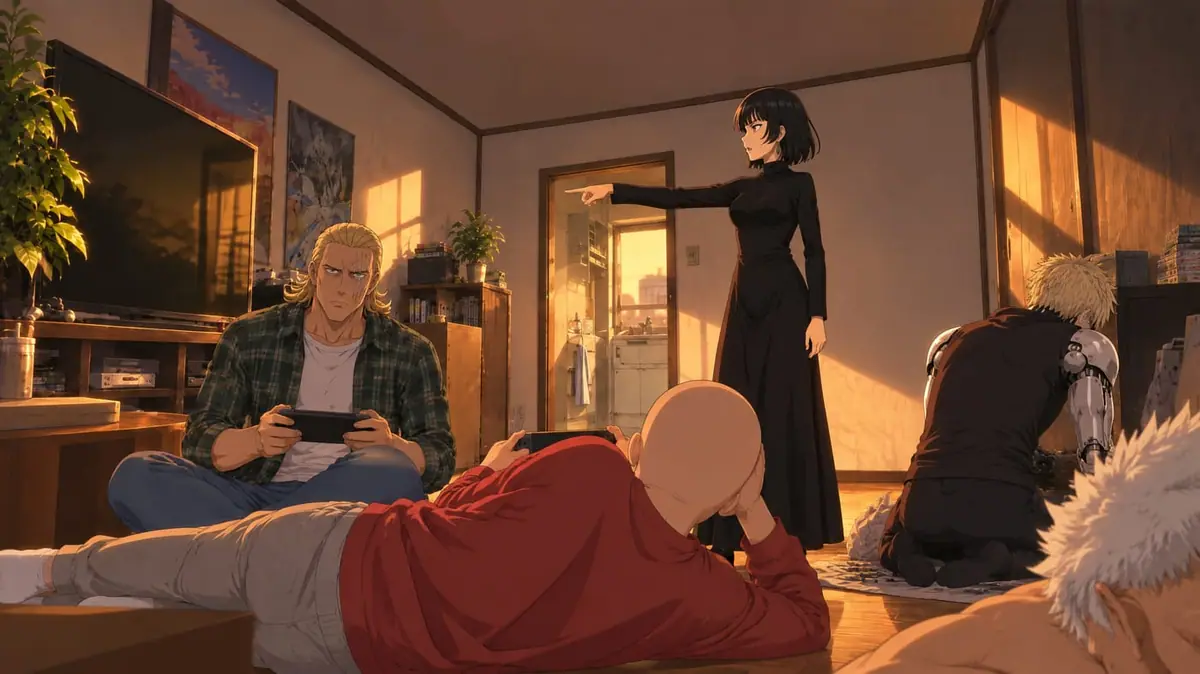 D · Hybrid
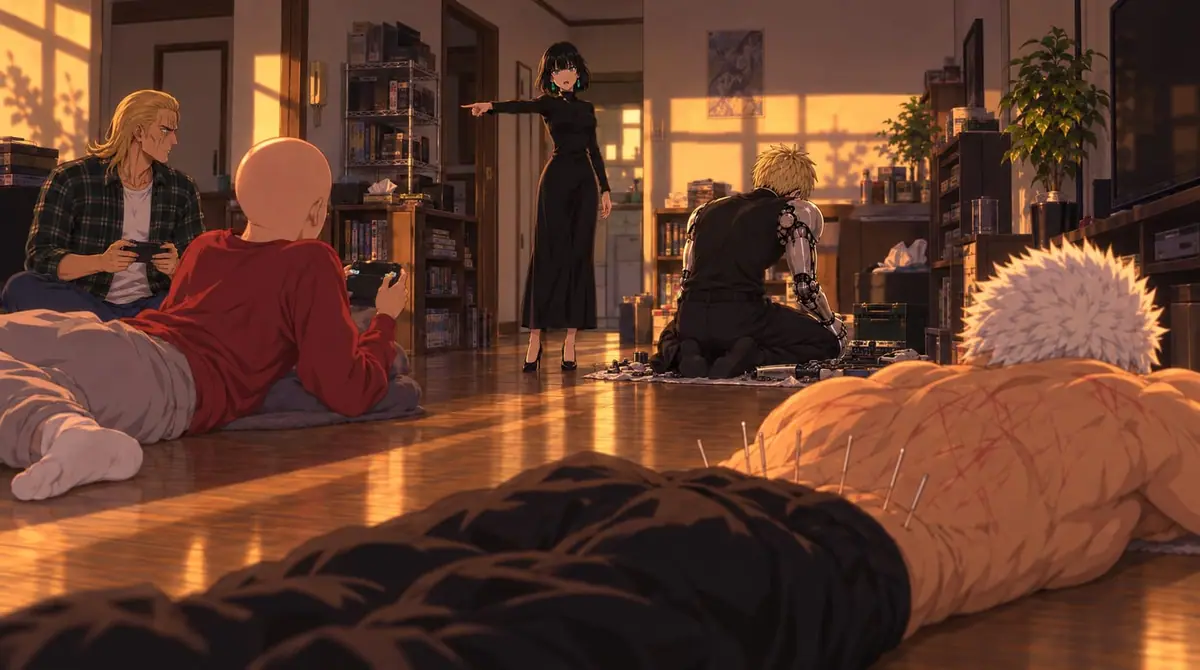 B · Chained
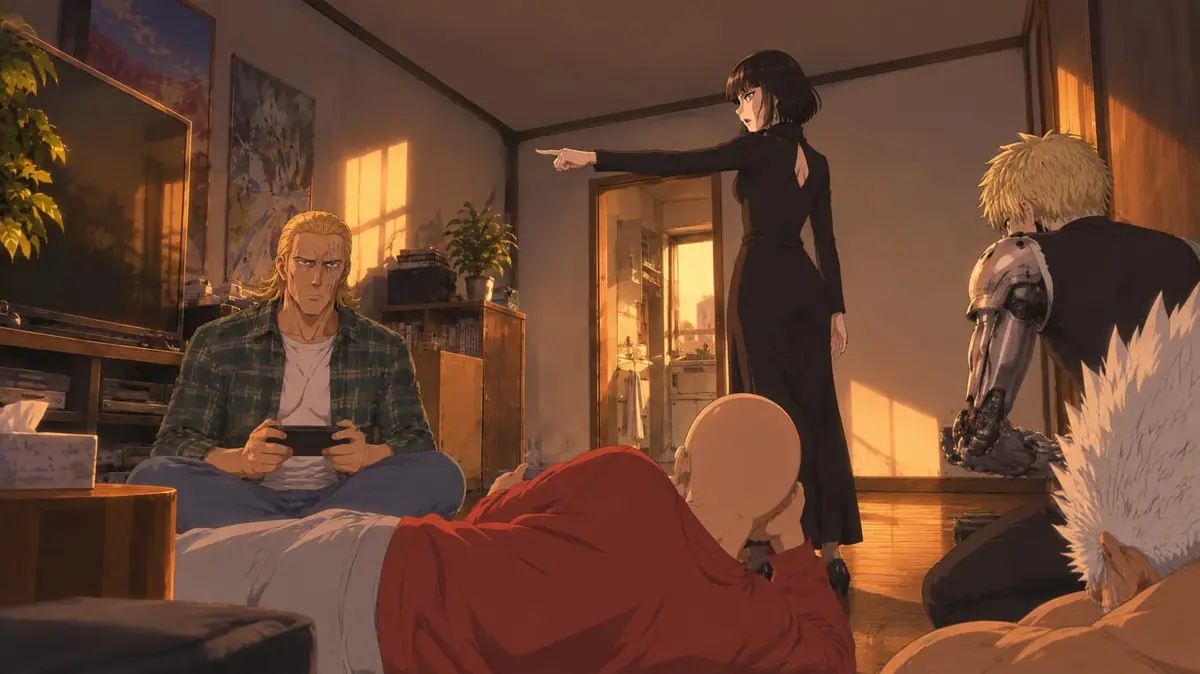 D · second staging
Cut 126 p164 panel 2
Close-up at floor level: Silverfang, face-down on the boards, chin on his forearms, explains; the needles in his back catch the light.
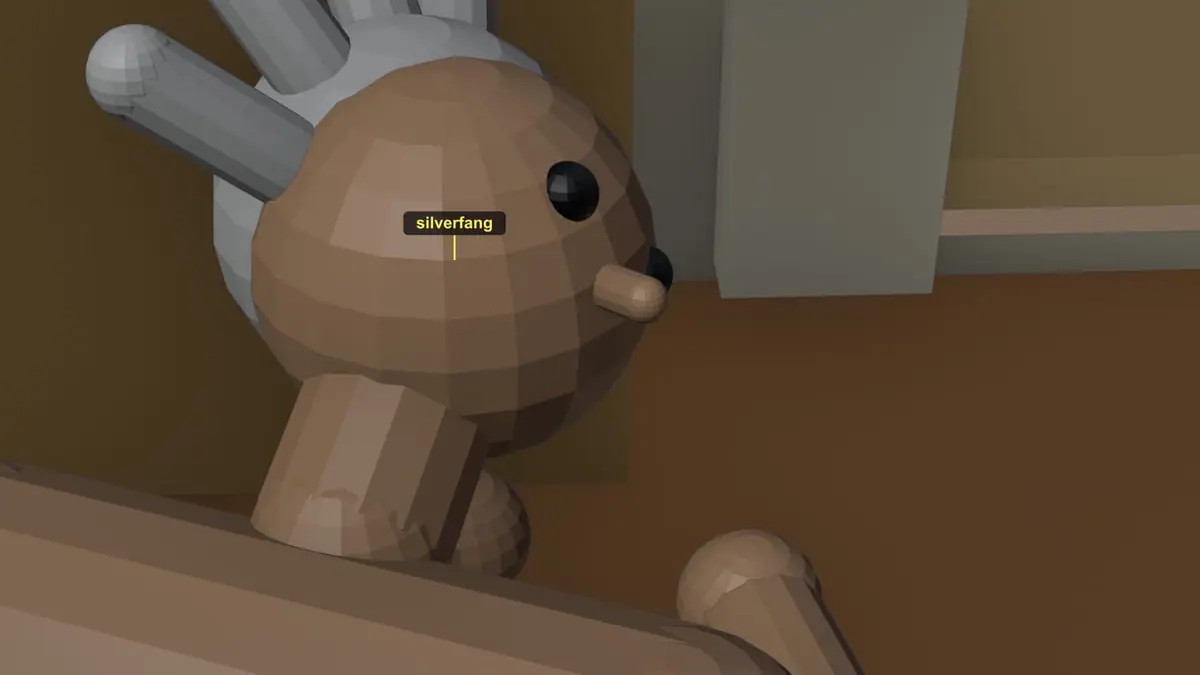 Blocking
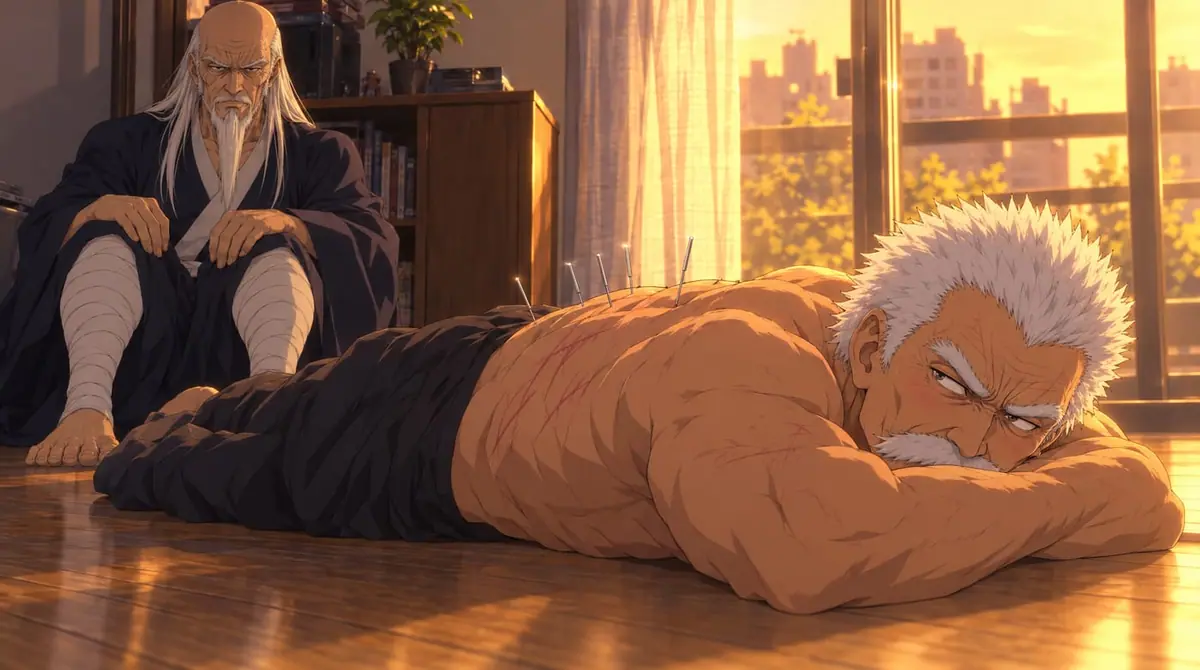 A · first cameras
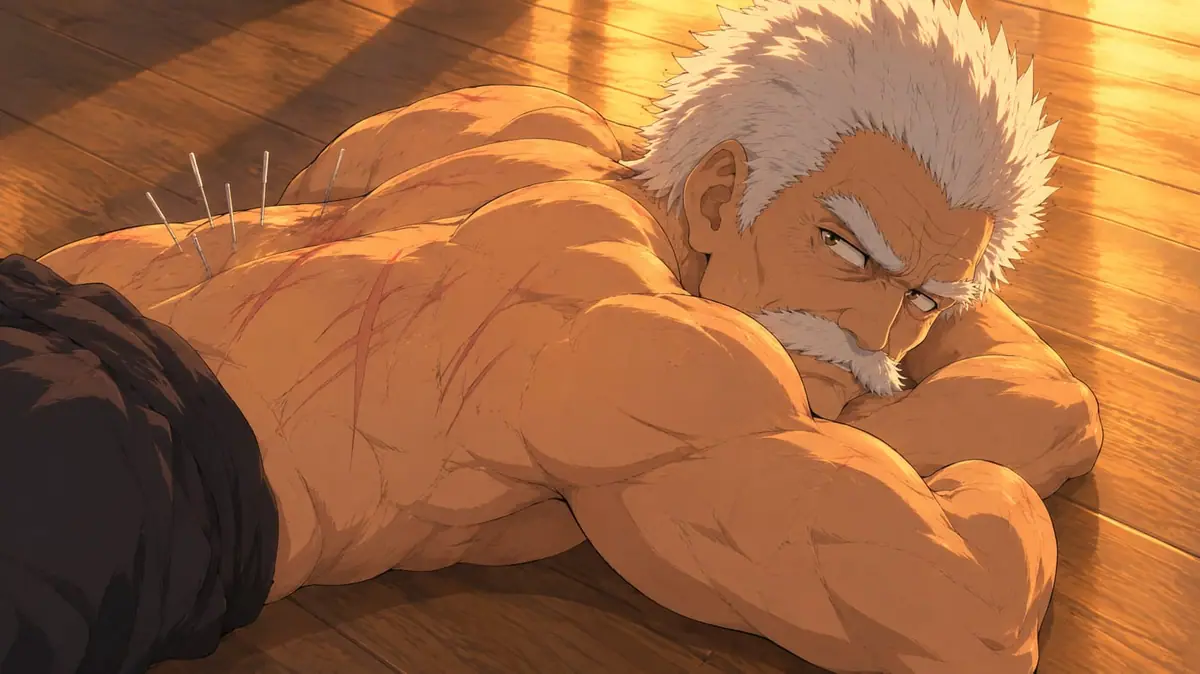 A · revised
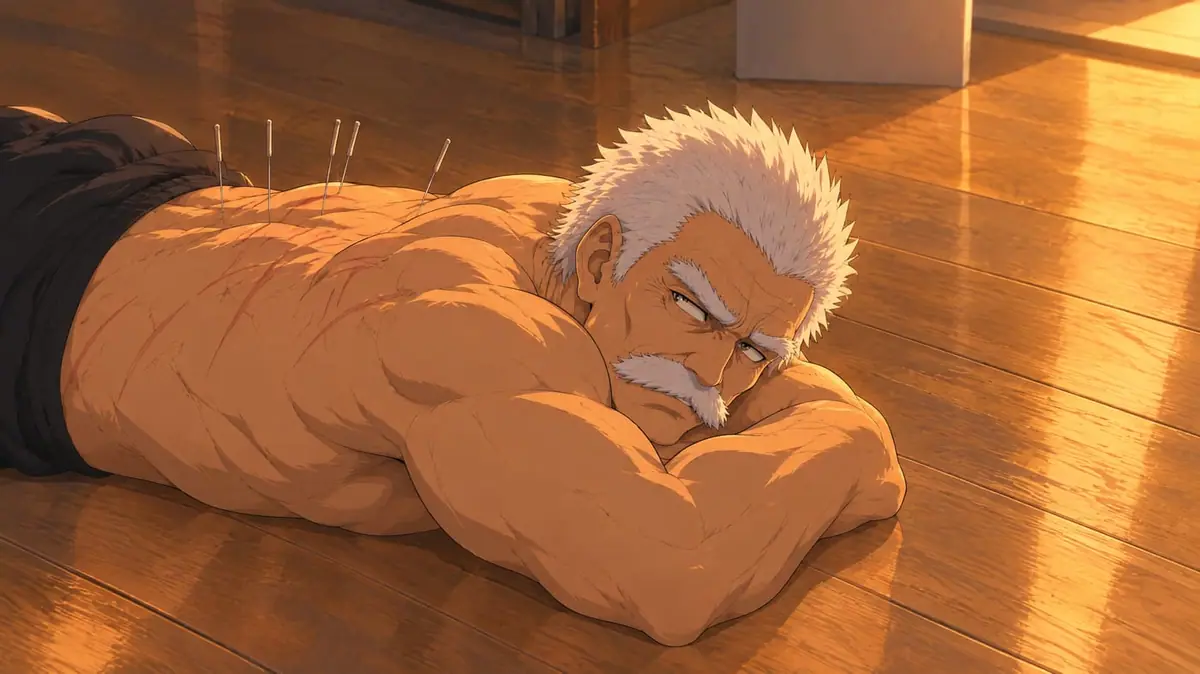 D · Hybrid
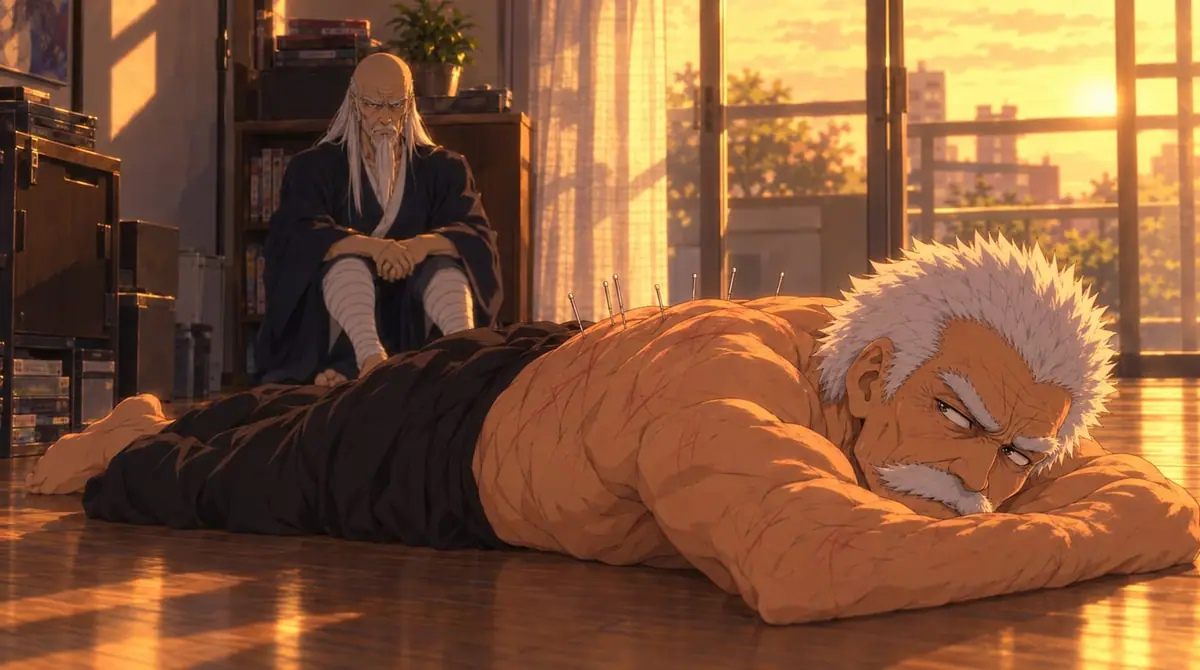 B · Chained
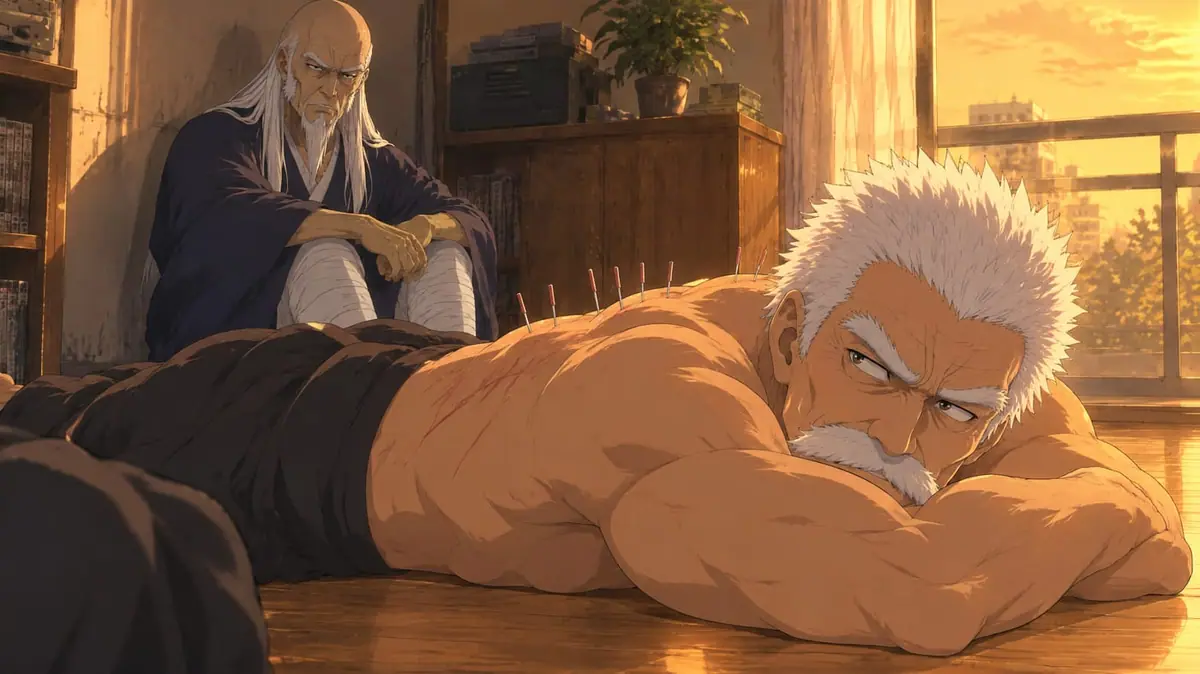 D · second staging
Cut 127 p164 panel 3
Medium: Bomb sits in the corner rubbing his bandaged knees; Silverfang's spiky white hair in the right foreground.
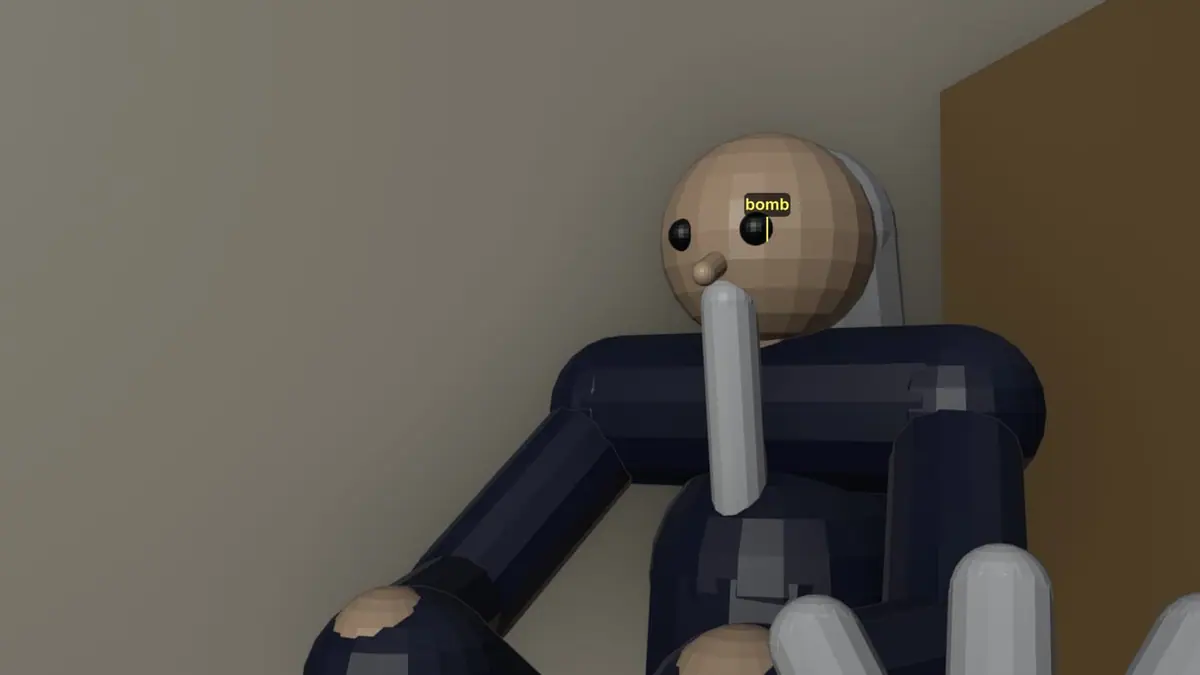 Blocking
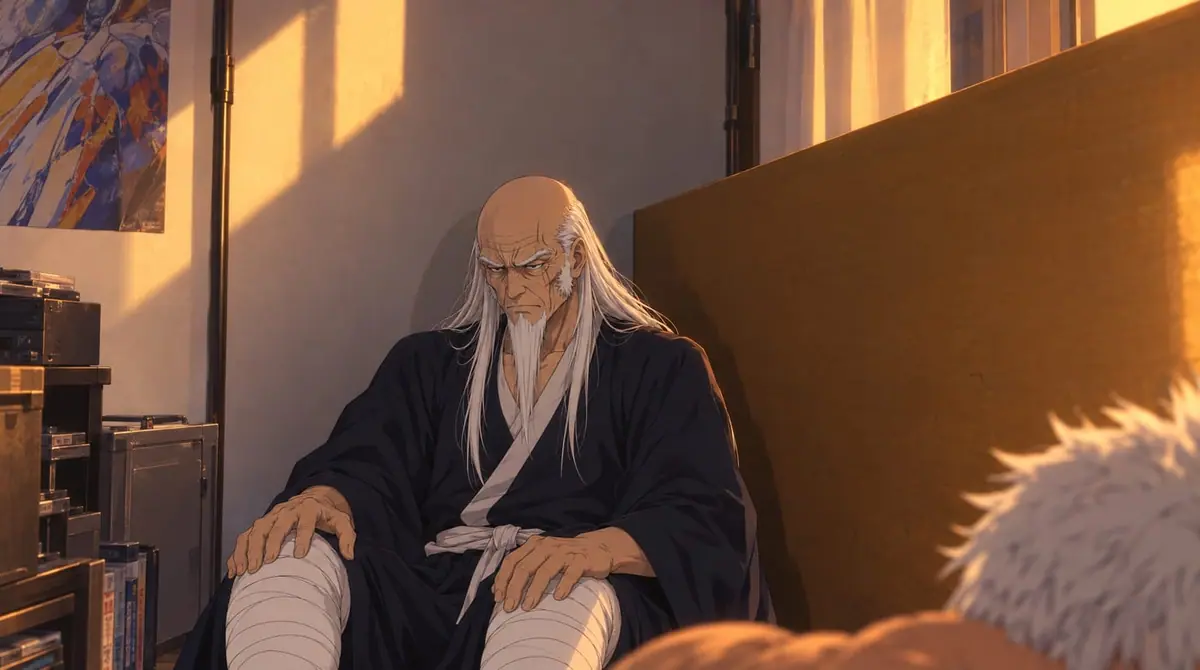 A · first cameras
 A · revised
 D · Hybrid
 B · Chained
 D · second staging
Cut 128 p164 panels 4-5
Medium close-up: Fubuki, her anger gone, lowers her eyes, sobered; the kitchen doorway soft behind her.
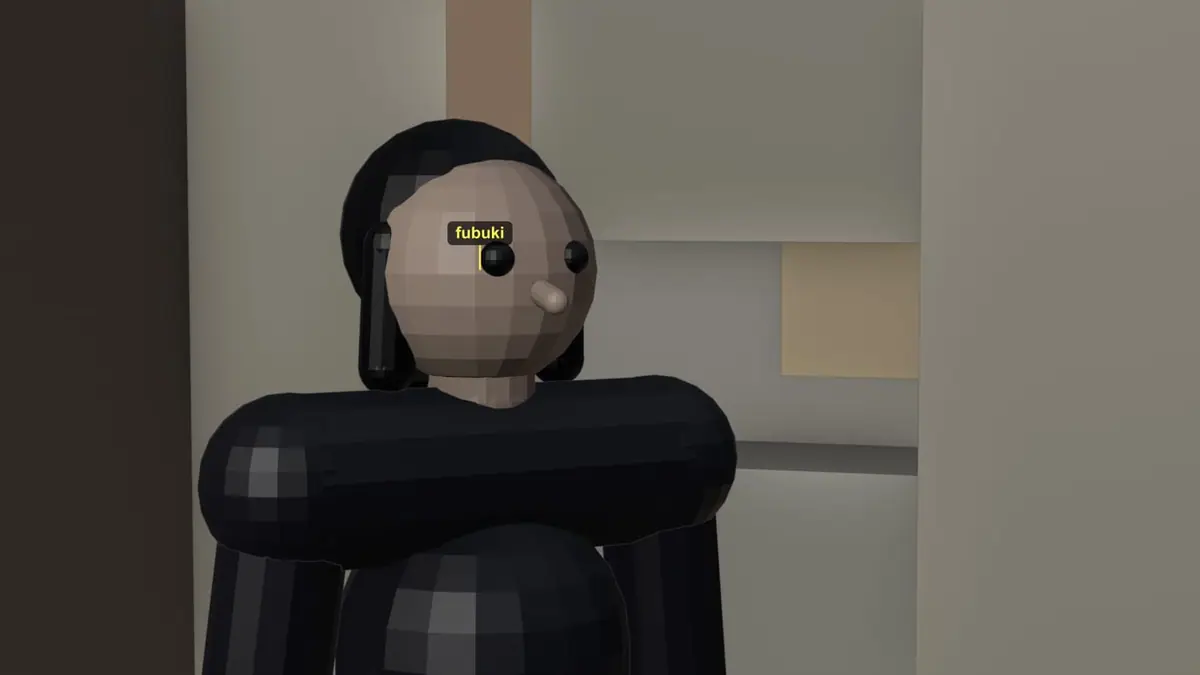 Blocking
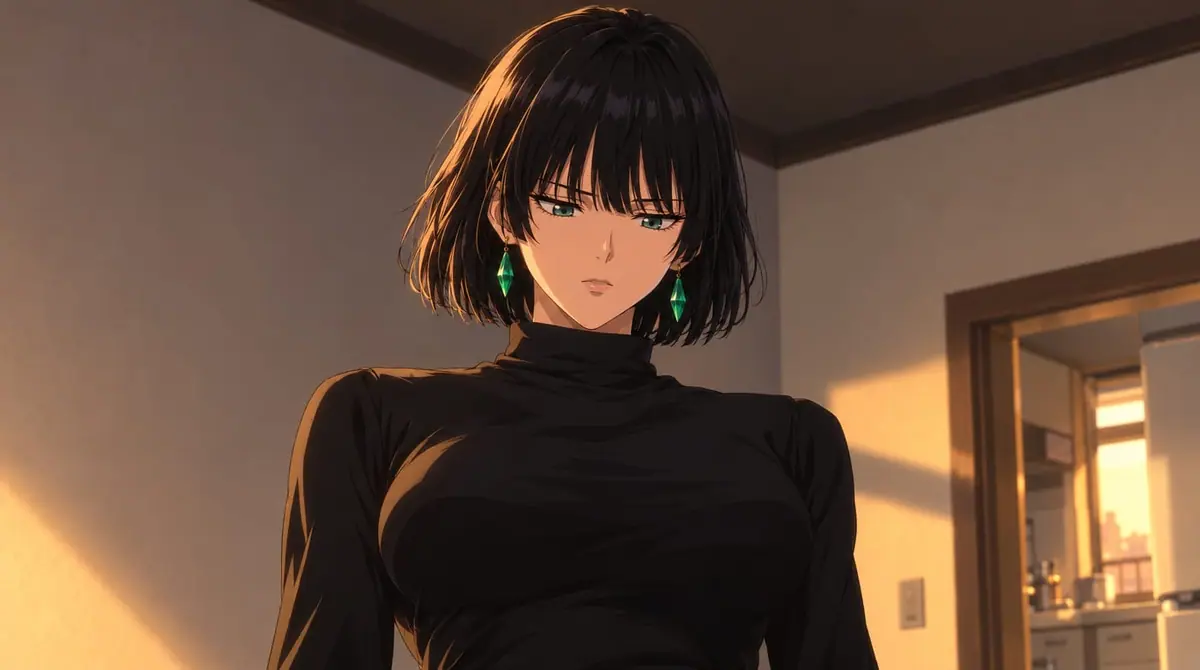 A · first cameras
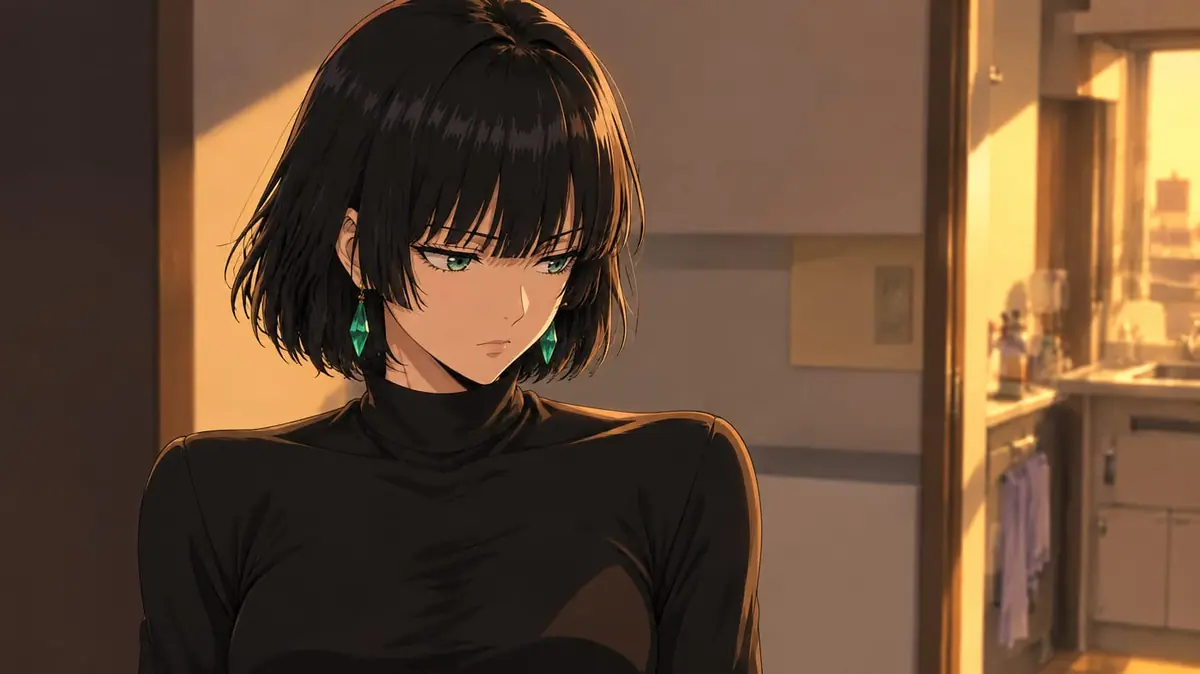 A · revised
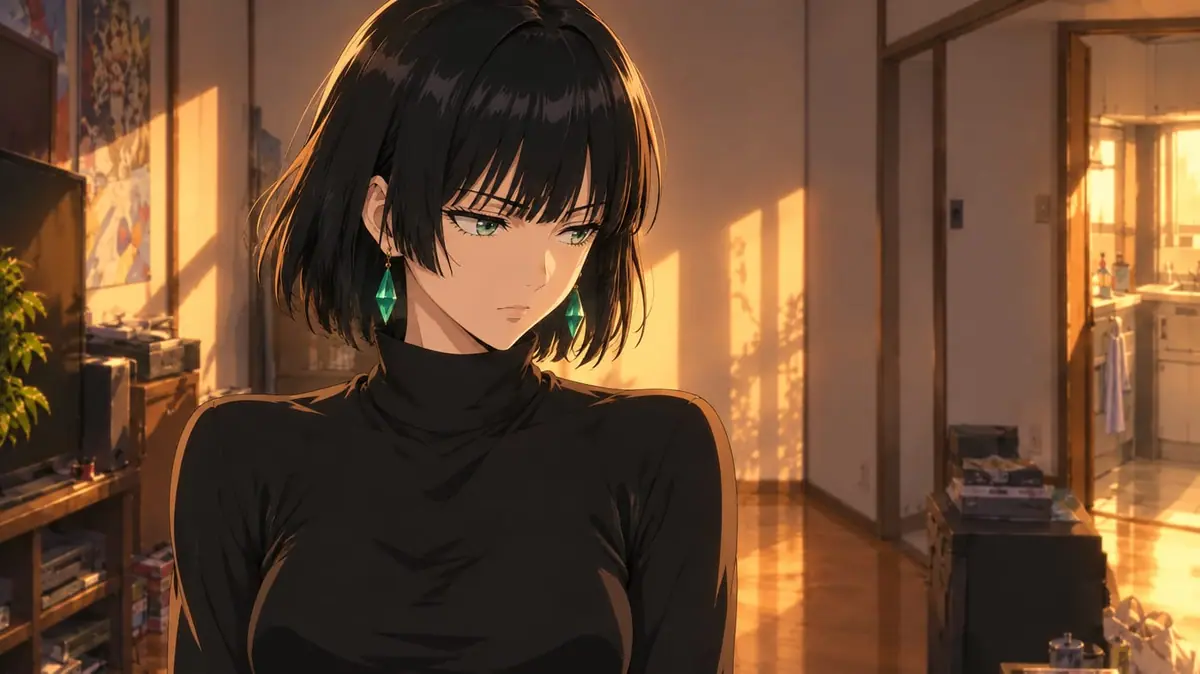 D · Hybrid
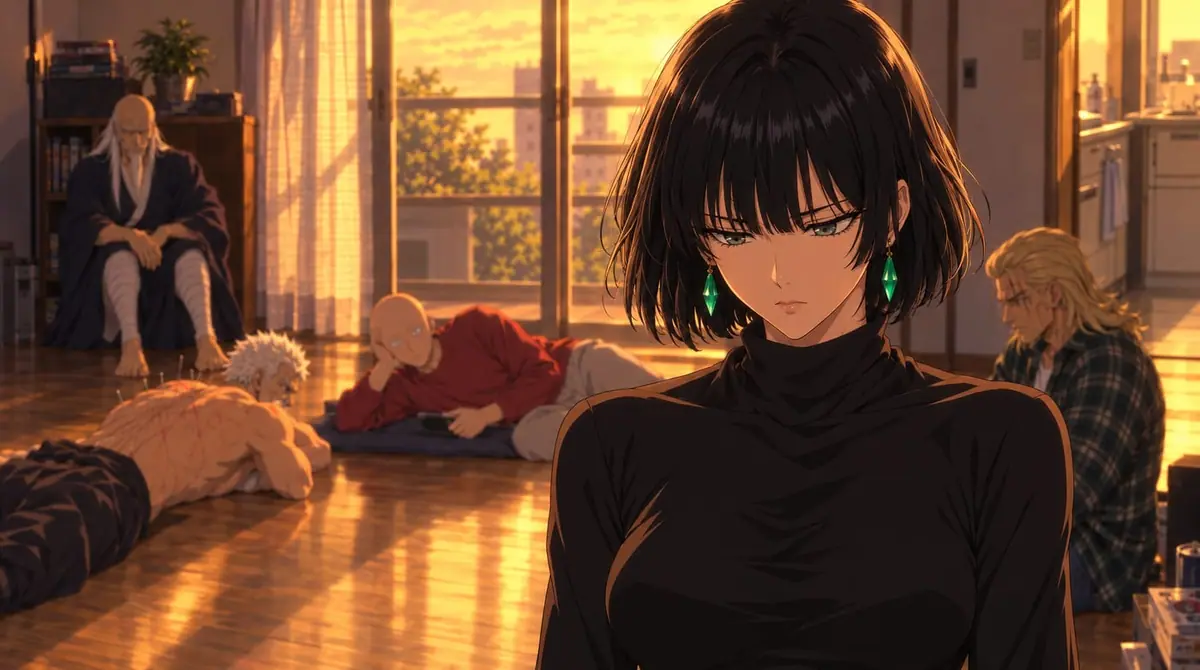 B · Chained
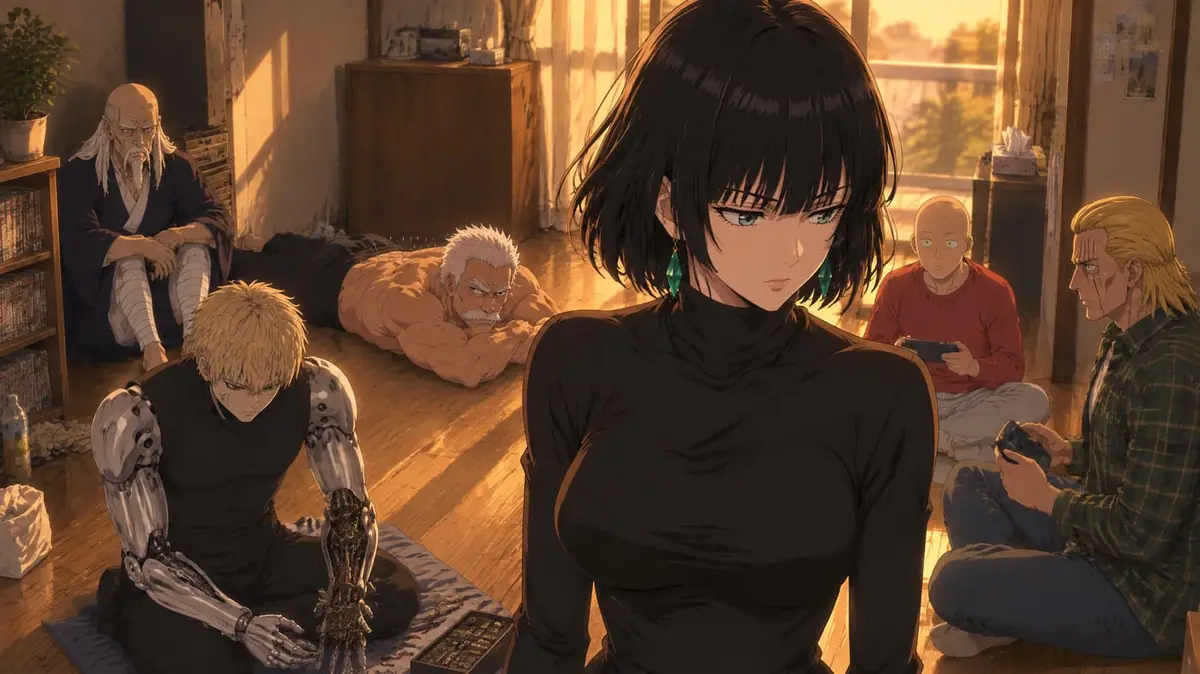 D · second staging
The arena · pages 190–193
Cut 67 p190 panel 6
Insert: a spiked whip lashes across the frame from the left and snaps round the blade.
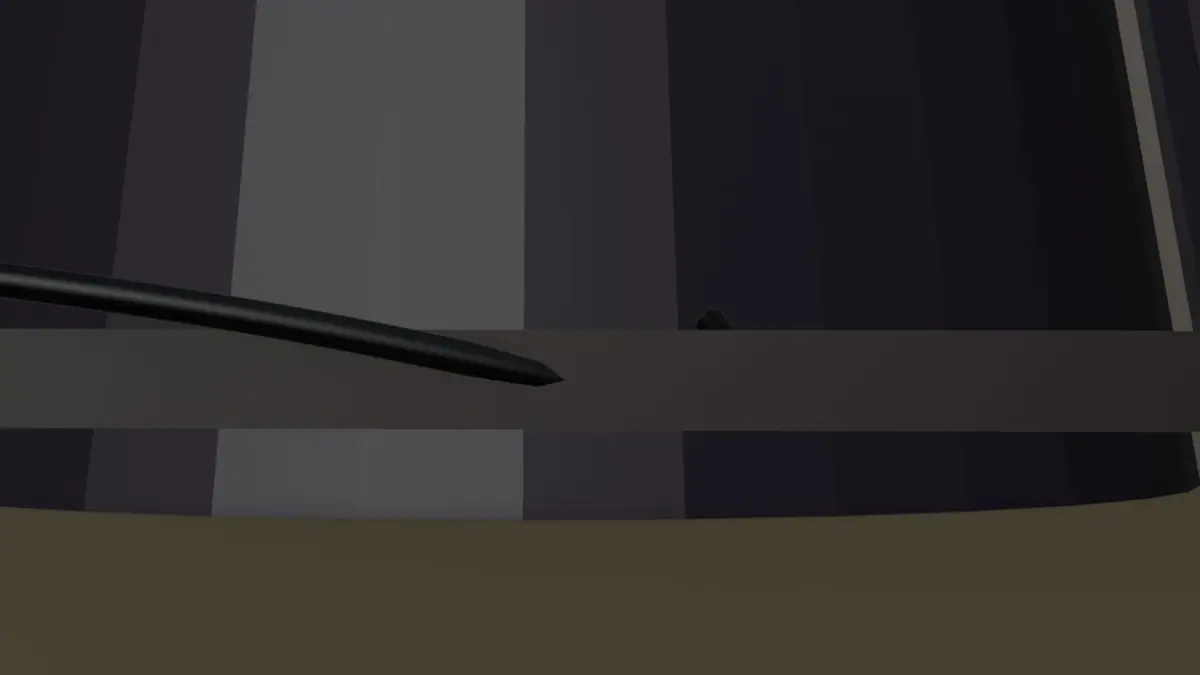 Blocking
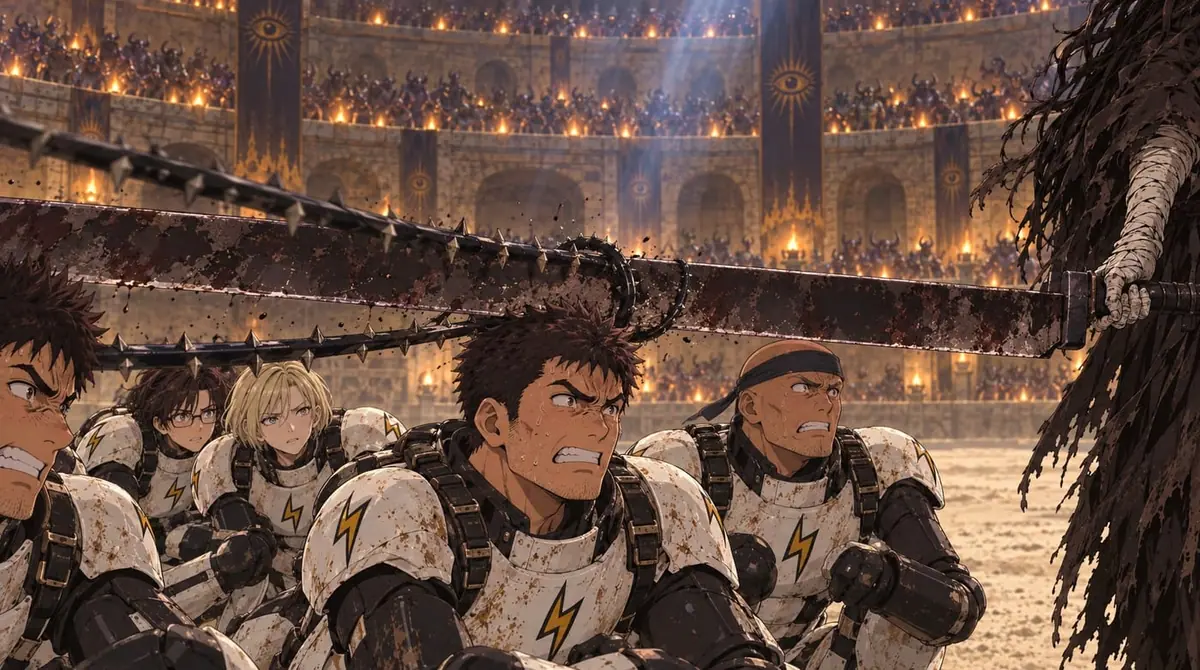 A · first cameras
 A · revised
 D · Hybrid
 B · Chained
 D · second staging
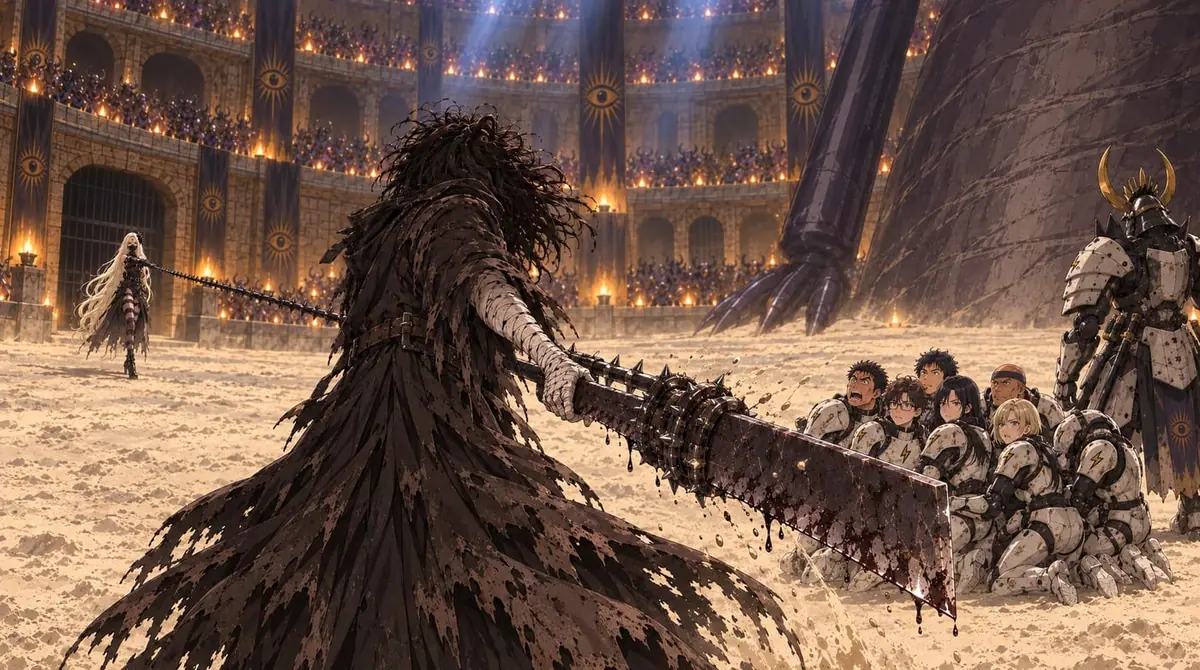
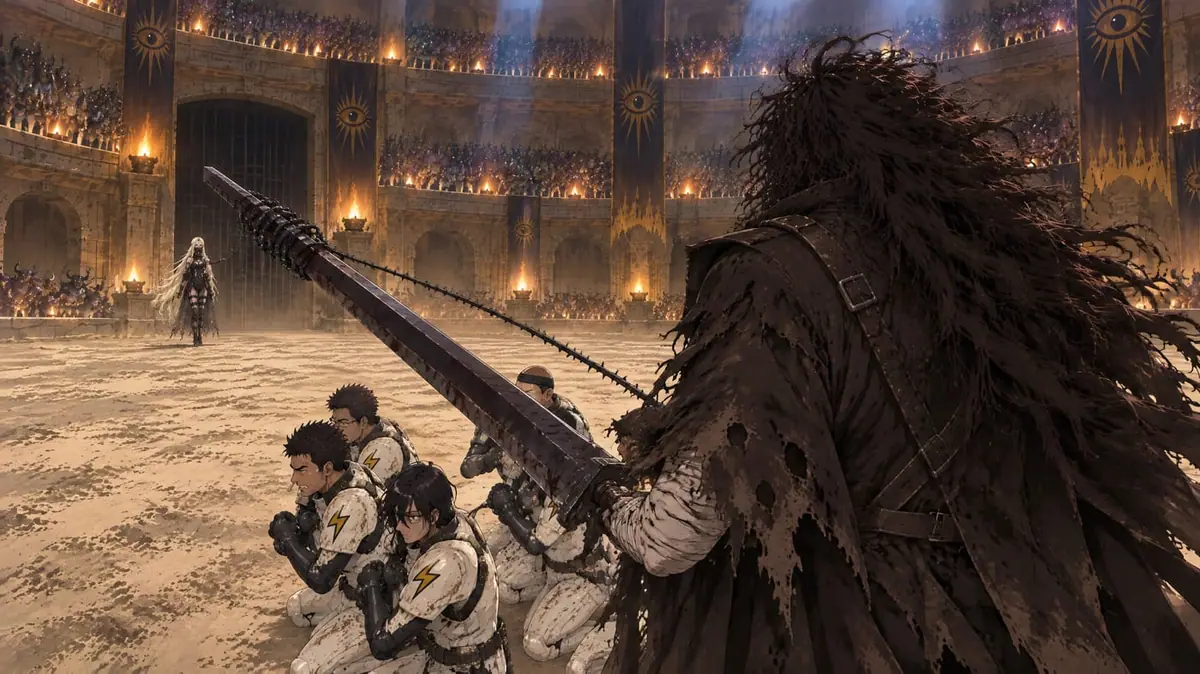
Cut 68 p191 panel 1
Wide, from behind the Ripper's shoulder: the whip has coiled round his blade and yanks it aside; far behind, at the west gate, the tall blonde woman holds the handle.
 Blocking
 A · first cameras
 A · revised
 D · Hybrid
 B · Chained
 D · second staging
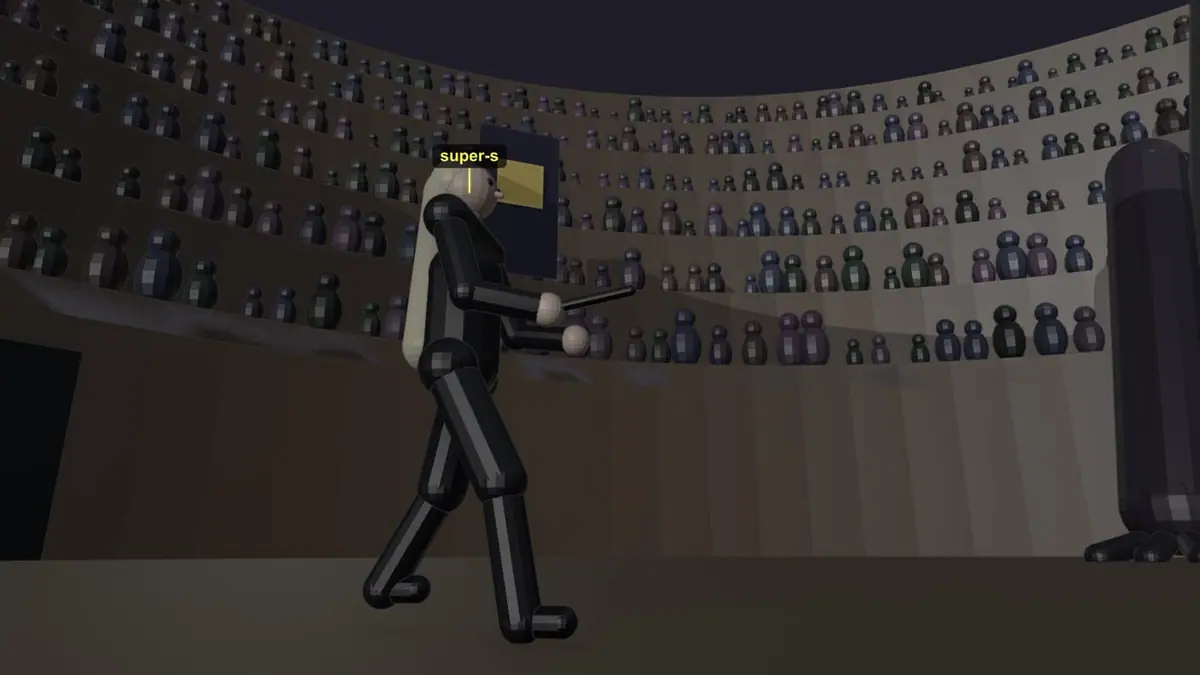
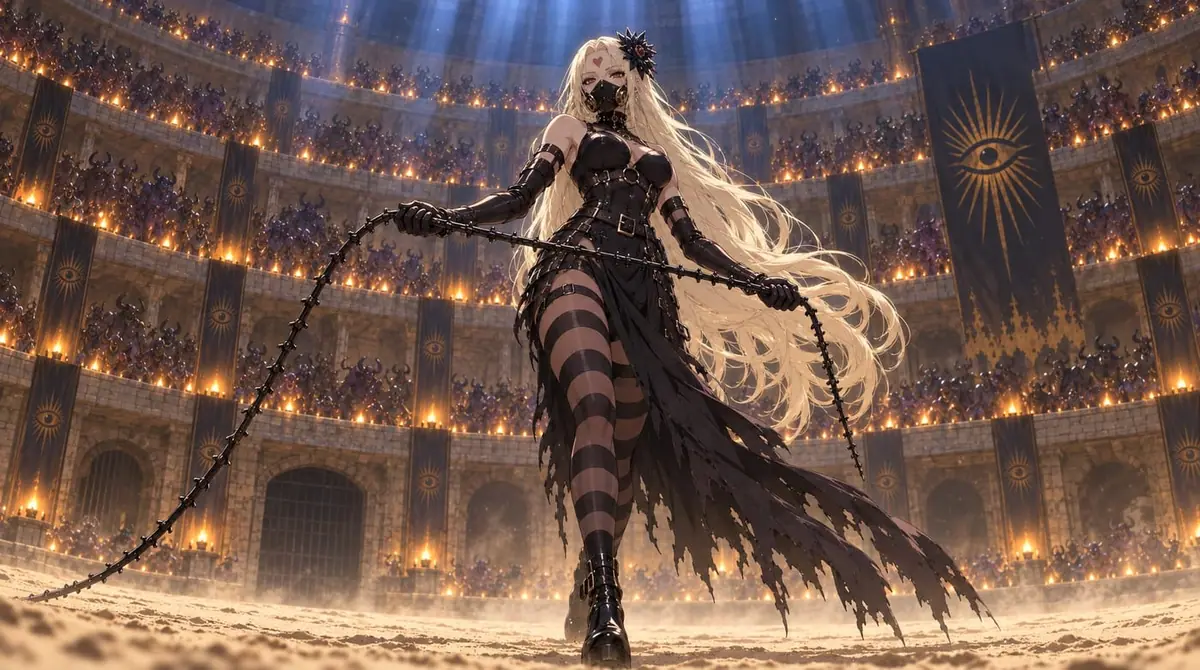
Cut 69 p191 panel 2
Full shot, low angle, slow tilt up: Super S strides toward camera across the sand, hair swaying, the whip pulled taut between her gloved hands.
 Blocking
 A · first cameras
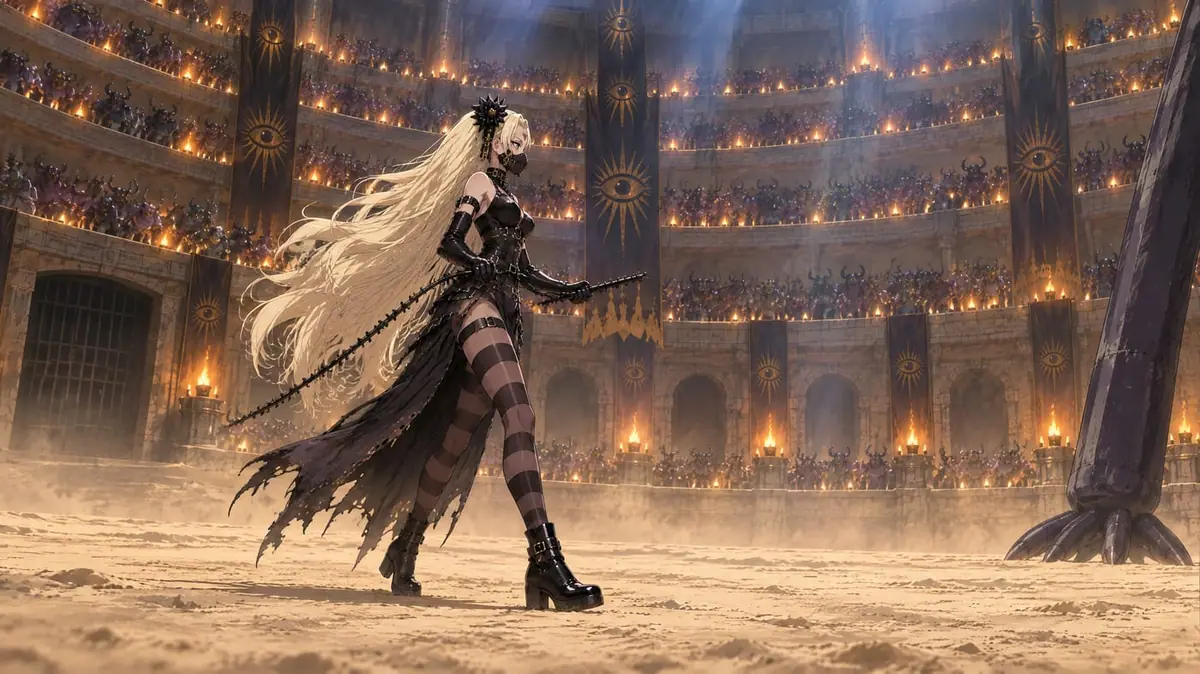 A · revised
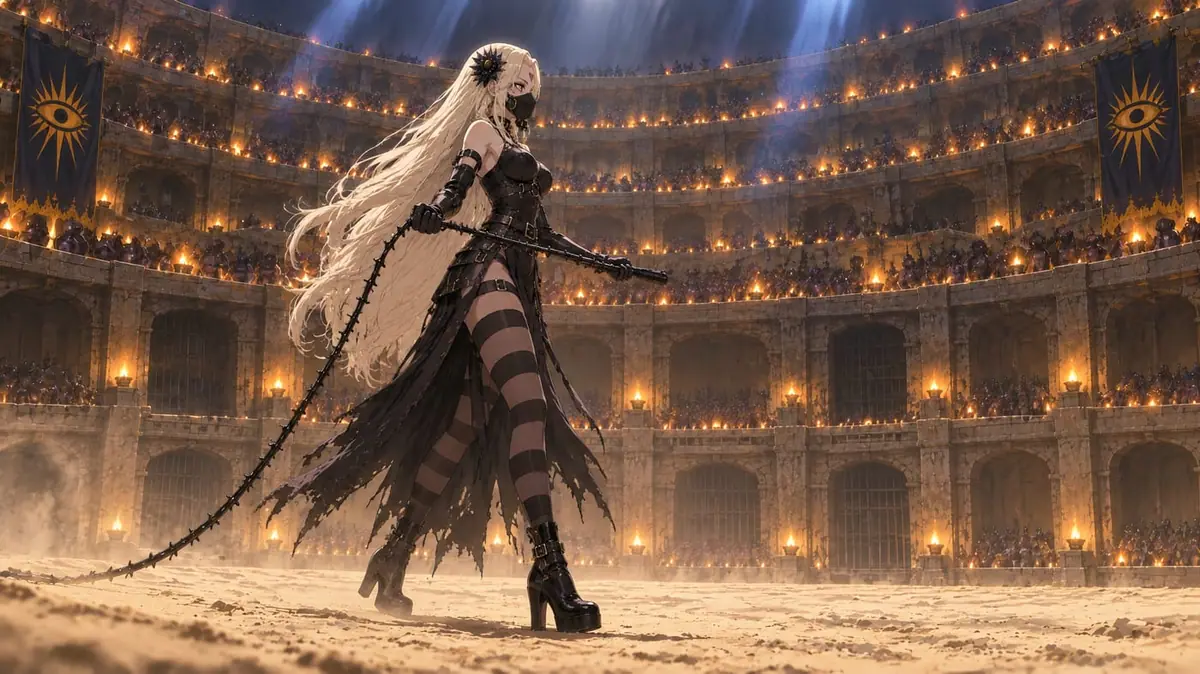 D · Hybrid
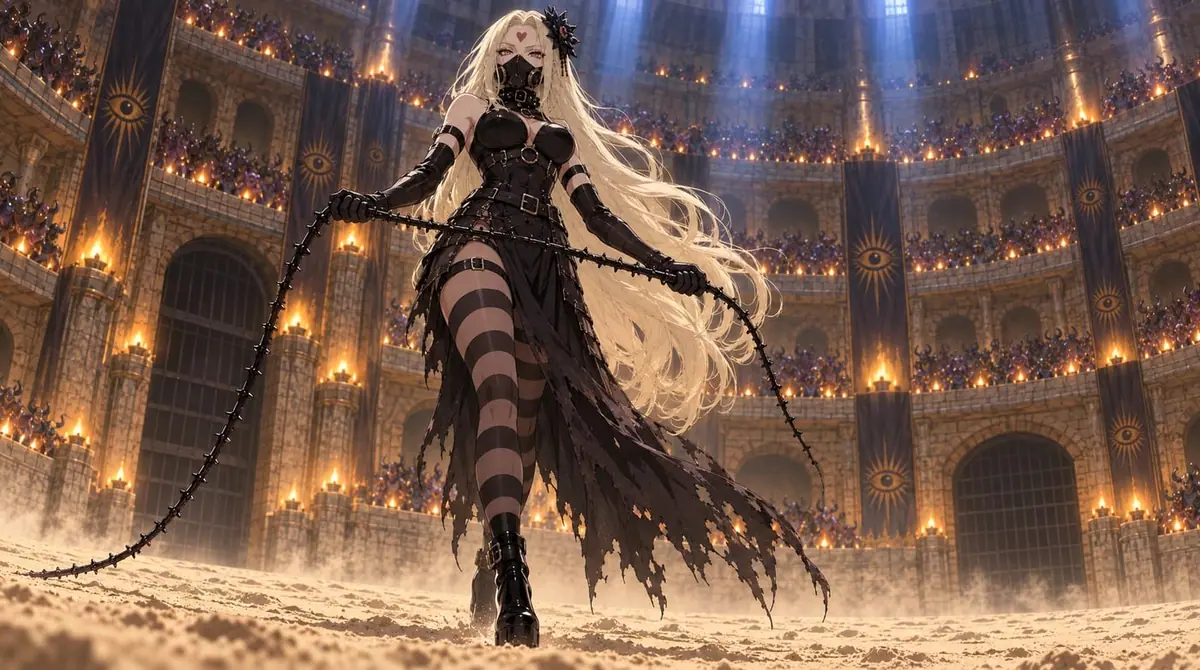 B · Chained
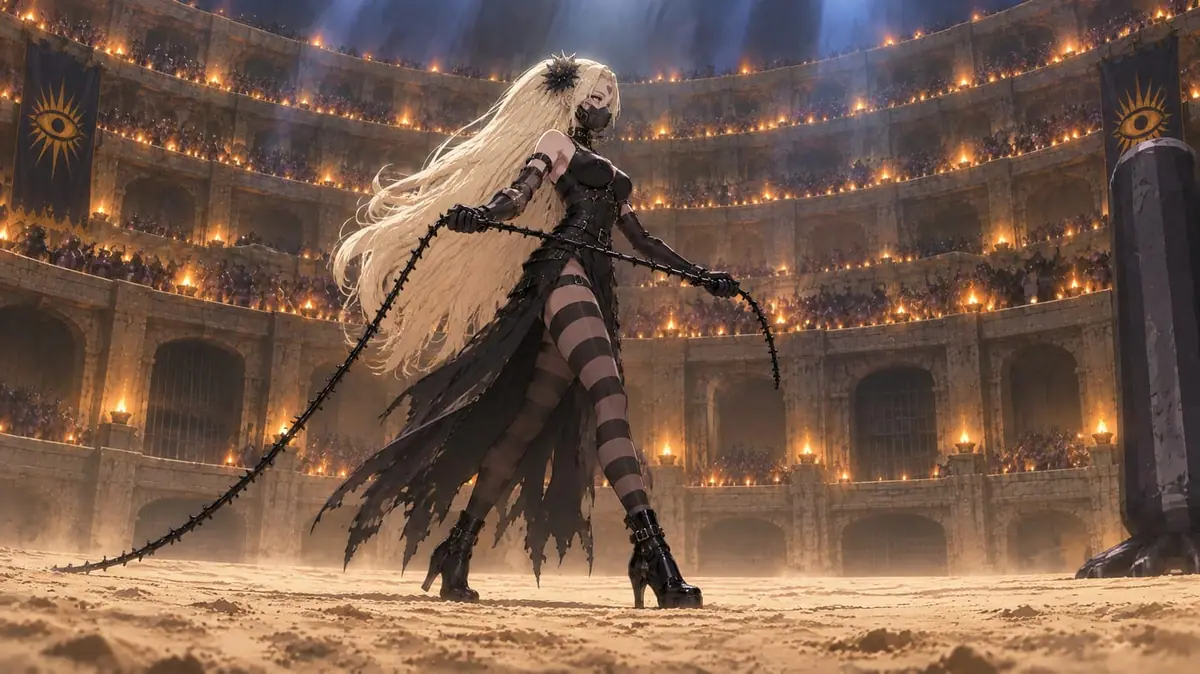 D · second staging
Cut 70 p191 panel 2 (inset)
Close-up: her eyes curve into a smile above the respirator mask.
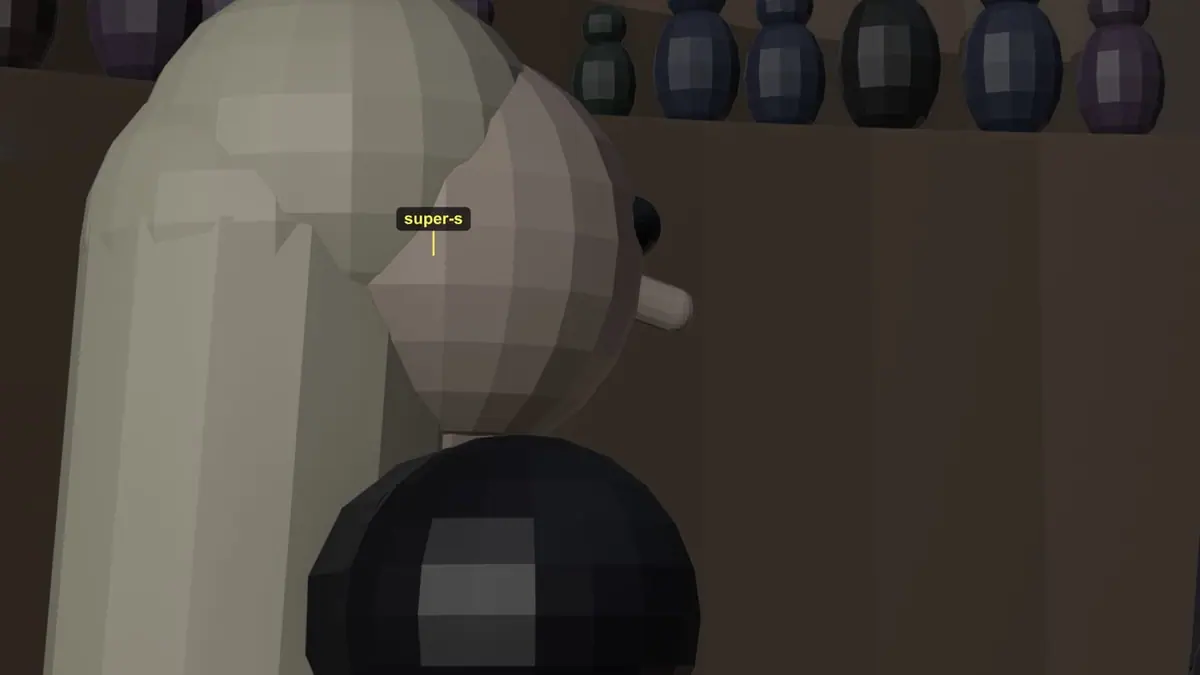 Blocking
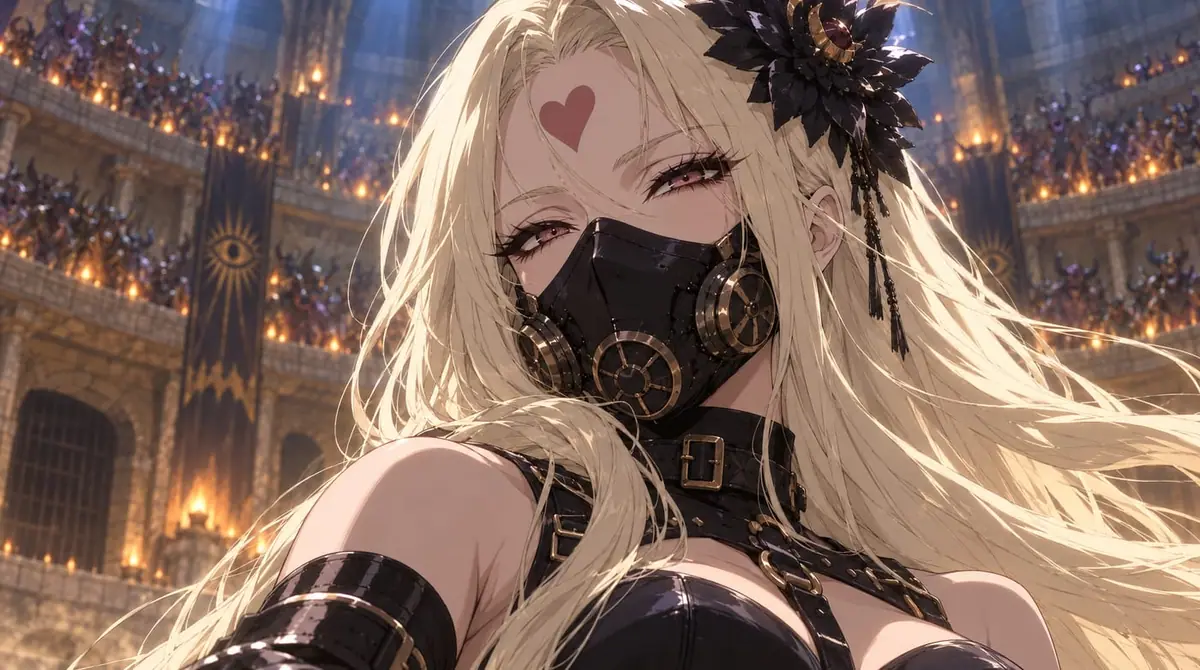 A · first cameras
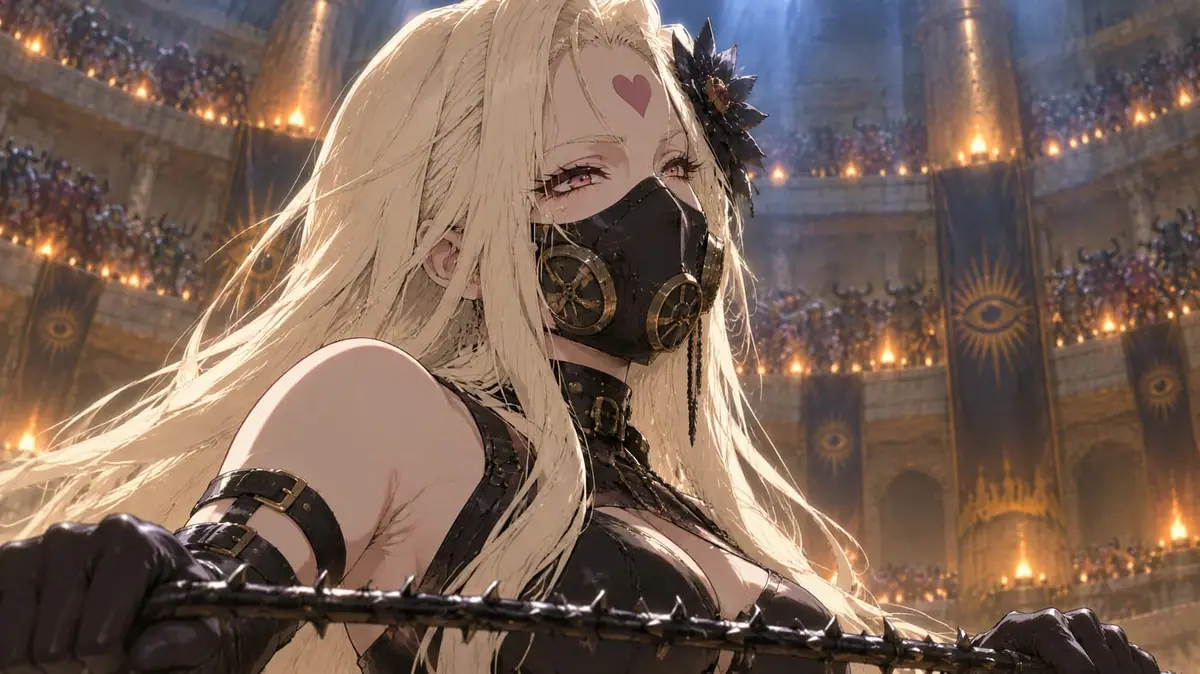 A · revised
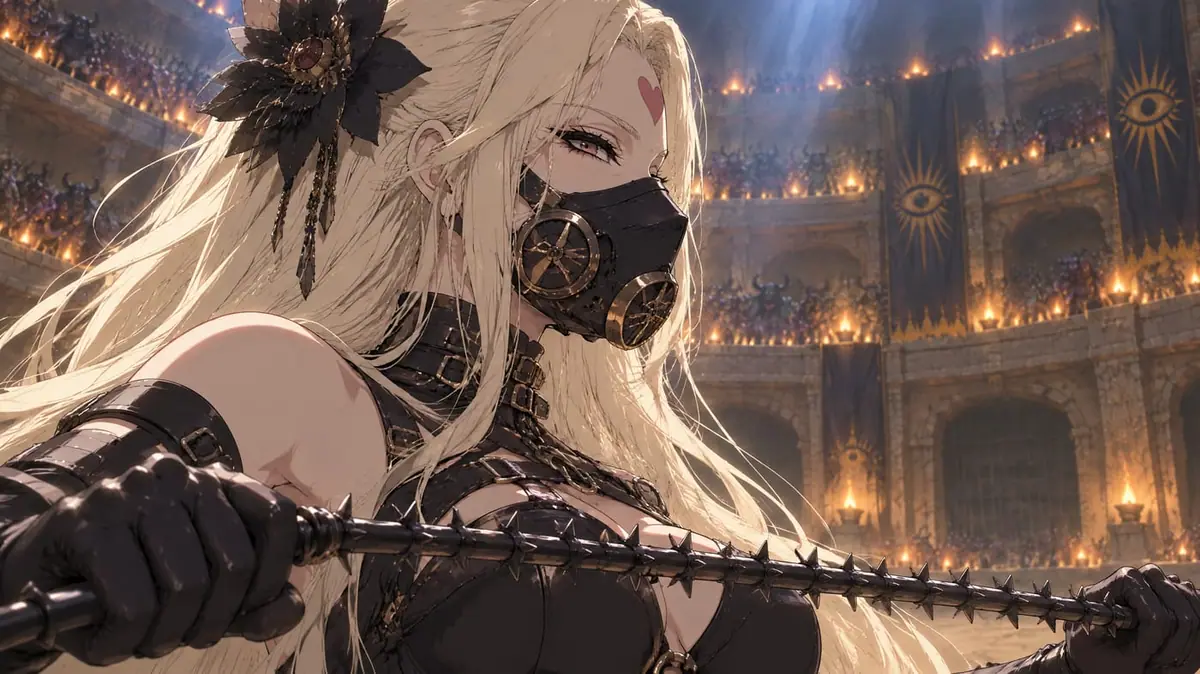 D · Hybrid
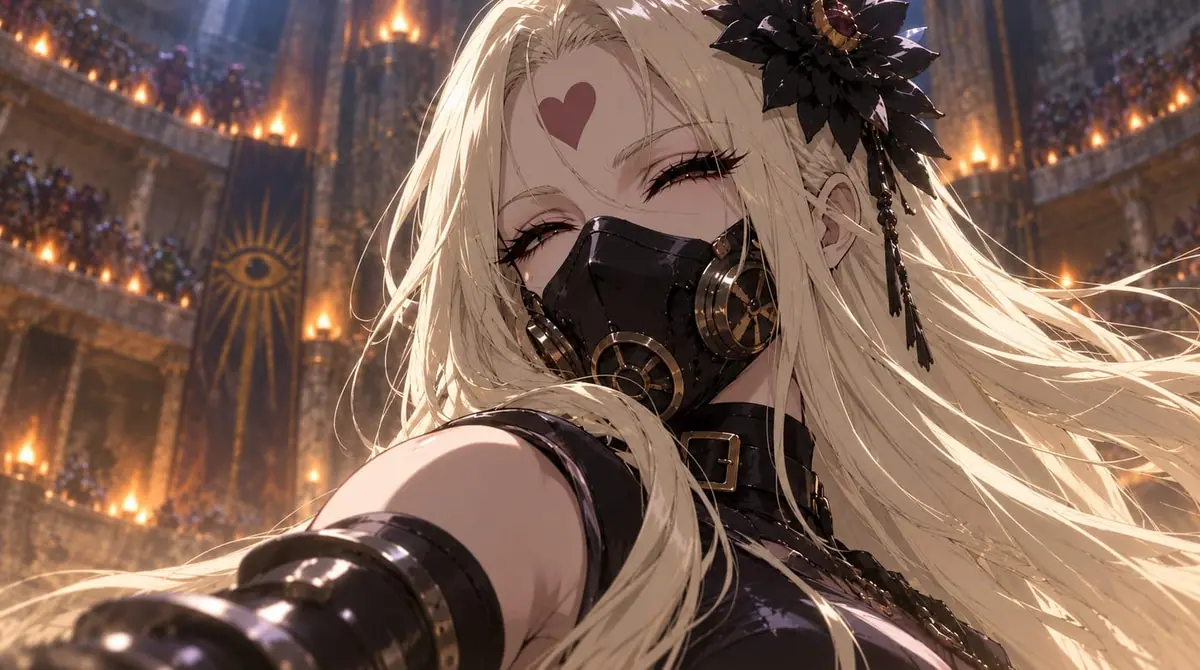 B · Chained
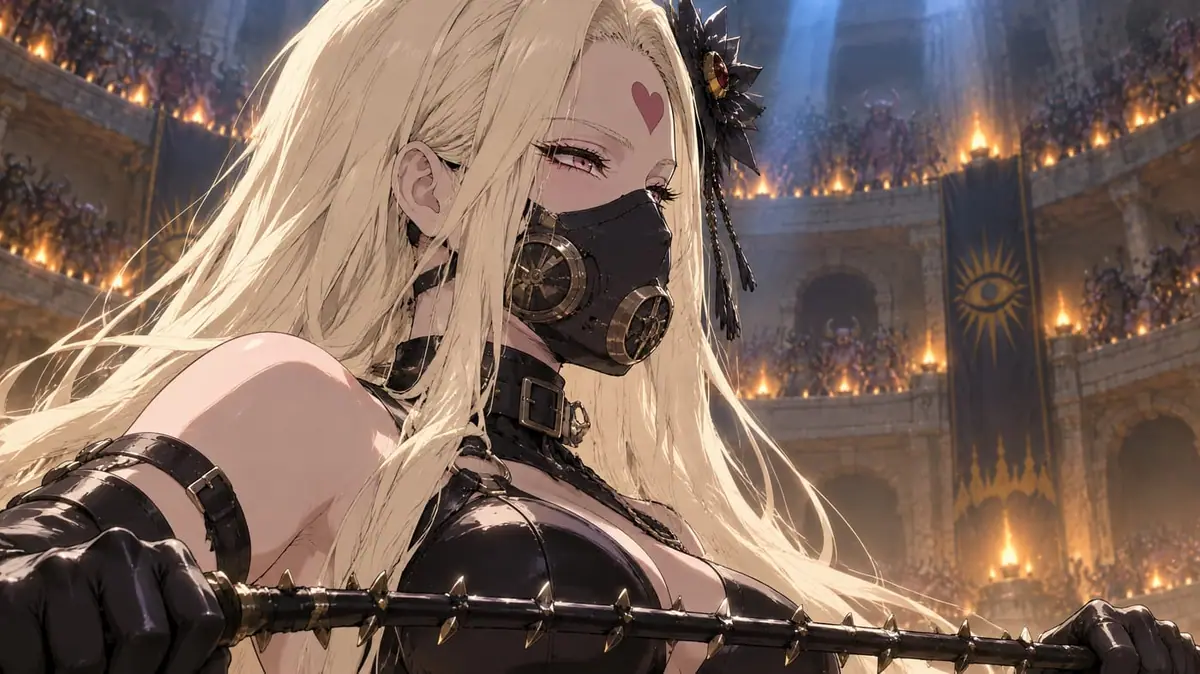 D · second staging
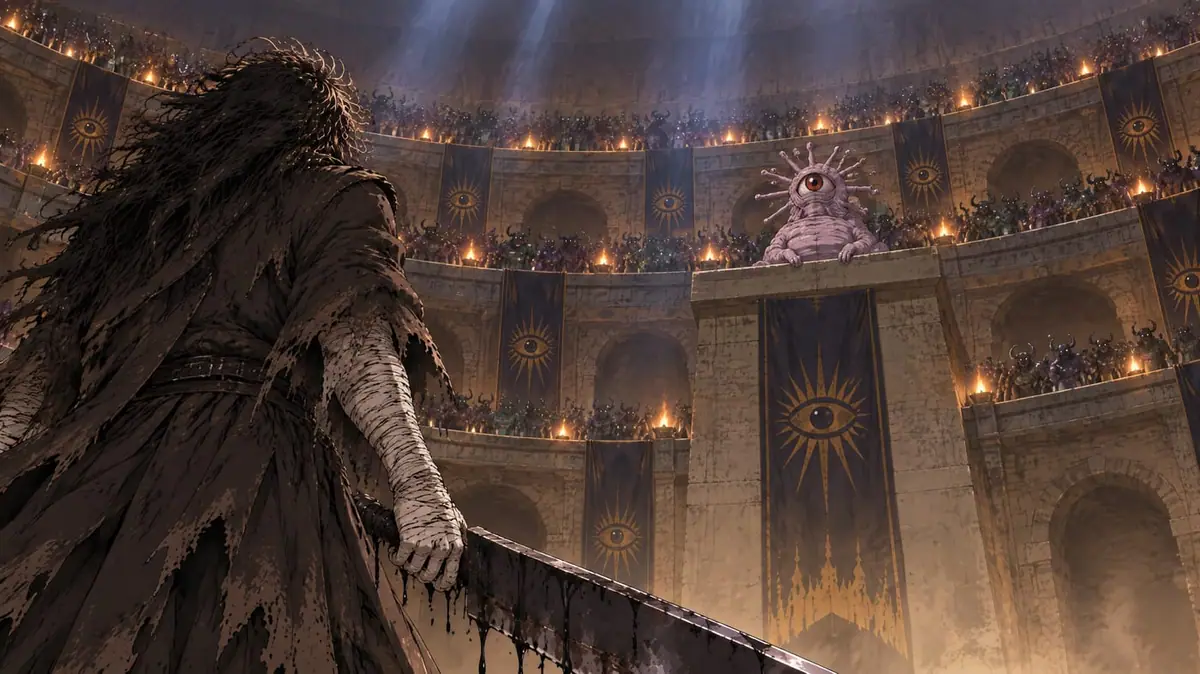
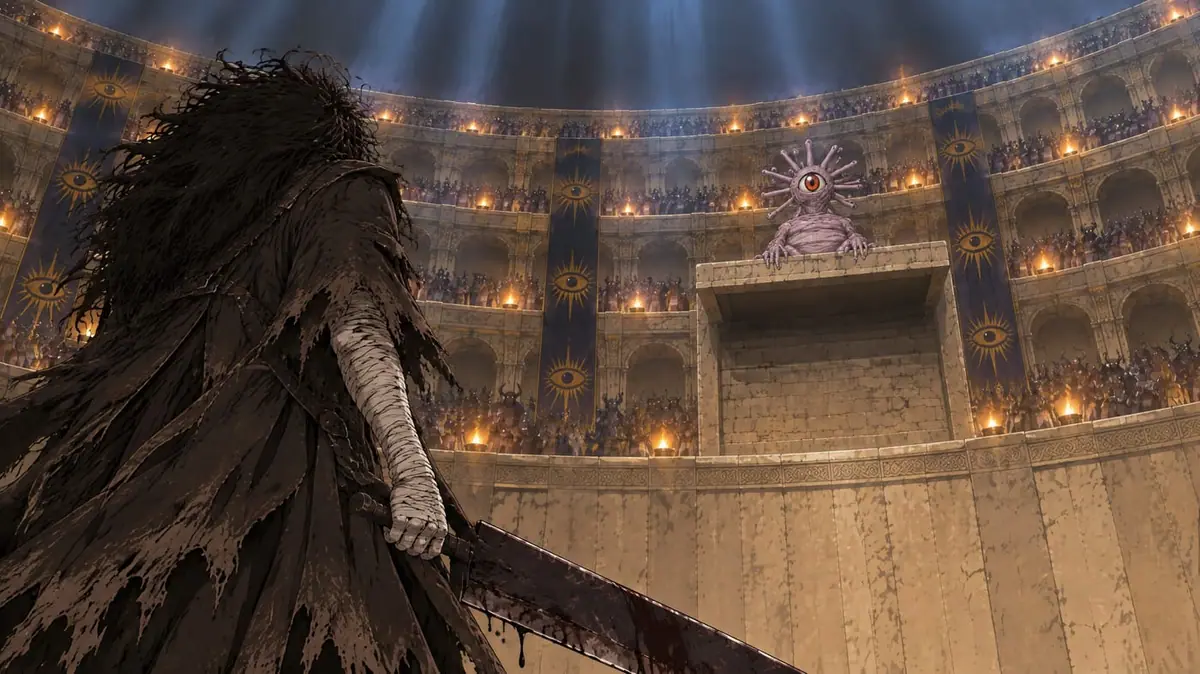
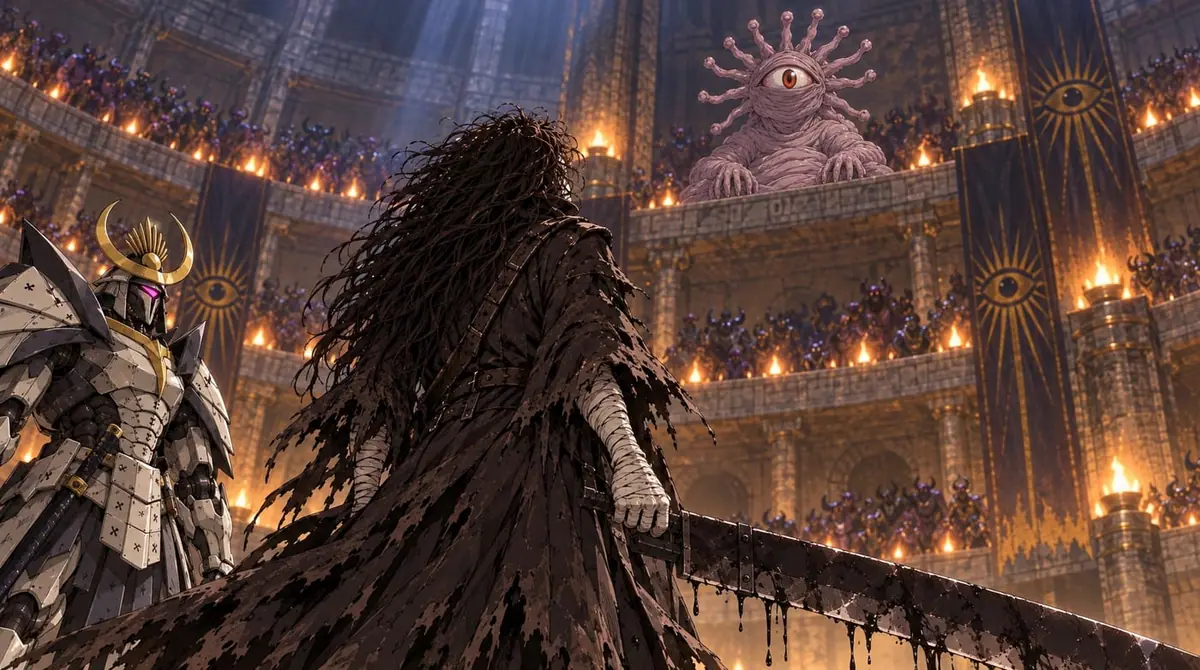
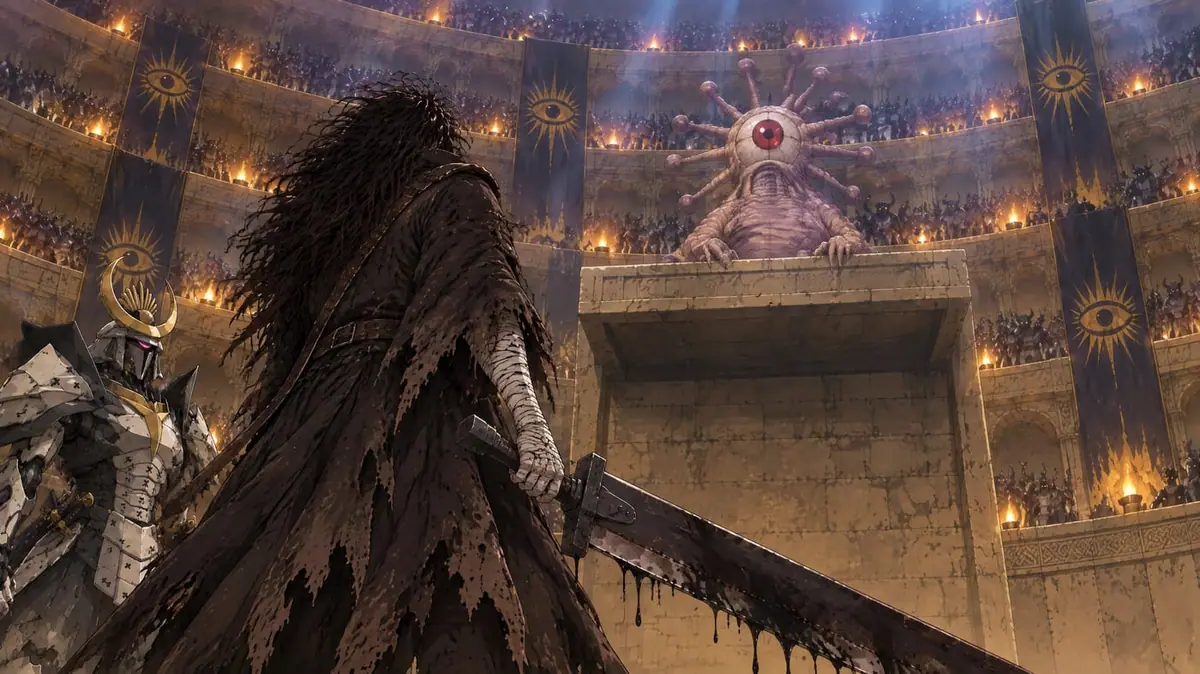
Cut 71 p192 panel 1
Medium from behind the Ripper, tilting up: he lifts his head toward Gyoro-Gyoro on her ledge high on the south wall.
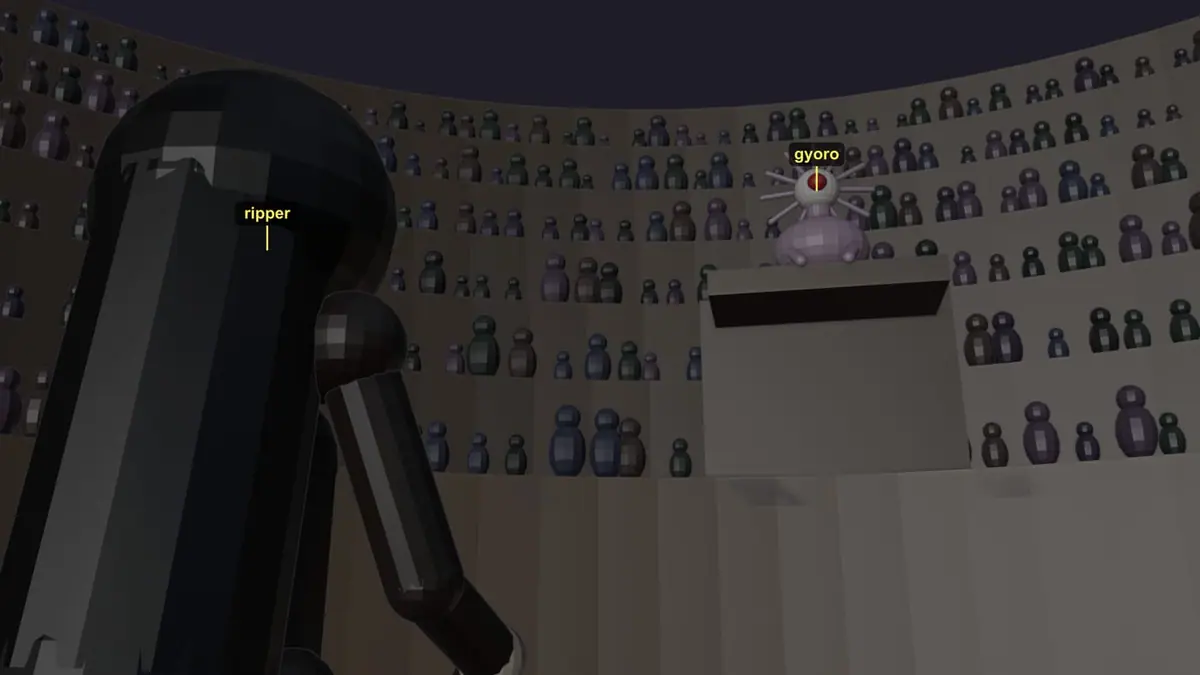 Blocking
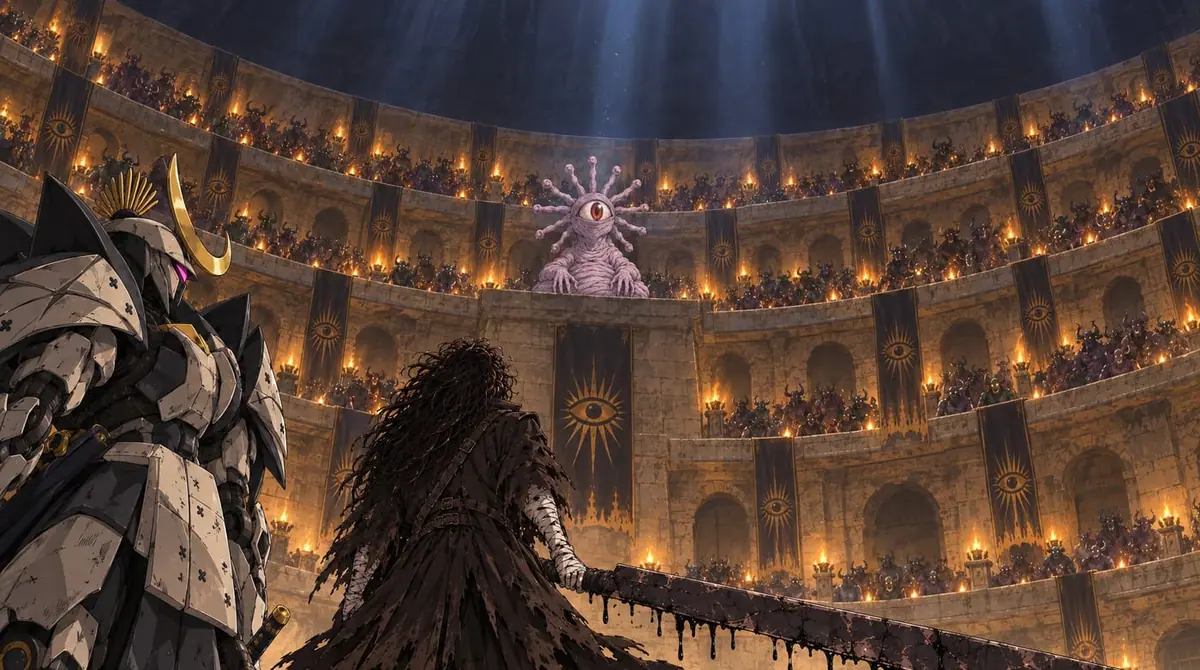 A · first cameras
 A · revised
 D · Hybrid
 B · Chained
 D · second staging
Cut 72 p192 panel 2
Wide, high angle over Gyoro-Gyoro's shoulder: down on the sand Super S (left), the huddled captives, the Ripper and G5 (right); Orochi's huge claws rest at the top edge of frame.
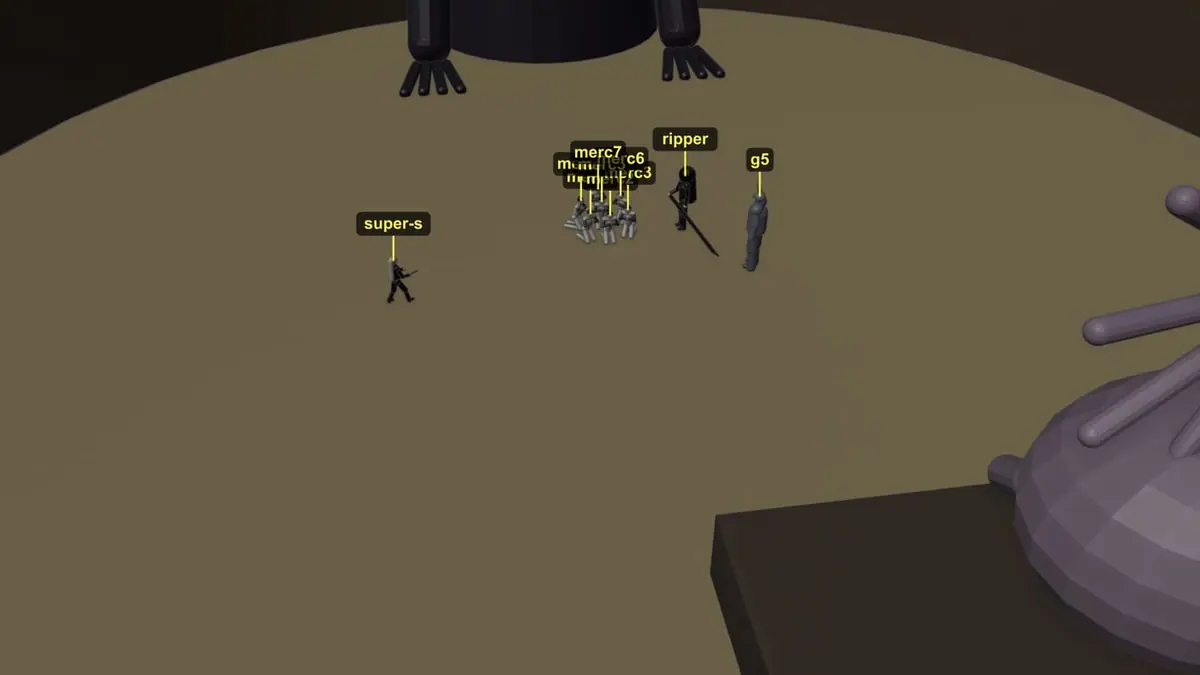 Blocking
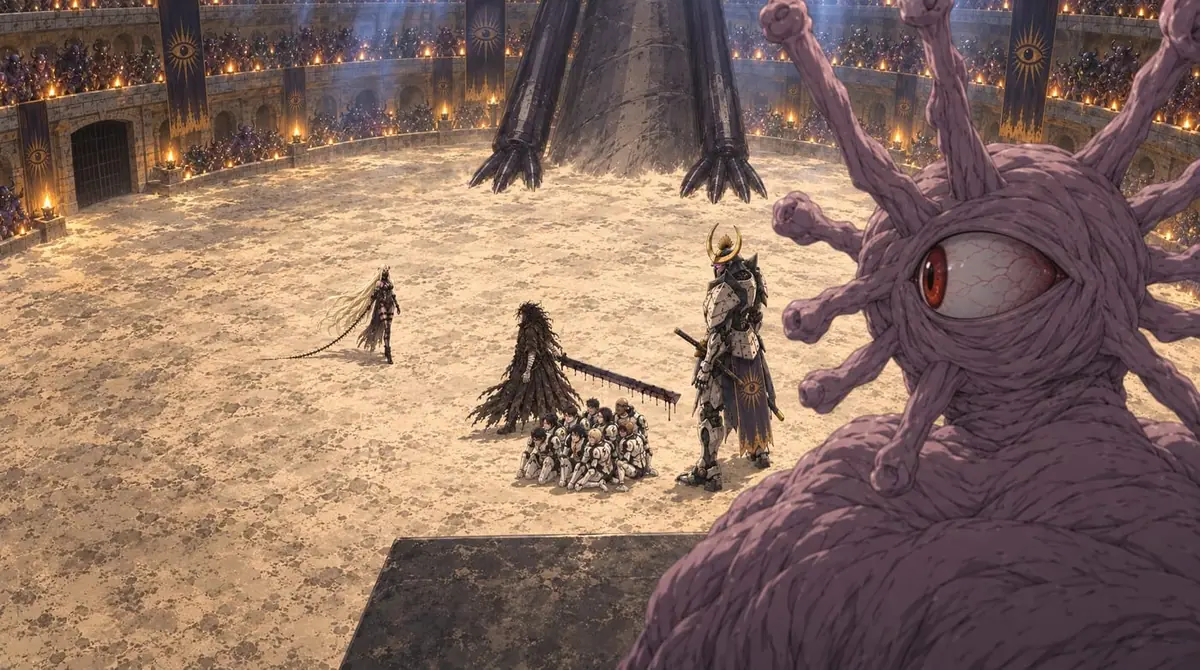 A · first cameras
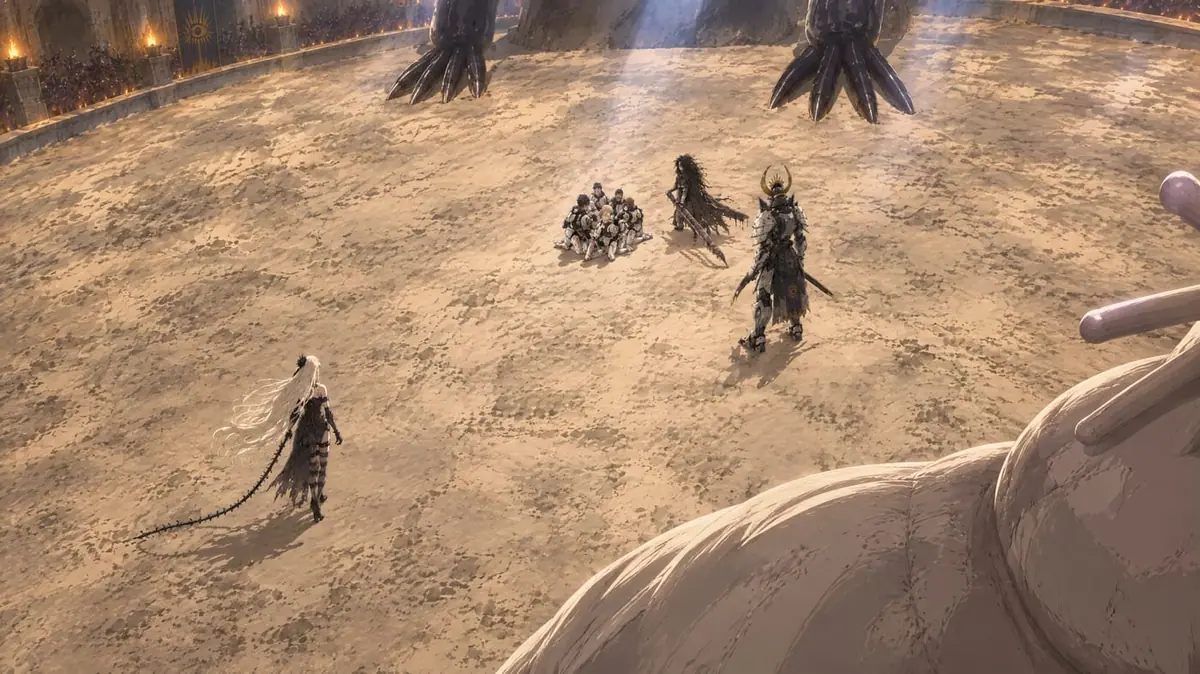 A · revised
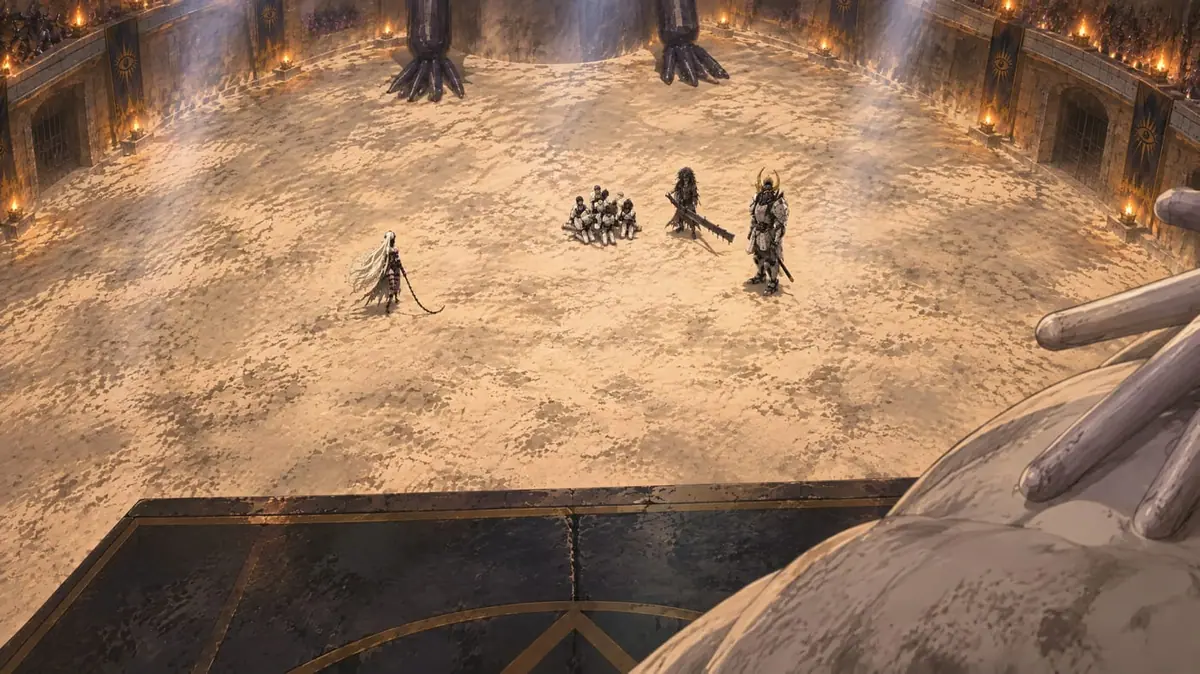 D · Hybrid
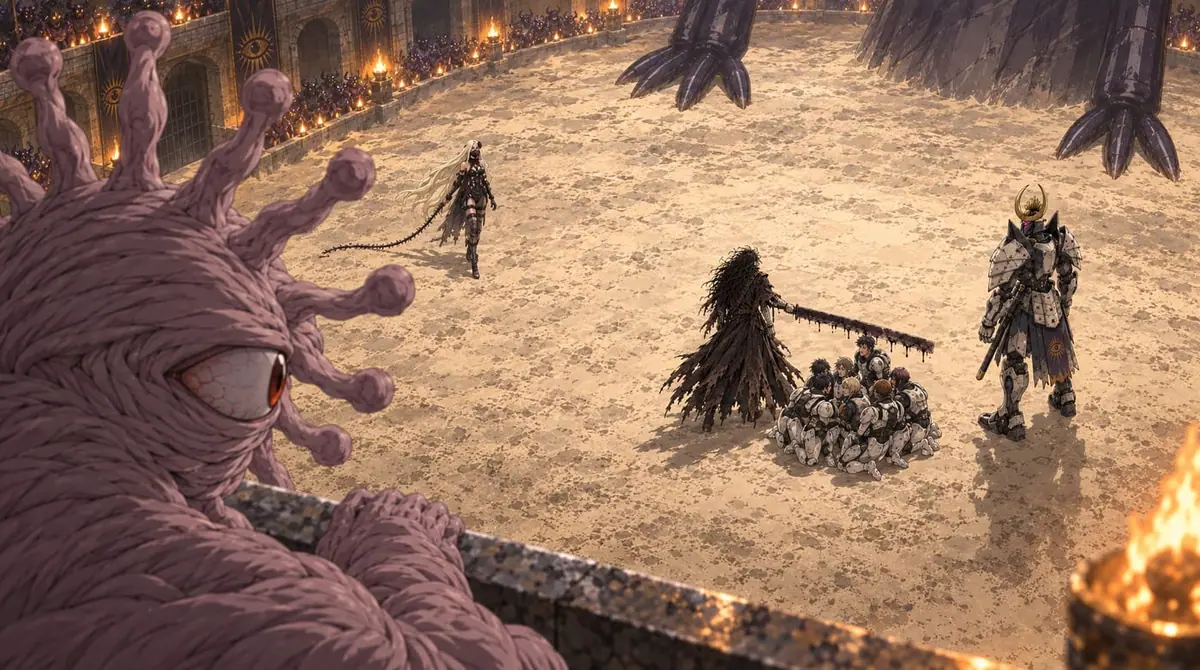 B · Chained
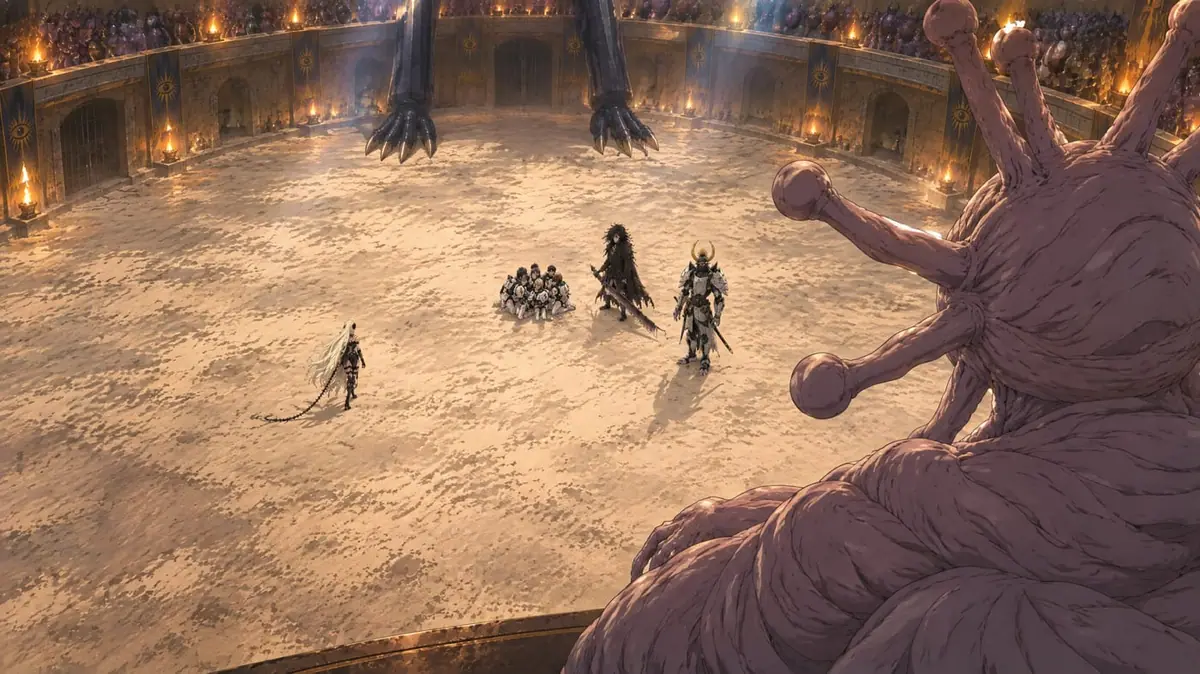 D · second staging
Cut 73 p192 panel 3
Medium: two of the mercenaries clutch each other and plead upward in panic.
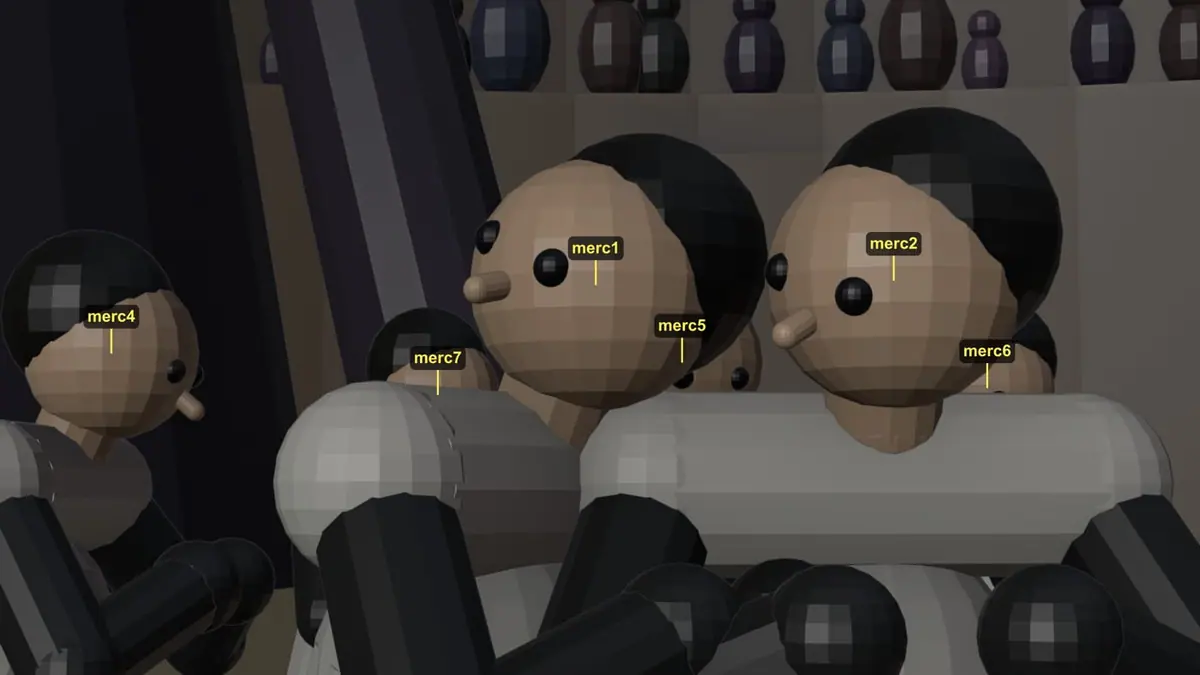 Blocking
 A · first cameras
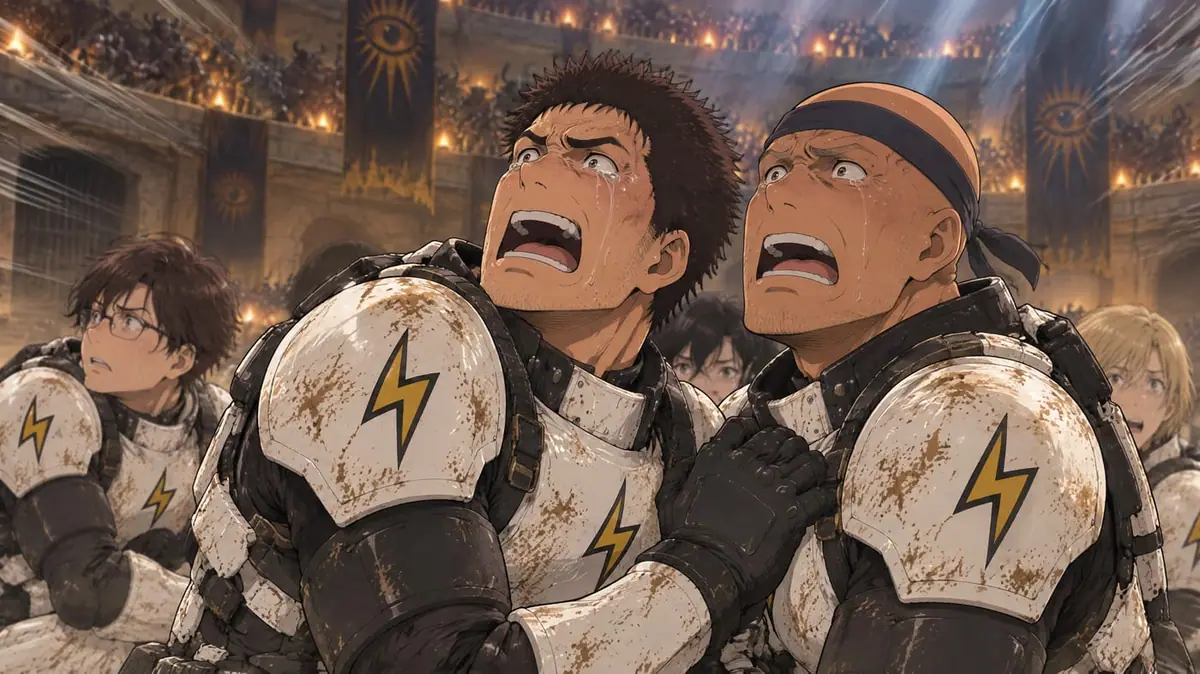 A · revised
 D · Hybrid
 B · Chained
 D · second staging
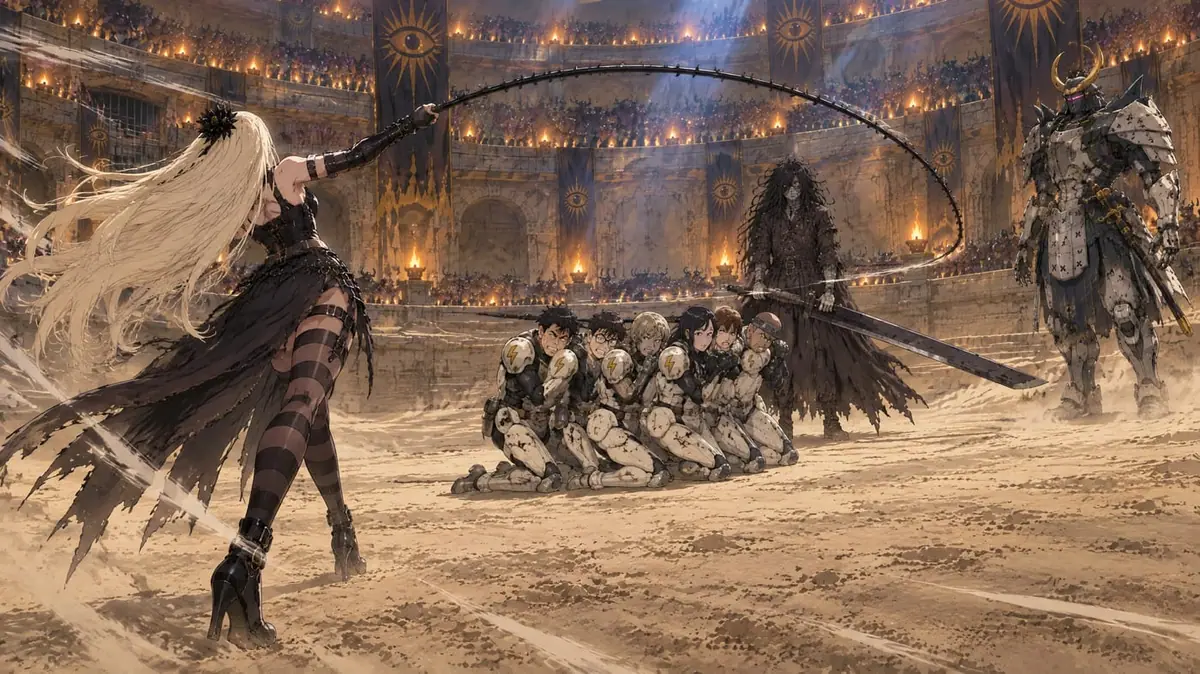
Cut 74 p192 panel 4
Full shot, the camera whipping with the lash: Super S spins on one heel and cracks the whip in a huge arc over the whole huddle.
 Blocking
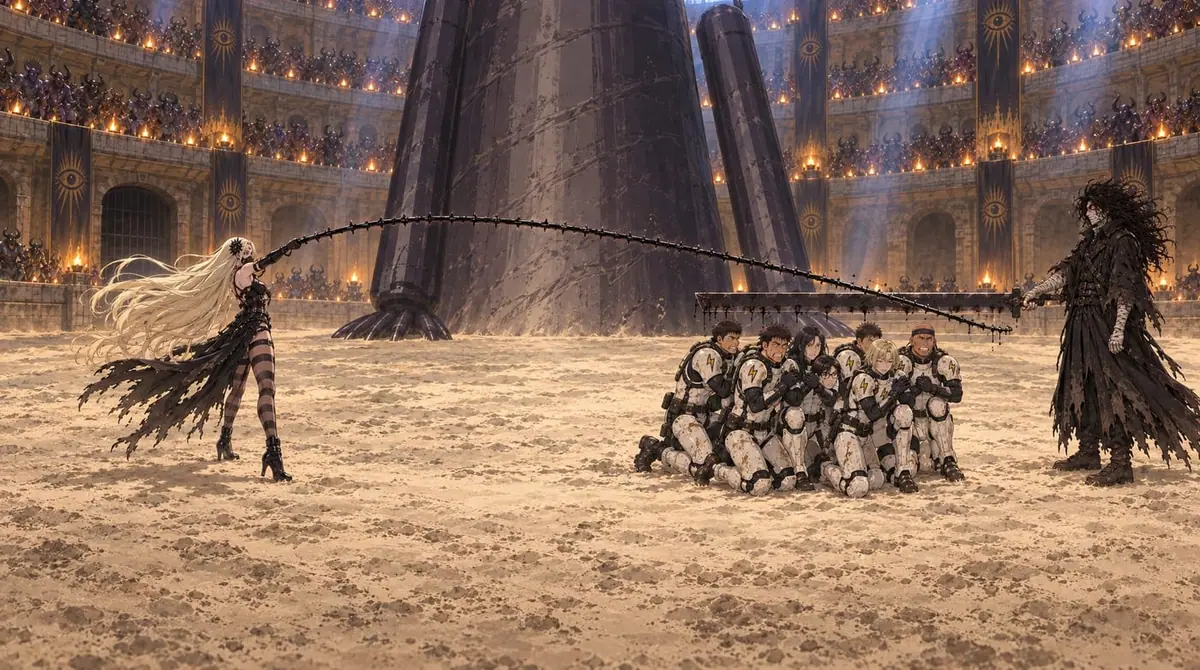 A · first cameras
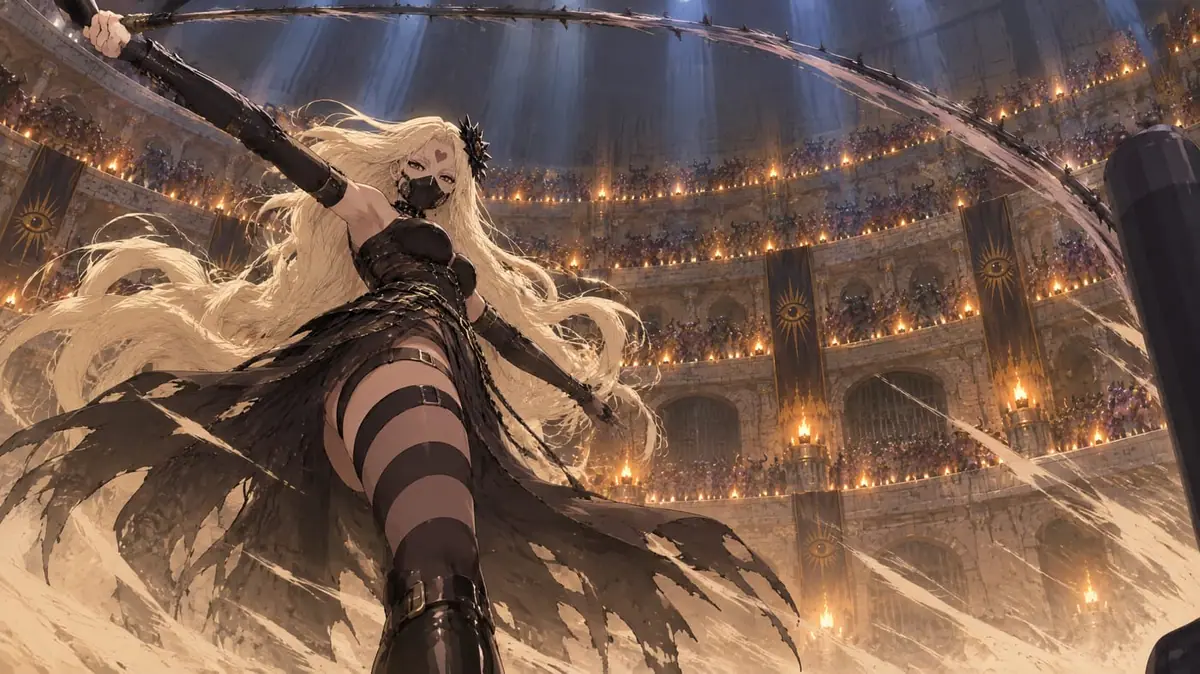 A · revised
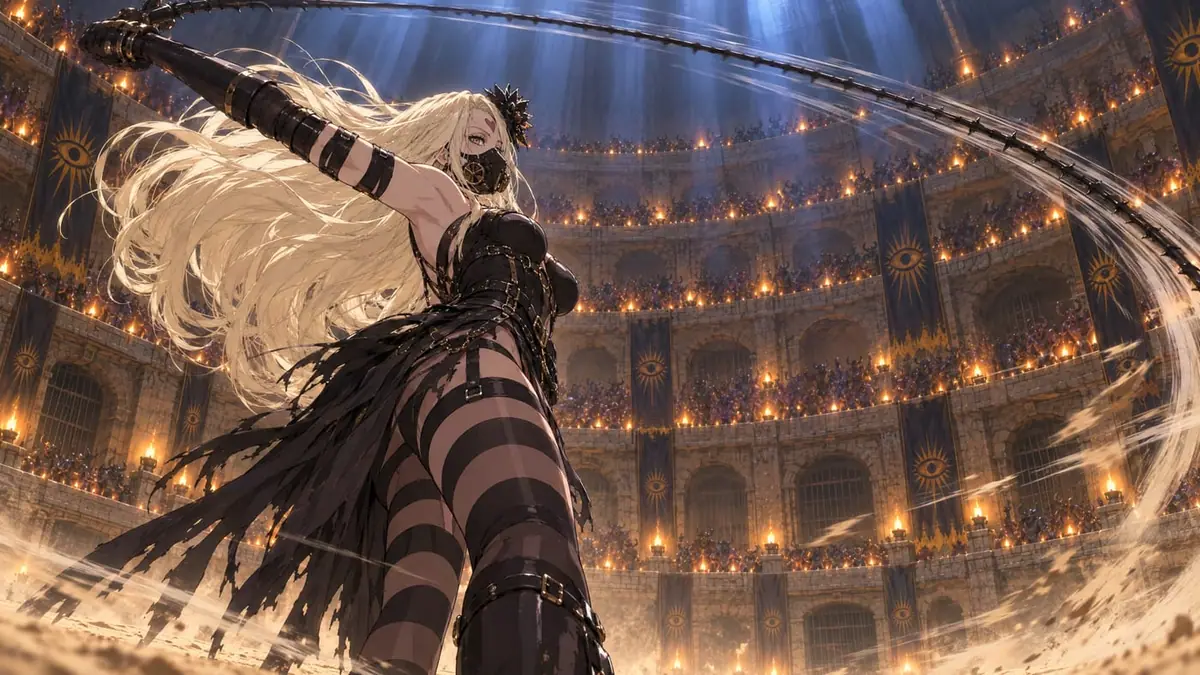 D · Hybrid
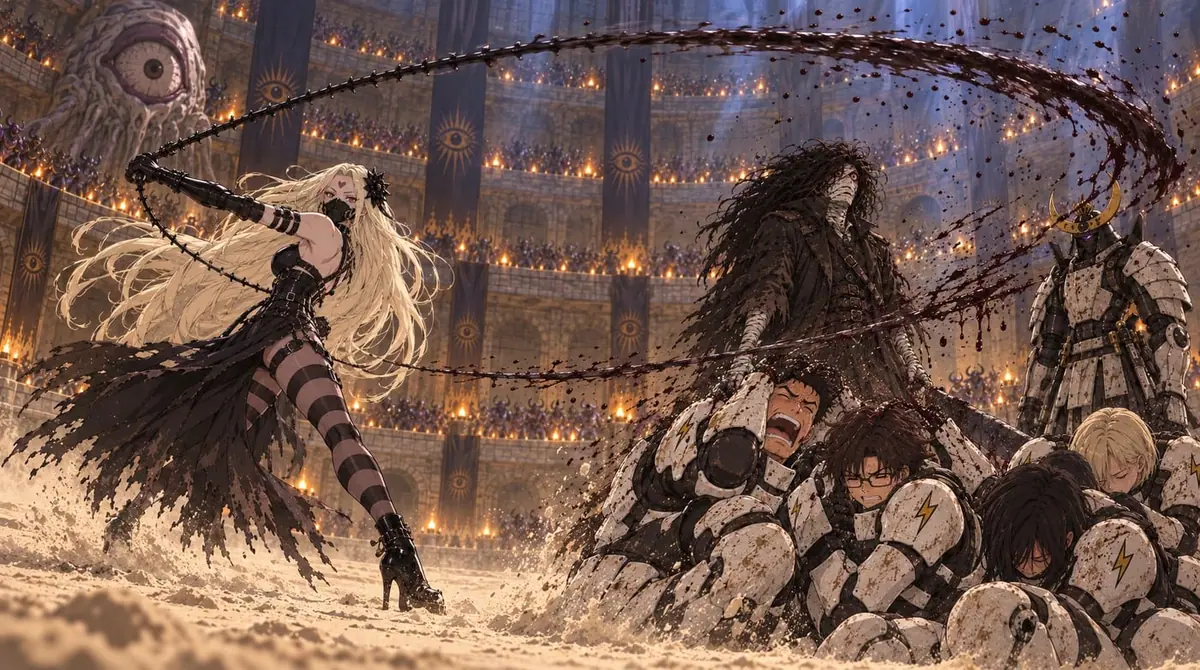 B · Chained
 D · second staging
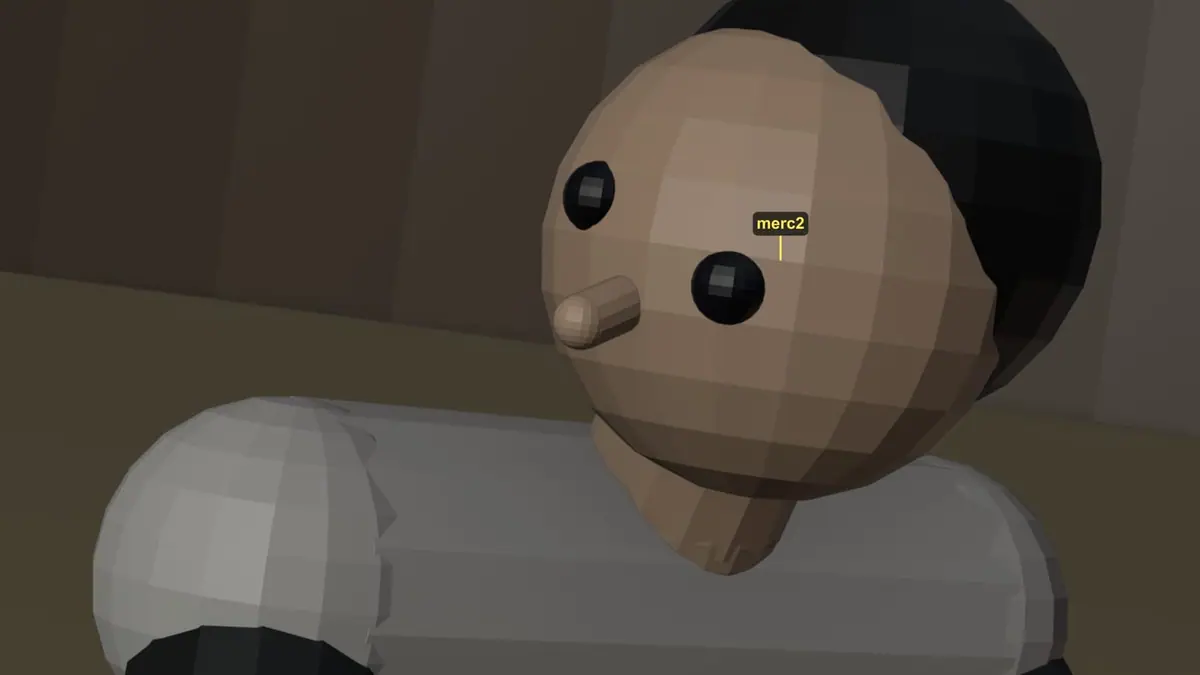
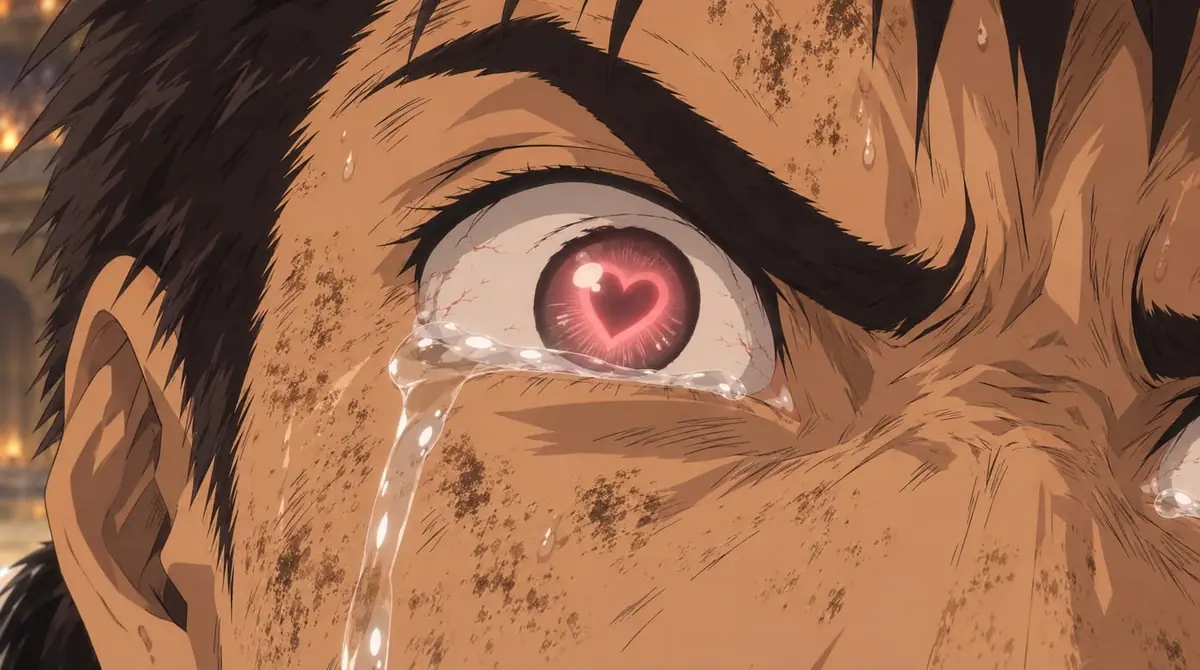
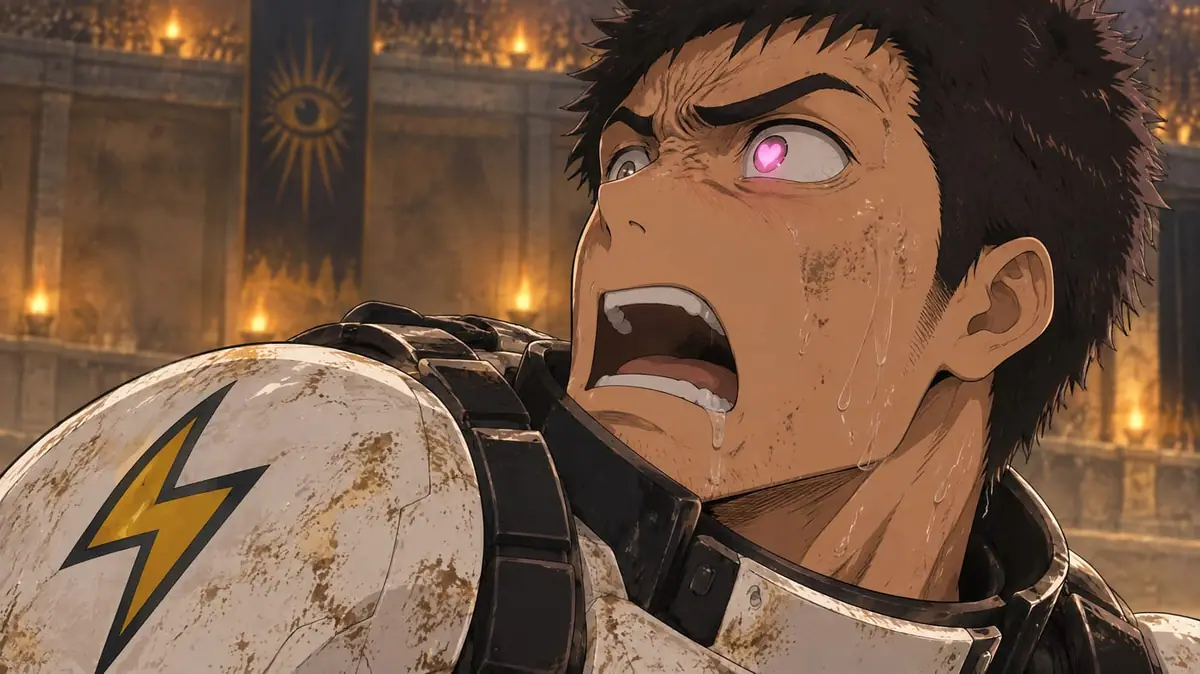
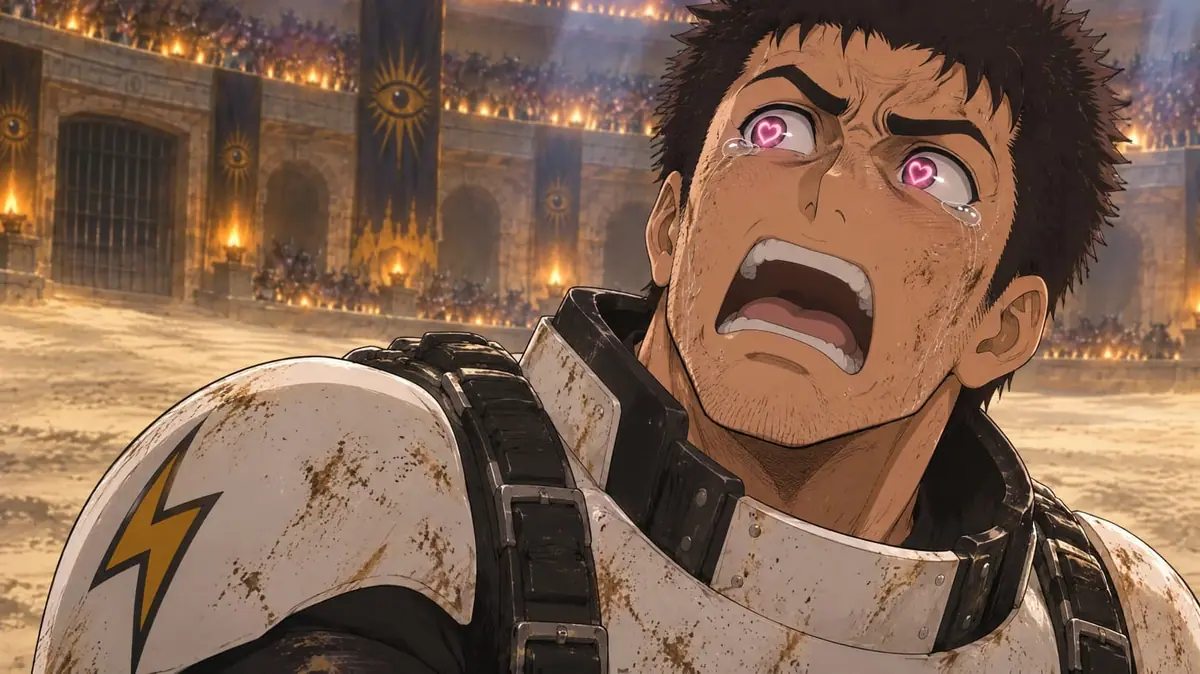
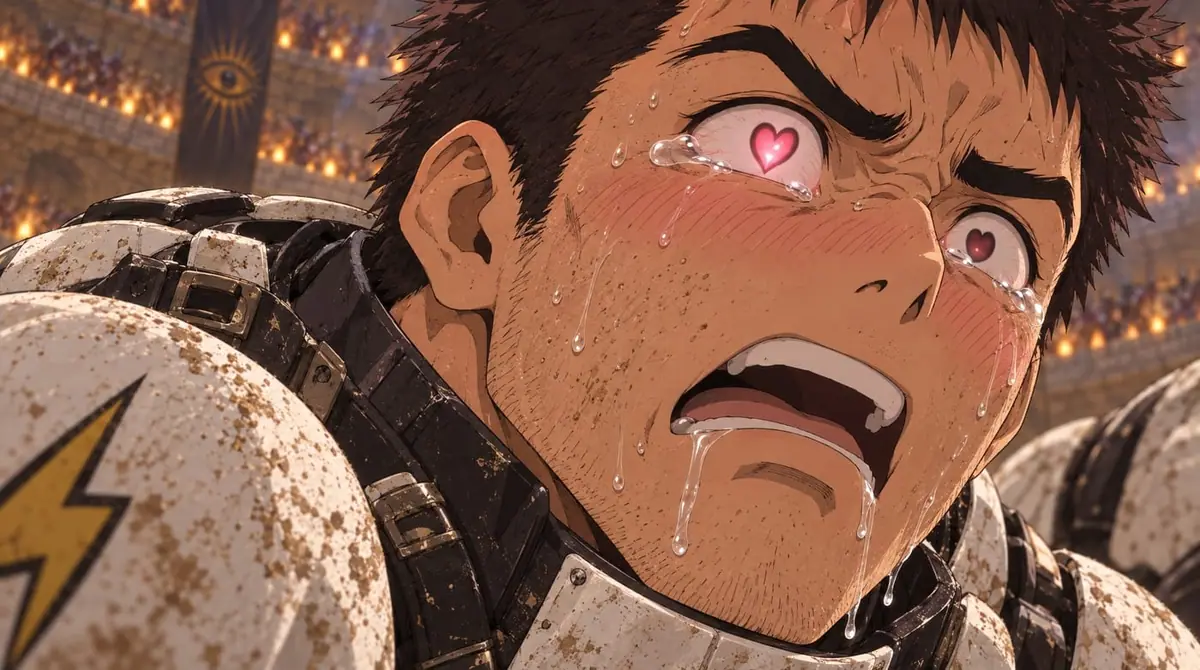
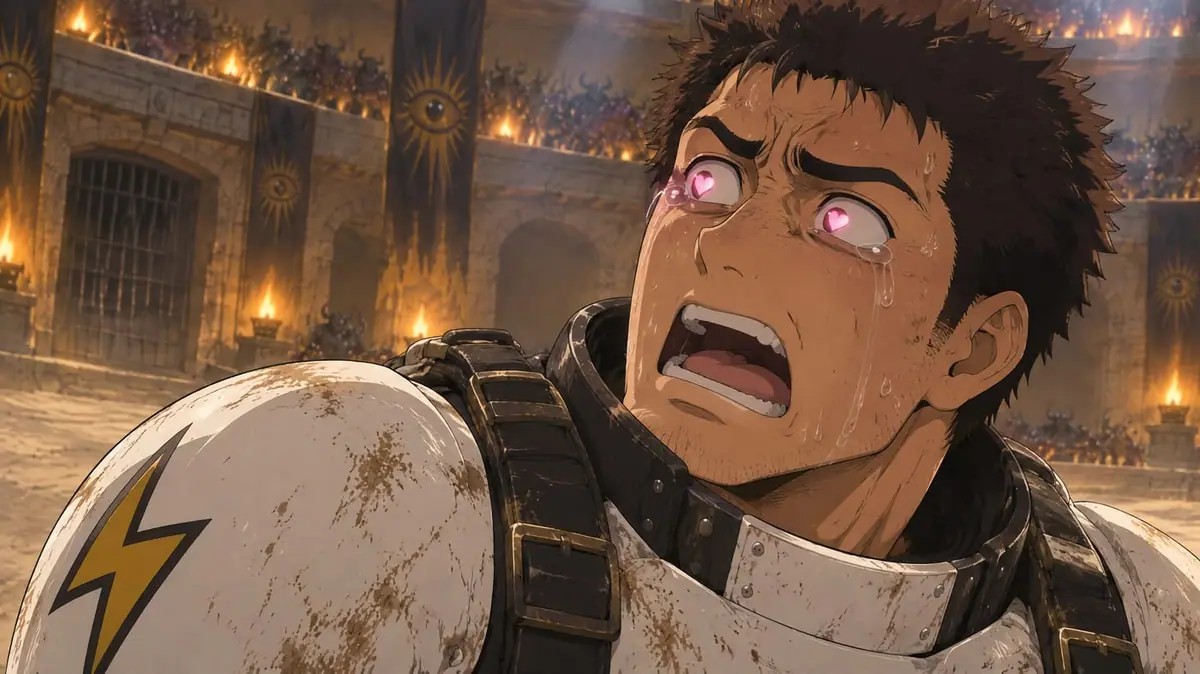
Cut 75 p193 panel 1
Extreme close-up: a mercenary's pupil warps into a glowing heart; he chokes.
 Blocking
 A · first cameras
 A · revised
 D · Hybrid
 B · Chained
 D · second staging
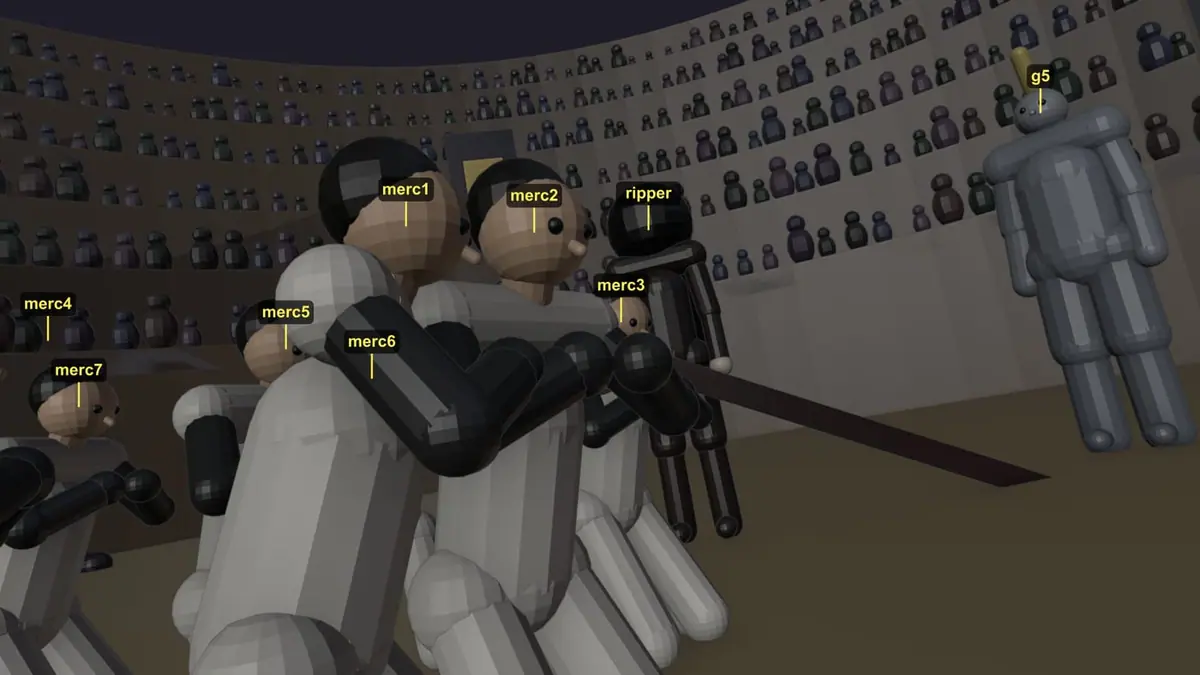
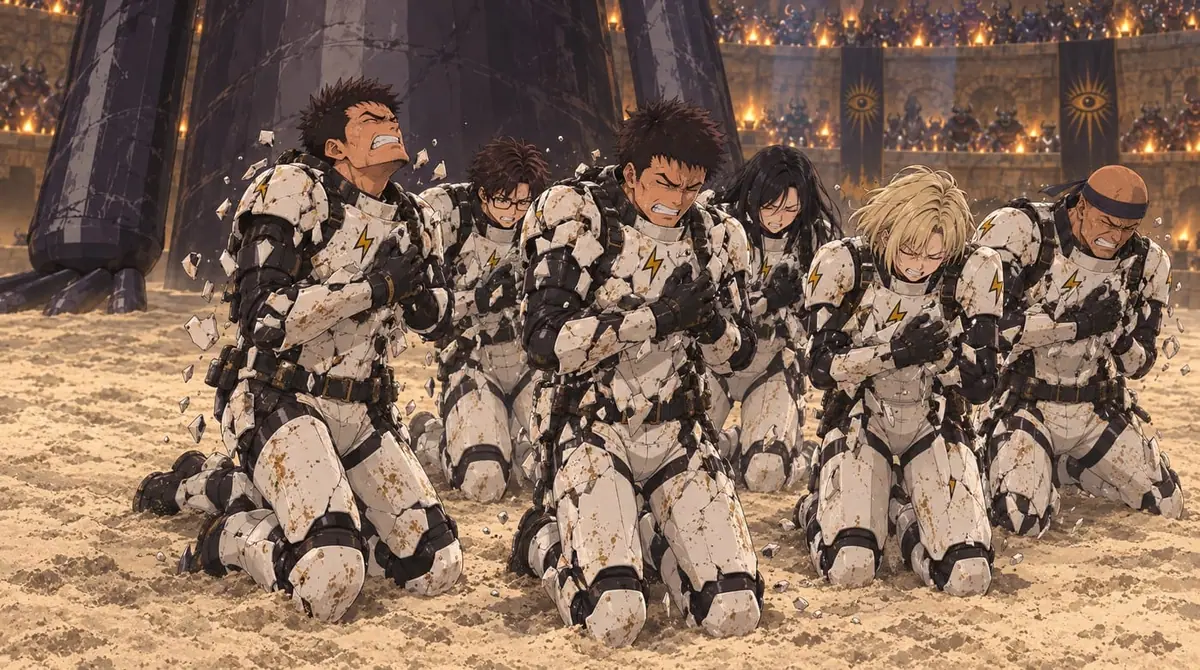
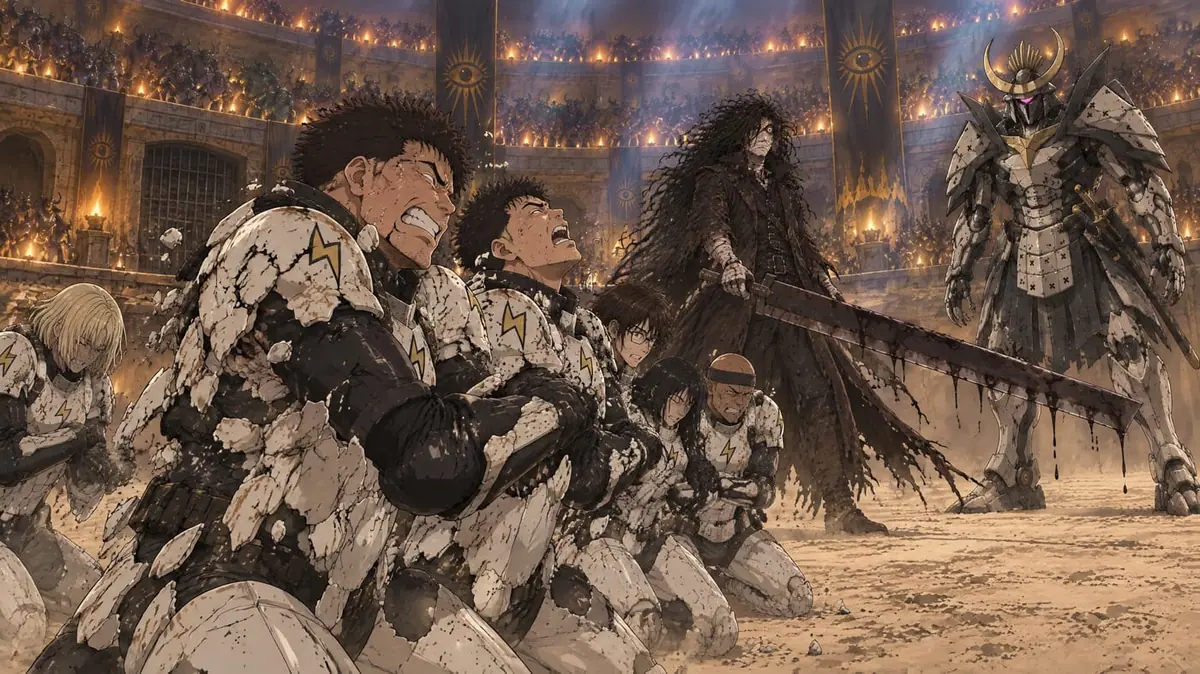
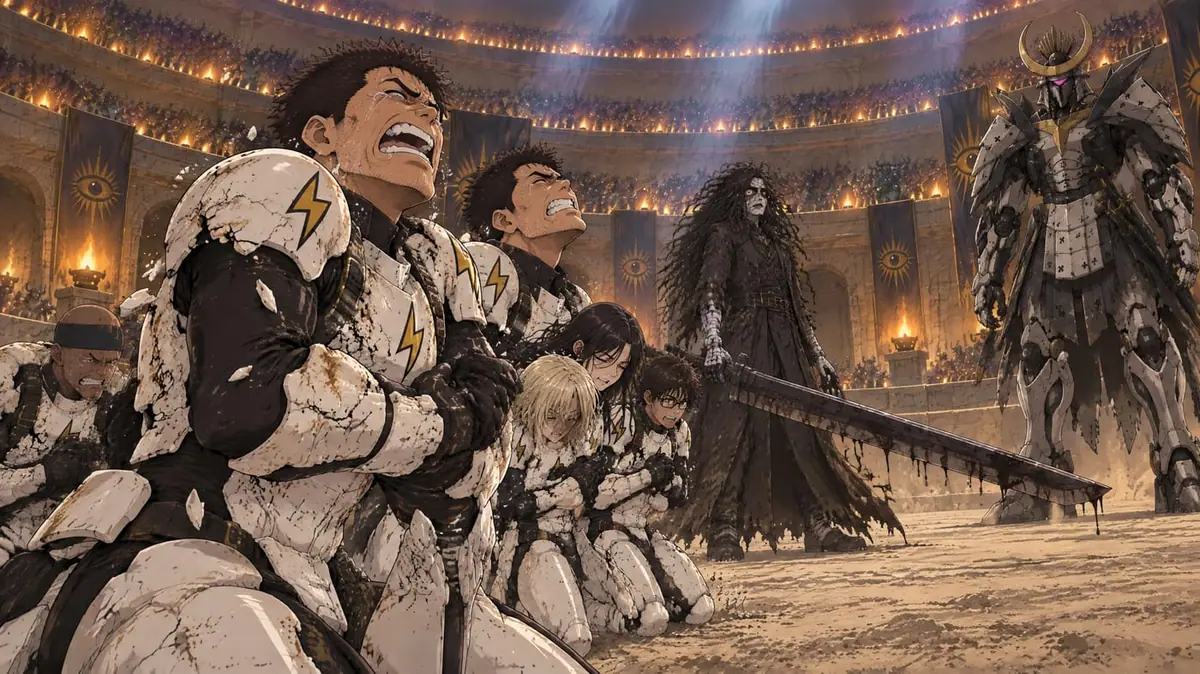
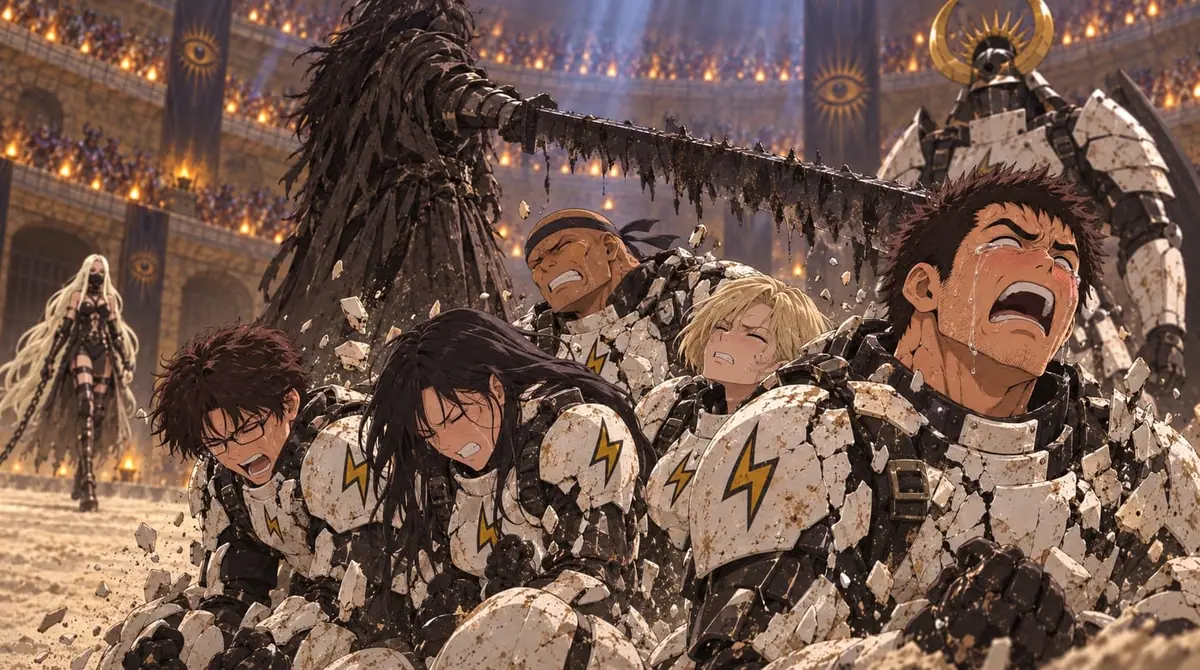
Cut 76 p193 panel 2
Medium, handheld shake: their suits crack and splinter as their bodies convulse.
 Blocking
 A · first cameras
 A · revised
 D · Hybrid
 B · Chained
 D · second staging
Cut 77 p193 panel 3
Wide, debris flying past the lens: they burst up as hulking black brutes and roar, shards of white armour flying.
 Blocking
 A · first cameras
 A · revised
 D · Hybrid
 B · Chained
 D · second staging
05What held: continuity
- The room. With the plates, the apartment is the same room in every cut: the TV wall, the shelves, the balcony light, the kitchen door. Painted from the clay alone, the room is a plain wall and a cardboard box.
- The costumes. Every frame of a scene gets the same sheets and master. Nobody changes clothes, and Silverfang is shirtless in every cut.
- The placement. The hybrid keeps everyone where the blocking put them. In cut 123 it keeps all five people, where painting from the clay alone keeps two.
- The line. The checks caught two crossings before any money was spent.
- The price. Kie sells the same edit at a flat $0.05 for a 2K frame. On fal at its highest quality, the same frame cost $0.10–0.14. We can't tell them apart. Cut 74 was painted both ways on the same camera after a Kie timeout, so you can compare them yourself on the board.
A · From the clayD · HybridCut 121, same blocking. The plate turns the bare walls into the room.
06What didn't: composition
Then we looked at the hybrid frames next to the chained ones, cut by cut. Chaining is less accurate on continuity, but almost every chained frame is the better picture. In the hybrid, the staging is poor, and so is where the people are placed in the shot. Here is cut 76, where the mercenaries' armour cracks as they convulse:
BlockingD · HybridB · ChainedCut 76. Our notes asked for "two faces large in the left foreground". Our camera stood behind the huddle, so the hybrid painted backs and profiles. The chained frame had only the words, and it painted the faces.
The painter follows the blocking so closely that the blocking's composition becomes the frame's composition. So the blocking has to be the better shot.
We went through every pair and found five things the chained frames do that our staging didn't.
- Look down the room. The chained frames point the camera along the apartment toward the balcony, so the low sun is behind the people and the room runs on behind them. Ours mostly faced the side walls. In cut 127 the wall behind Bomb was only 1.15 times as far from the camera as he was, so he was pinned to it.
- Keep the others in the frame. In cuts 126, 127 and 128 our camera saw one person and nobody else. The chained frames show the family in every one: Bomb behind Silverfang, the whole room behind Fubuki. The scene is about Fubuki walking in on a room full of heroes. A single shot against a wall loses that.
- Build the frame in layers. A near shape at the edge of the frame, such as a shoulder or a head of hair, then the subject, then the room.
- Wider lenses, closer in. Our closer cuts used 40–60 mm lenses from further back, which flattens the room into a backdrop. The chained frames read like 24–35 mm lenses used close in.
- Place people for the shot. The chained 124 puts Genos between Fubuki and the family, with the balcony behind him. Our marks put him at the kitchen end. From there, any camera that keeps him on his side of the line looks straight at the closet.
124 · against the closet / down the room to the balcony
DB126 · alone on the floor / Bomb behind him, the window beyond
DB127 · pinned to the wall / Silverfang's hair in the foreground, the balcony light
DB128 · a single against the kitchen / the family she came to recruit behind her
DB73 · two faces alone / the Ripper and G5 looming behind them
DB74 · Super S alone / the lash over the whole huddle, the Ripper and G5 beyond
DB71 · the Ripper alone / G5 framing the left
DBHybrid on the left, chained on the right, with the difference named above each pair.
We then measured the first staging the same way for every cut: how many other people are in the frame, how far the room runs behind the subject compared with how far the subject is, and how far the subject's face turns from the camera. The numbers say what the eye says. The table is in section 08, beside the second staging.
07What didn't: which way a mannequin faces
The second weakness is smaller, but it kept coming up. The painter often couldn't tell which way a mannequin was facing. In four of the nineteen hybrid cuts (70, 75, 77 and 126), it turned someone the wrong way or restaged them, even though the prompt also said it in words, such as "in profile, facing screen right". Painting from the clay alone made the same mistakes.
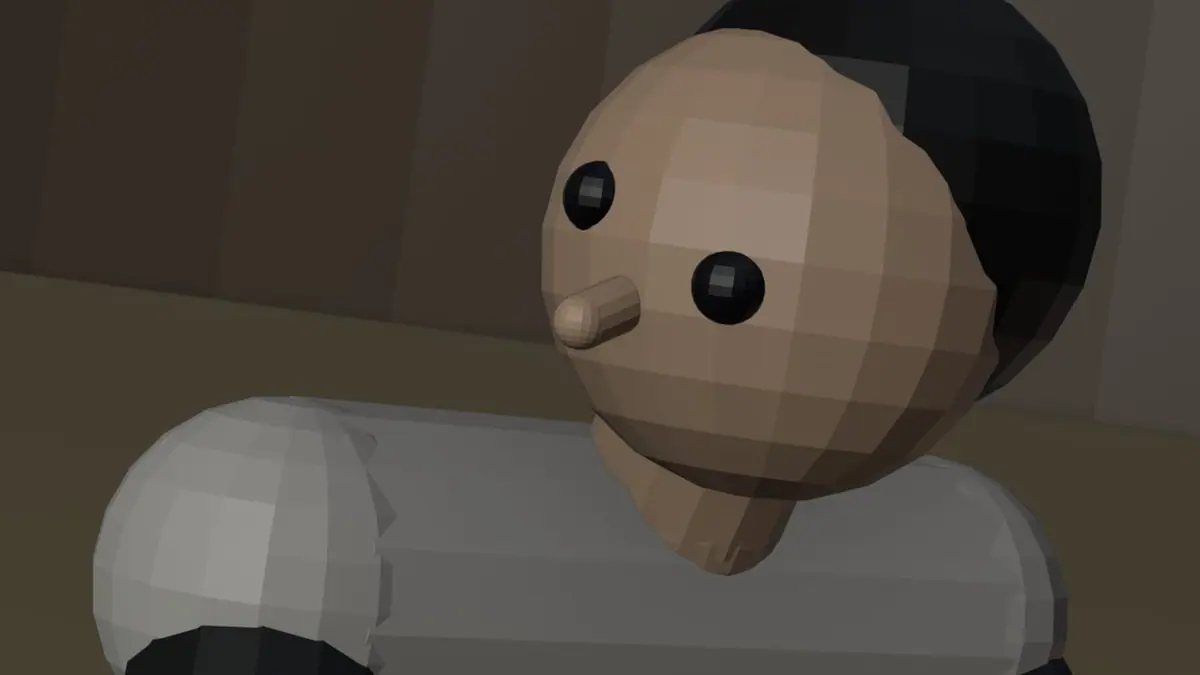
A mannequin's face was two dots and a small nose on a ball. From behind, in profile, or on an all-black costume there was almost nothing to read, so the painter fell back on faces turned toward the camera. The mannequins now have faces: eye whites with pupils, brows, a mouth, a bold nose, and ears. The ears are what tells a profile from the back of a head.
 75 · beforePainted: turned
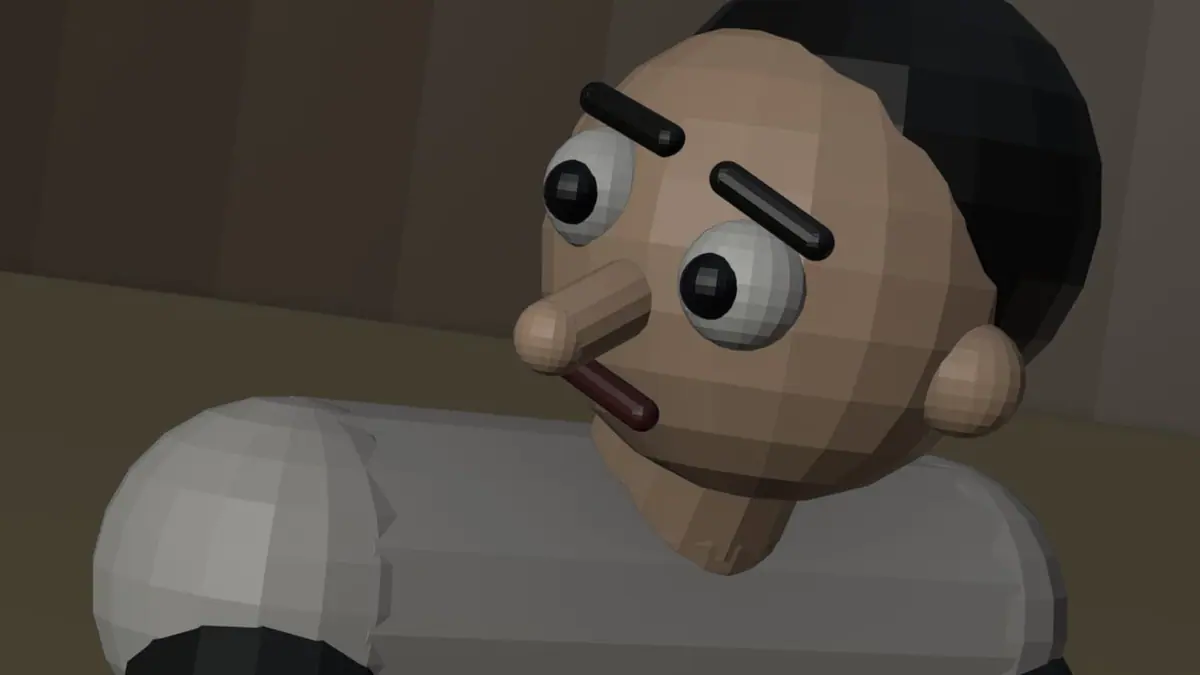 75 · now
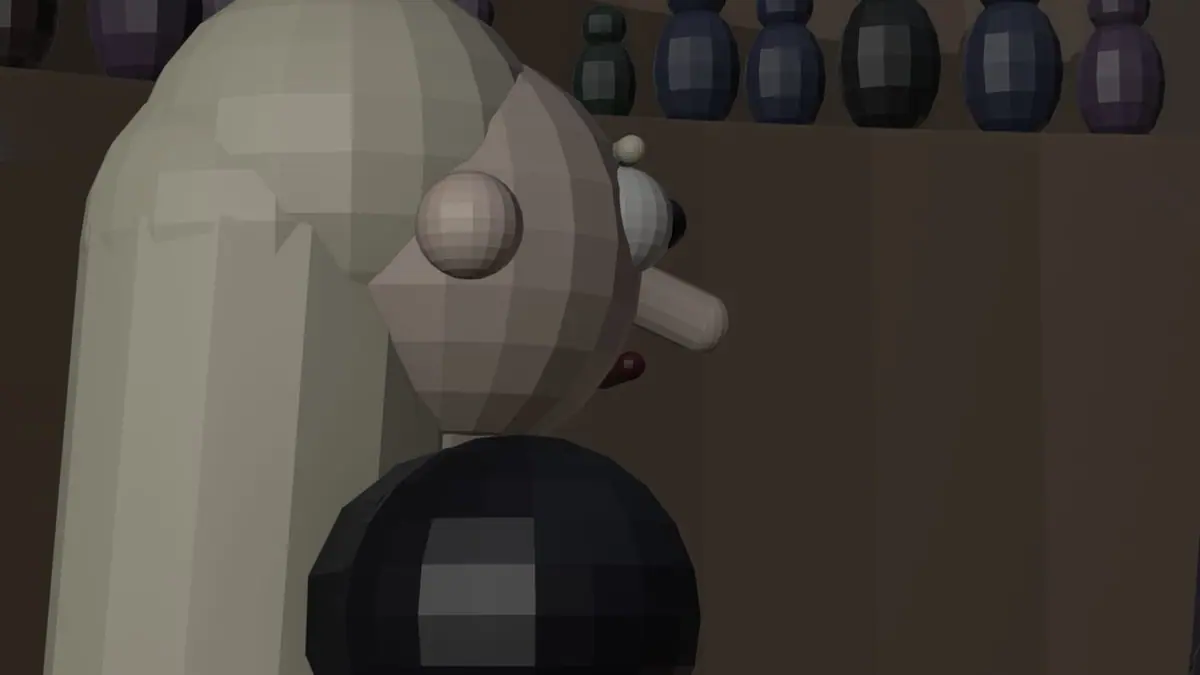 70 · now
Cut 75. The old face looked down to the left, but the painter turned him up to the right. The new faces make the direction unmistakable from any side.
08The fix: compose first, lock second
The chained frames have the composition and the blocking has the continuity, so we take the composition from the first and lock it into the second.
- Mark the layout. On the chained frame, or on Murata's panel, we mark where each head sits. We add a second point on the main bodies, the chest or the hips, so the size is pinned. We also mark landmarks such as the balcony window.
- Solve the camera. A solver searches the set for the camera position, aim and lens that put our real marks on those points. The camera must stand in open space, outside everyone, and within the zone we give it. That zone matters: with no limits, the solver happily shoots from 26 metres away on a long lens, which matches the head positions but flattens all the depth.
- Check it. All the rules above run on the result, including the three new ones.
- Paint it with the hybrid. The room, the costumes and the line stay consistent, as they were.
Each sheet below shows the chained frame with its layout marked in red. Beside it is the solved blocking, with our marks landing in green.
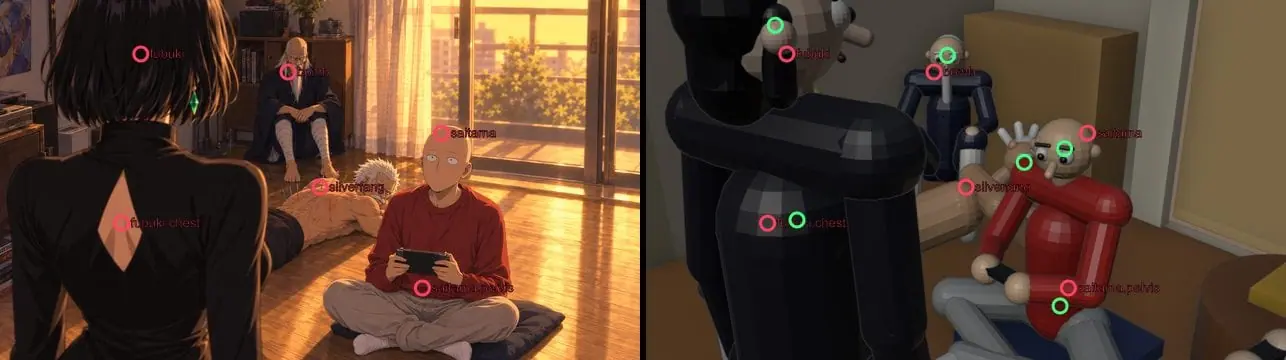 Cut 121 · target → solved
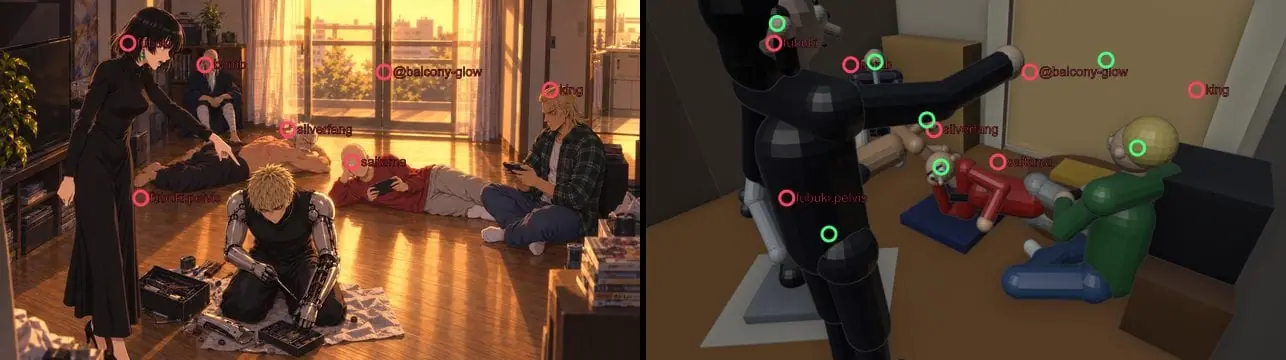 Cut 123 · target → solved
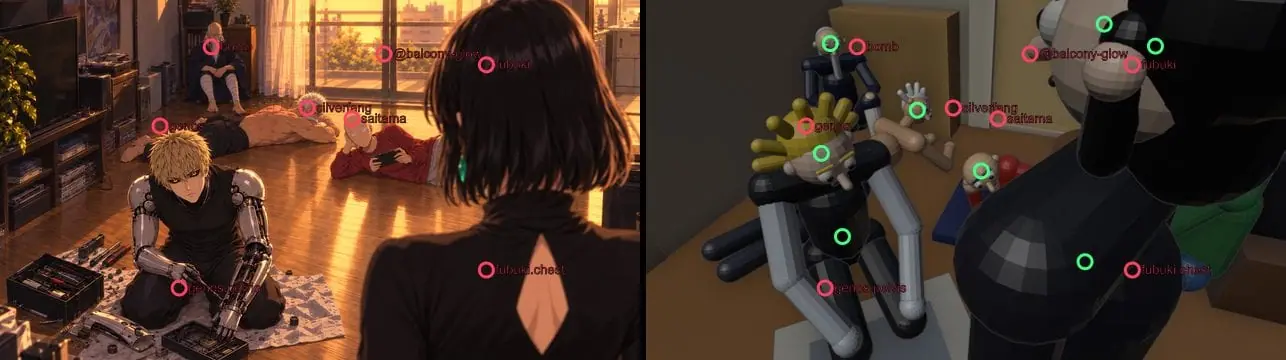 Cut 124 · target → solved
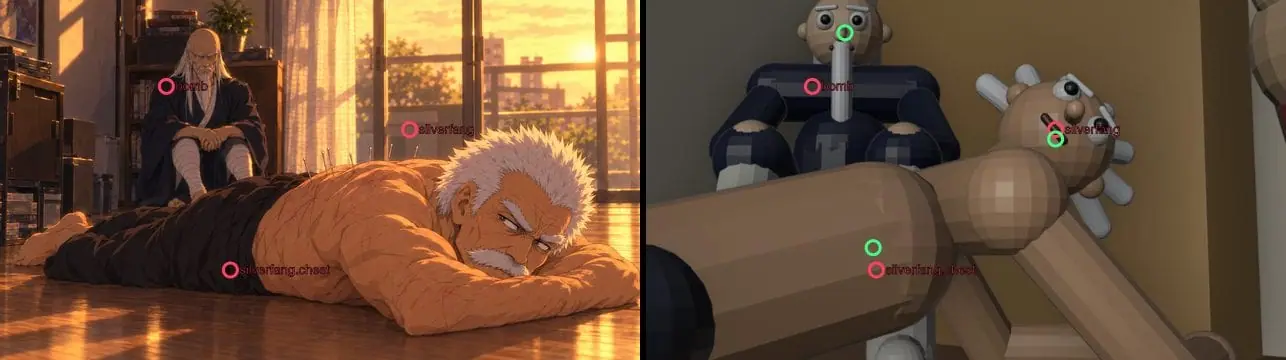 Cut 126 · target → solved
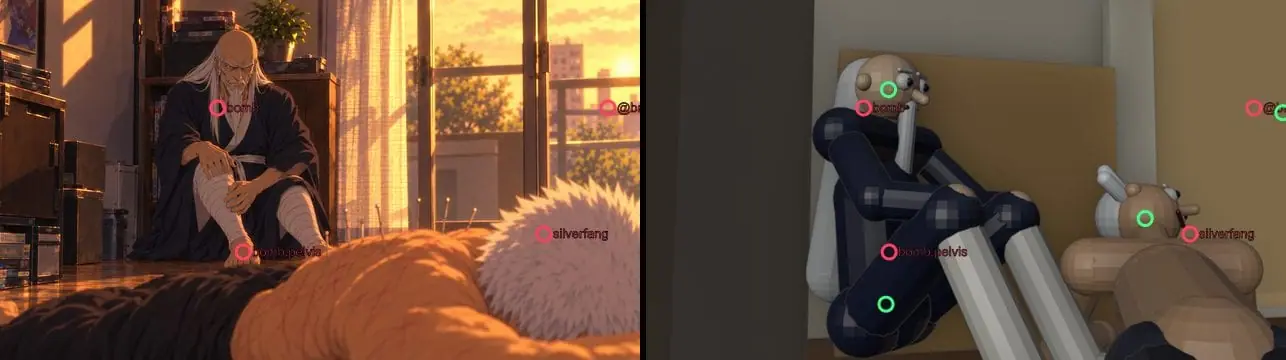 Cut 127 · target → solved
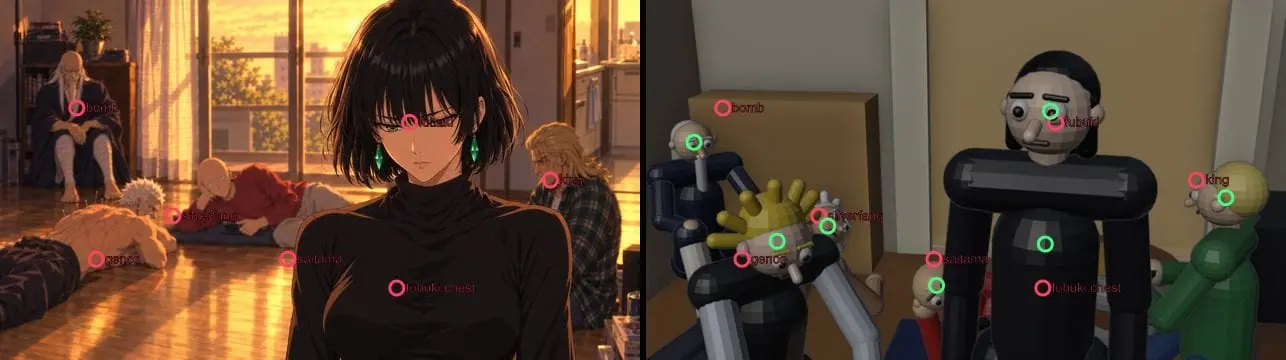 Cut 128 · target → solved
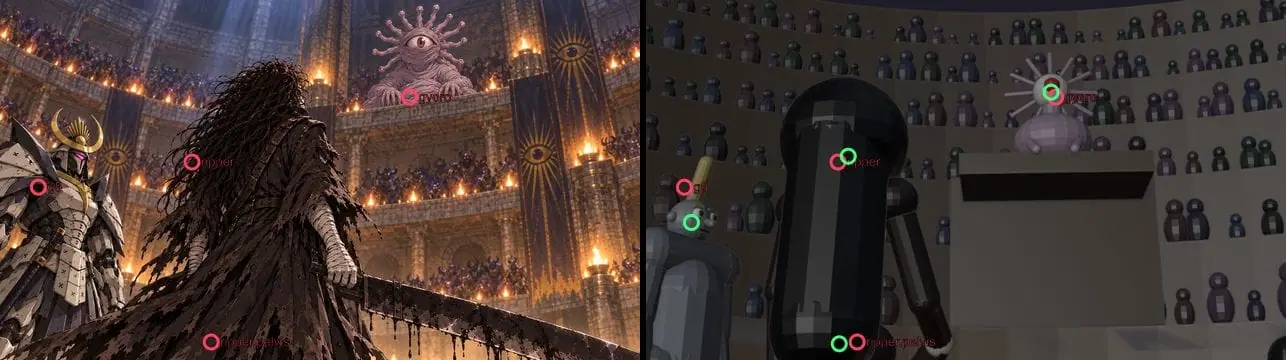 Cut 71 · target → solved
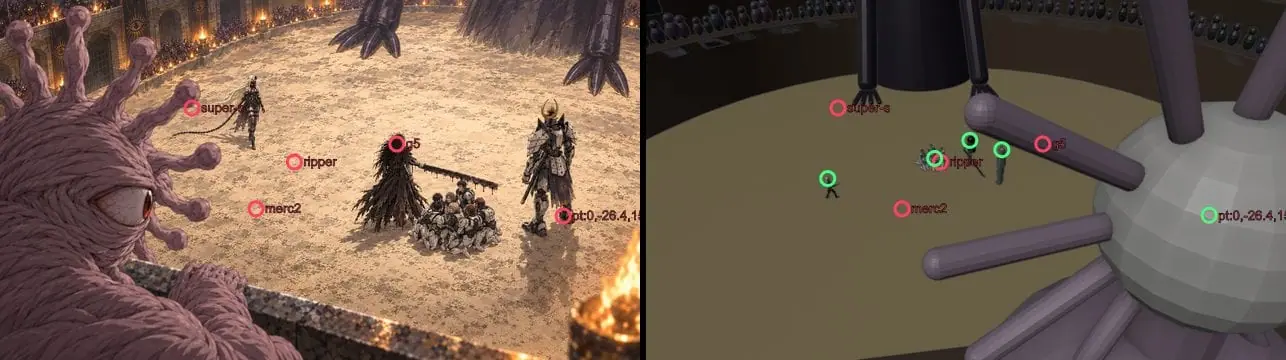 Cut 72 · target → solved
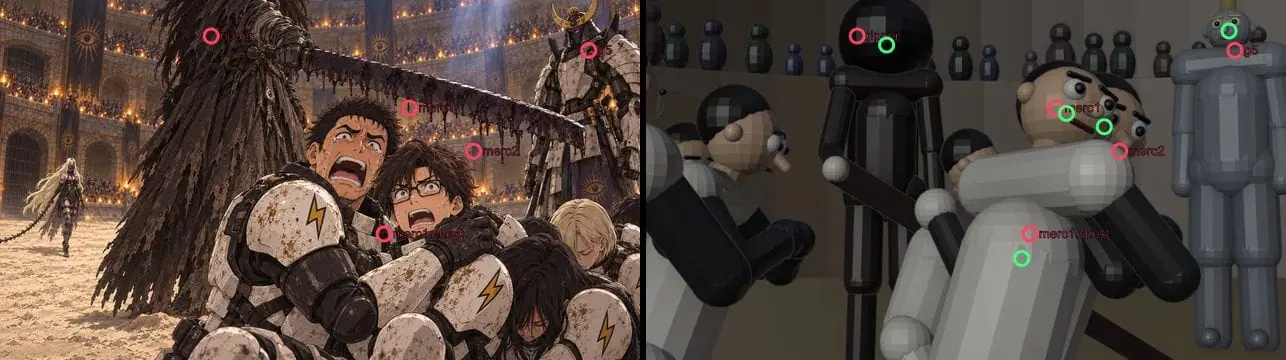 Cut 73 · target → solved
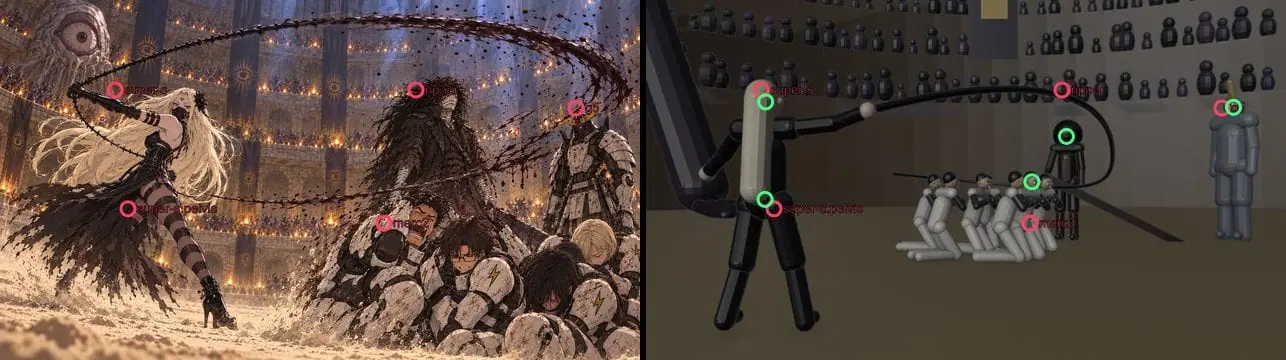 Cut 74 · target → solved
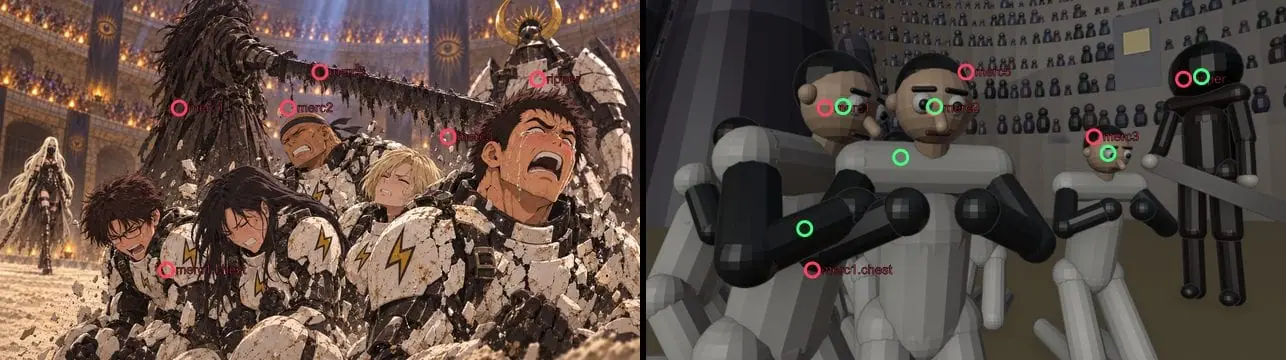 Cut 76 · target → solved
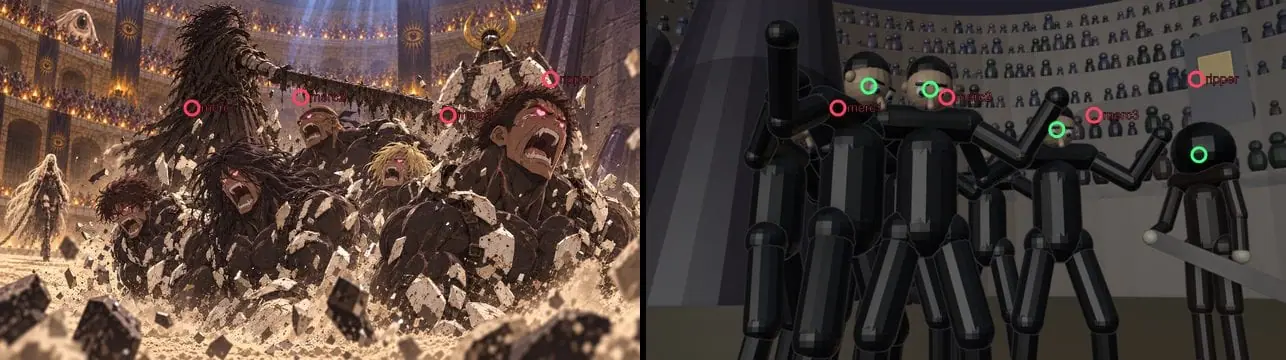 Cut 77 · target → solved
Left half of each sheet: the chained frame, with where each head should sit marked in red. Right half: the blocking after the solve, with where our real marks land in green.
The chained frame isn't always right. Where it did something our real geography can't do, we kept the rule and dropped the picture:
- 68. The chained frame has Super S at the far left and the huddle at the Ripper's right. On our marks, no camera behind the Ripper can do that: the huddle always lands on the same side as she does. 68 keeps its first camera.
- 72. The chained frame puts Gyoro-Gyoro on the left of the frame, which crosses the line from cut 71, where she is on the Ripper's right. 72 is solved as the mirror image, with her looming in the right foreground. Its red marks are mirrored too, so they don't sit on the chained frame's heads.
- 123. The chained frame moves Genos to the wrong side of Fubuki, so his position is left free.
- 74. The spin starts with Super S's back to us, because the huddle she lashes has to be in the frame behind her. The cut is declared as one that shows her back, and its last frame turns her round.
Two placements changed on purpose:
- Genos moves 0.9 m into the room, between Fubuki and the family, in every cut of the scene. Continuity is untouched, and his over-the-shoulder now looks down the room to the balcony.
- In 128, Fubuki turns away from the room as she sobers. The people she came to recruit are behind her, as in the chained frame.
124 · first staging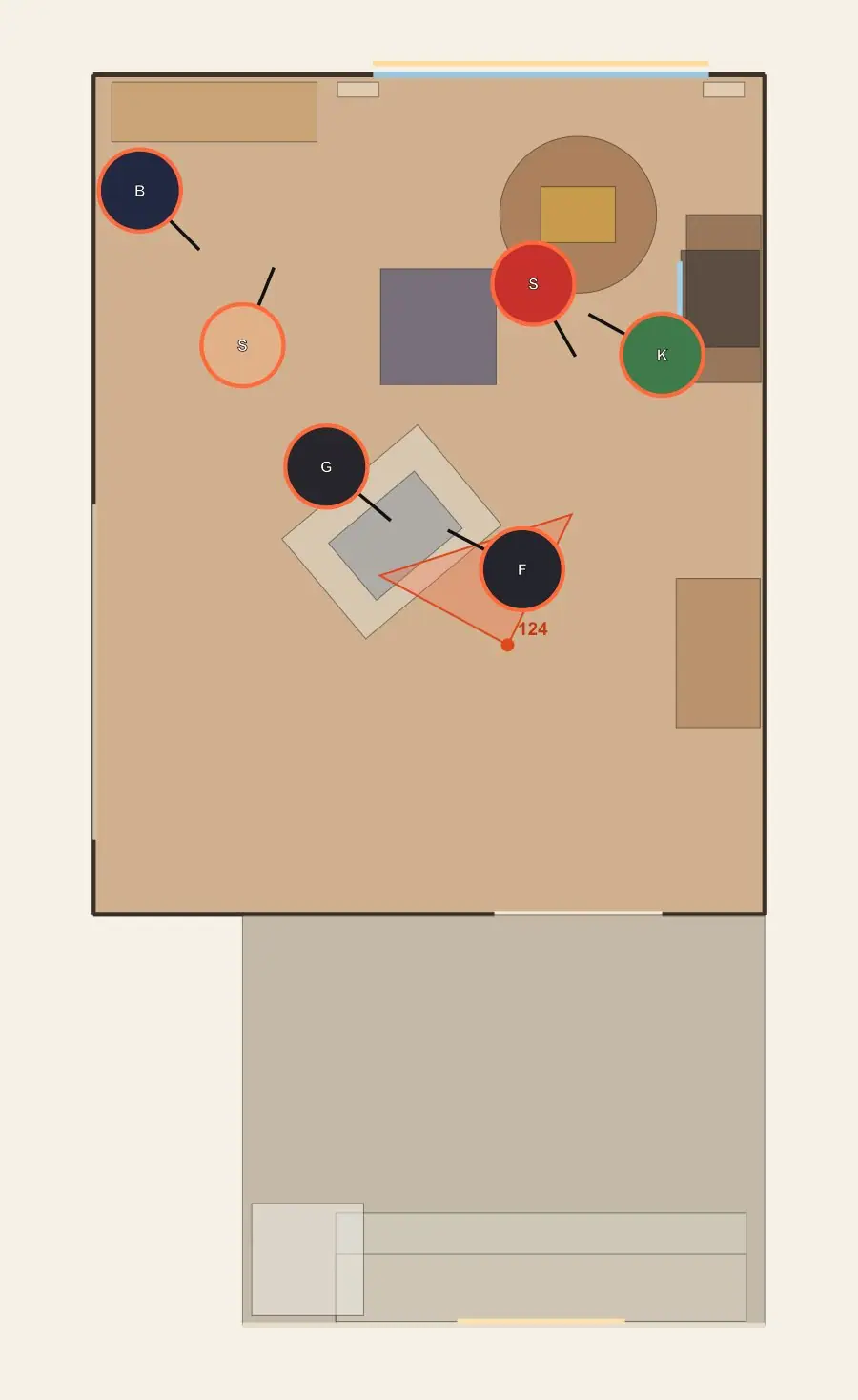 124 · second staging
Cut 124 from above, before and after. Genos moves into the room, and the camera now looks across him toward the balcony instead of at the closet.
The same measures on both stagings, for every cut we re-staged:
| Cut | Subject | Others | Room ÷ subject | Face | Lens |
|---|---|---|---|---|---|
| 121 | saitama | 4 → 5 | 0.1 → 1.9 | 32 → 34° | 45 → 36 mm |
| 123 | fubuki | 4 → 5 | 3.0 → 3.6 | 114 → 98° | 38 → 20 mm |
| 124 | genos | 1 → 5 | 2.1 → 2.8 | 29 → 59° | 32 → 19 mm |
| 126 | silverfang | 0 → 1 | 1.5 → 1.5 | 51 → 35° | 50 → 41 mm |
| 127 | bomb | 0 → 1 | 1.1 → 1.2 | 28 → 51° | 40 → 33 mm |
| 128 | fubuki | 0 → 5 | 2.2 → 2.6 | 31 → 21° | 60 → 41 mm |
| 71 | gyoro | 1 → 2 | open arena | – → –° | 30 → 51 mm |
| 72 | gyoro | 9 → 10 | open arena | 73 → –° | 30 → 24 mm |
| 73 | merc1 | 5 → 7 | open arena | 45 → 34° | 60 → 49 mm |
| 74 | super-s | 0 → 9 | open arena | 62 → 149° | 24 → 30 mm |
| 76 | merc1 | 8 → 7 | open arena | 78 → 42° | 20 → 19 mm |
| 77 | merc1 | 8 → 7 | open arena | 63 → 42° | 18 → 26 mm |
Each cell shows the first staging, then the second. Others counts the other people in frame. Room ÷ subject compares how far a level ray runs before it meets a wall with how far the subject is from the camera; under 1.8 means the subject is against a wall (in the arena the walls are far away, so it is not measured). Face is how far the subject's face turns from the camera; past 95° we see the back of the head, which 123 and 74 declare on purpose.
09The result, painted
We repainted all 19 cuts with the hybrid from the second staging, plus the apartment's master, because Genos had moved. This is the test of the whole idea: does the hybrid now get the chained frame's composition and keep its own continuity? In the cuts that matter most, it does.
124 · Genos kneeling, Fubuki's back in the foreground, the family and the balcony light behind
B · the compositionD · first stagingD · second staging128 · the family she came to recruit behind her
B · the compositionD · first stagingD · second staging126 · Bomb behind Silverfang, the window beyond
B · the compositionD · first stagingD · second staging73 · the two faces, the Ripper and G5 looming behind
B · the compositionD · first stagingD · second staging74 · the lash over the whole huddle
B · the compositionD · first stagingD · second staging76 · faces in the foreground, the Ripper standing over them
B · the compositionD · first stagingD · second stagingThe chained frame, the hybrid from the first staging, and the hybrid from the second. The room, the costumes and the line now hold, and so does the composition.
Three more things the repaint showed:
- The faces work. In 75 the mercenary now looks down to the left, the way his blocking faces. Twice before, he had been painted looking the other way.
- The Ripper keeps his bandages. With the corrected sheet, no frame in the repaint gives him a mouth.
- Don't trade the story for a rule. Our first paint of 128 lost the whole family. To keep two heads off the frame edges, we had tightened the lens to 50 mm. That pushed the family into the corners, and the painter dropped them. The fix was to stand the camera back in the kitchen doorway on a 40 mm lens, so everyone sits well inside the frame.
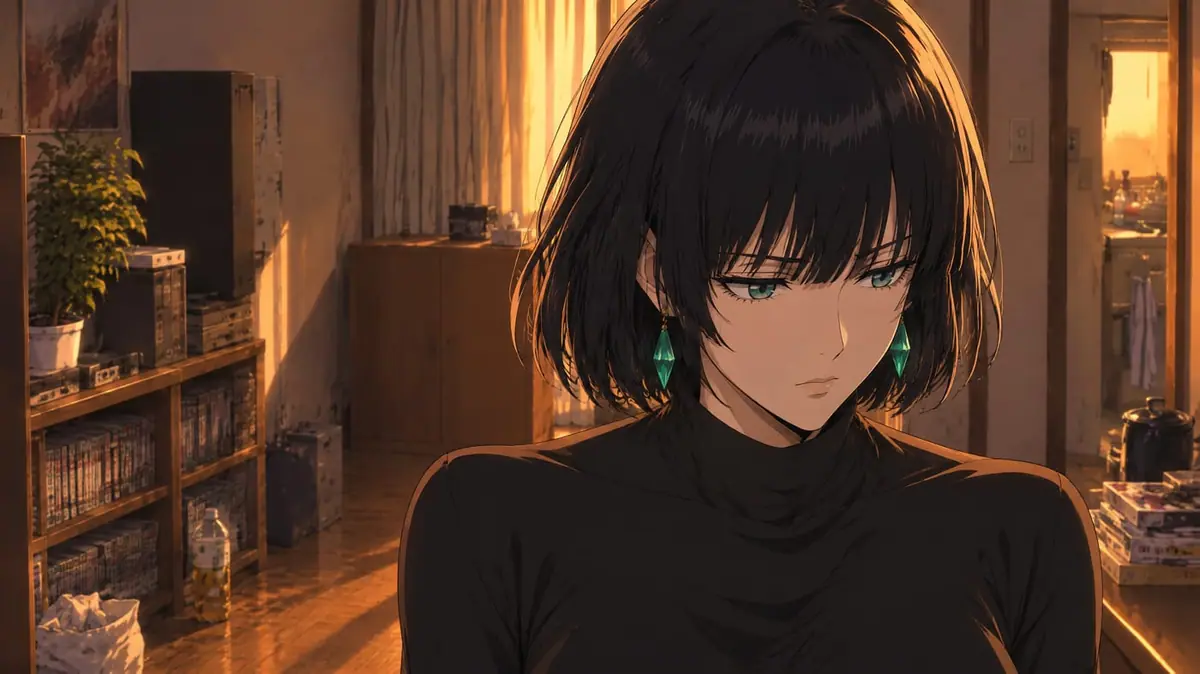 128 · 50 mm, family lost128 · 40 mm from the doorway75 · facing the right way
10Every re-staged cut
For each cut we re-staged: the chained frame it took its composition from, the first staging and its hybrid frame, and the second staging and the hybrid painted from it.
Cut 121 p163 panel 1
Medium two-shot: Fubuki's back and shoulder loom in the left foreground; Saitama, sitting cross-legged on his cushion with his handheld, looks up at her.
B · the compositionFirst stagingD · first staging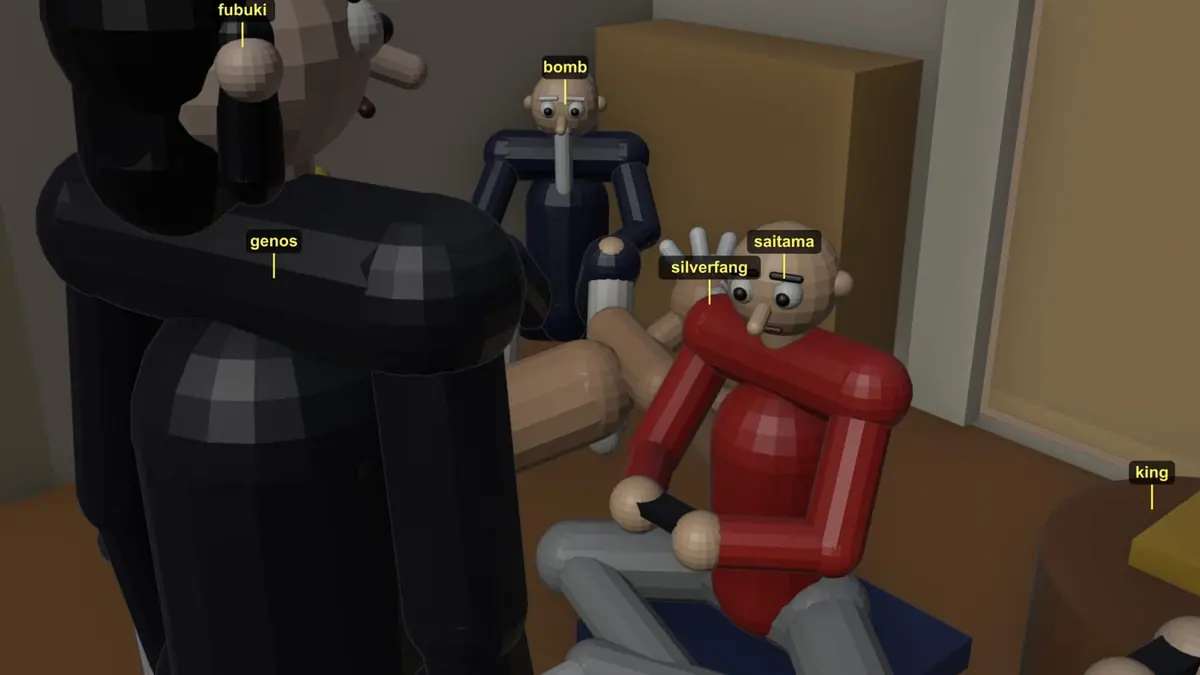 Second stagingD · second staging
Cut 123 p163 panel 3
Medium, side on: Fubuki stands on the left jabbing a finger down; Saitama flops onto his side on the right and props his head on his hand.
B · the compositionFirst stagingD · first staging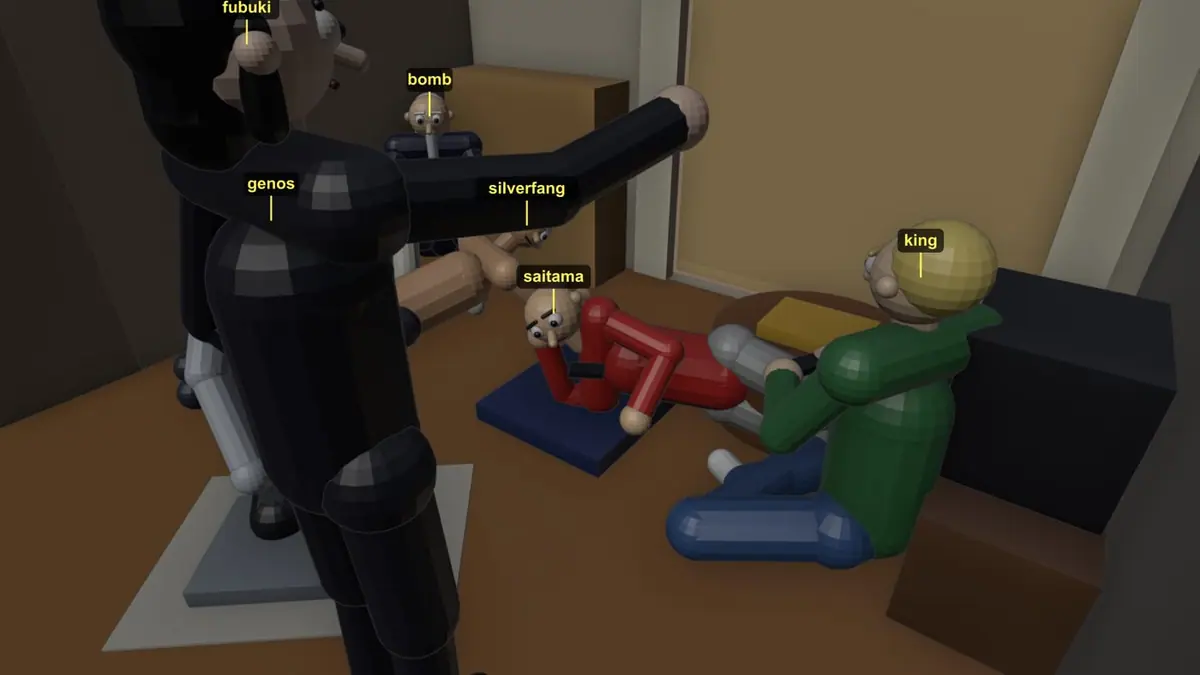 Second stagingD · second staging
Cut 124 p163 panel 4
Medium over Fubuki's shoulder (her black hair soft in the right foreground, so Genos stays on her left as in cut 123): Genos, kneeling over his parts, looks up from his opened arm.
B · the compositionFirst stagingD · first staging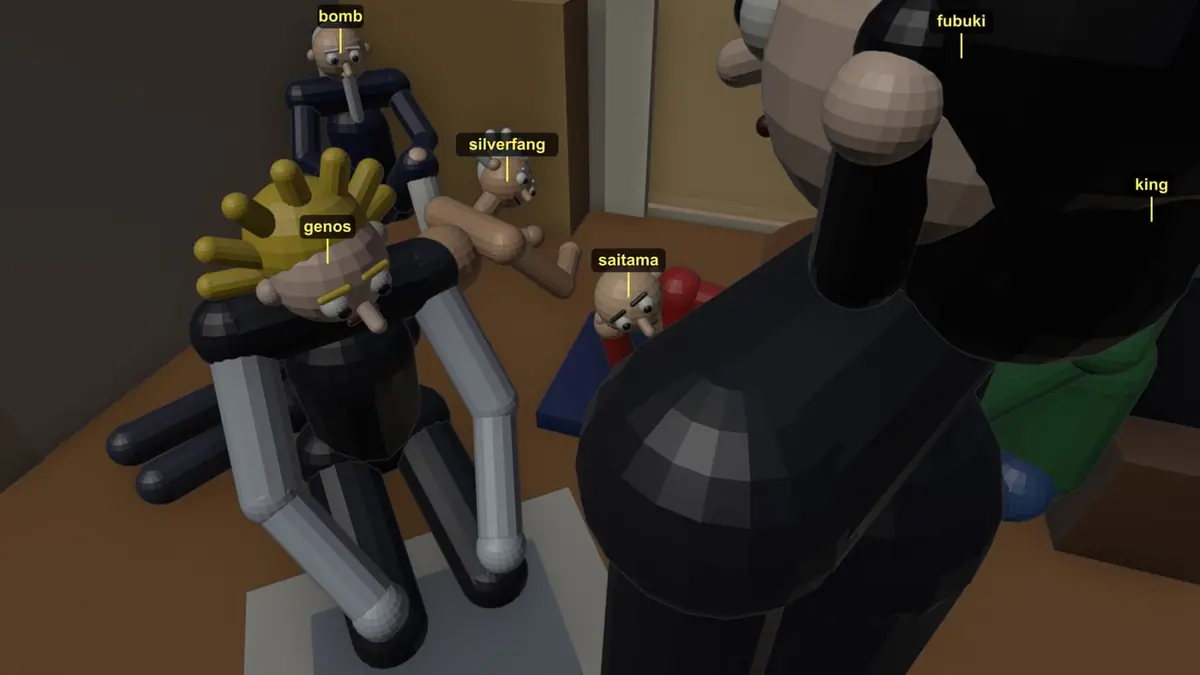 Second stagingD · second staging
Cut 126 p164 panel 2
Close-up at floor level: Silverfang, face-down on the boards, chin on his forearms, explains; the needles in his back catch the light.
B · the compositionFirst stagingD · first staging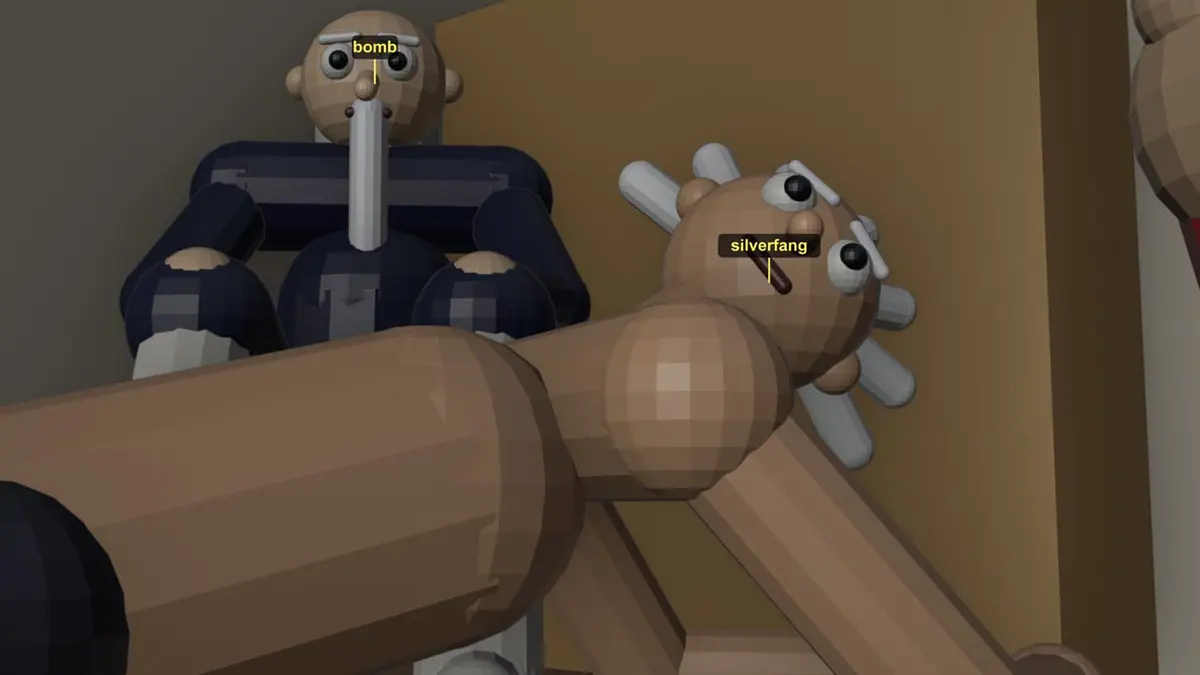 Second stagingD · second staging
Cut 127 p164 panel 3
Medium: Bomb sits in the corner rubbing his bandaged knees; Silverfang's spiky white hair in the right foreground.
B · the compositionFirst stagingD · first staging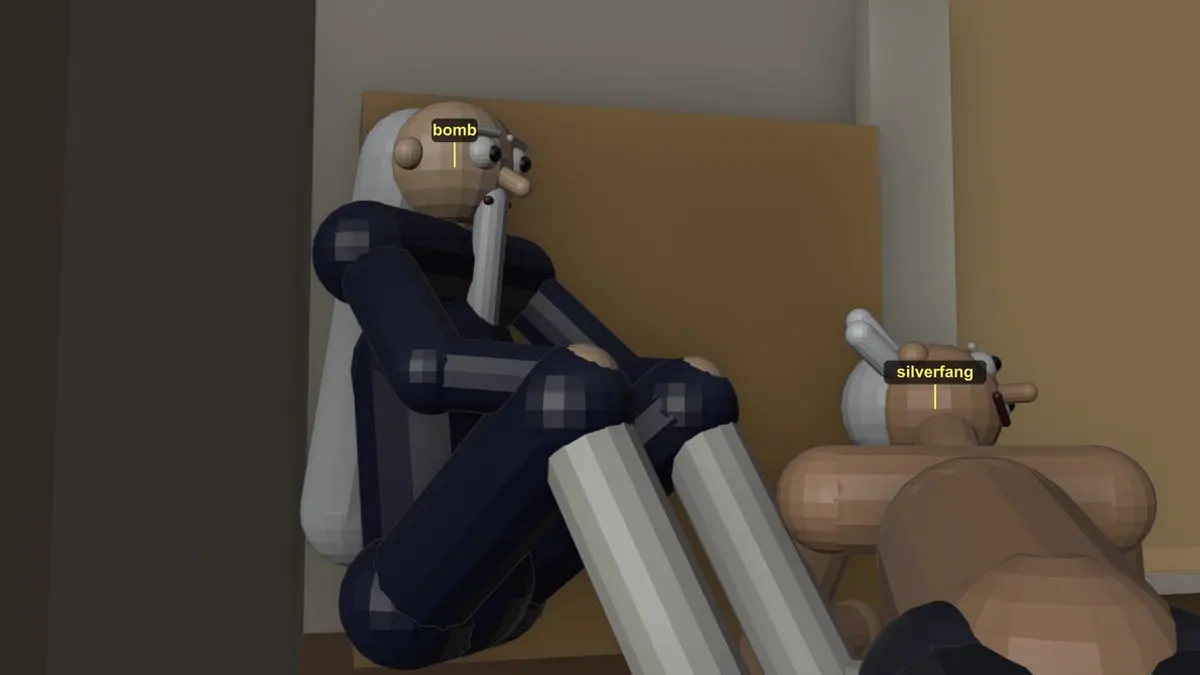 Second stagingD · second staging
Cut 128 p164 panels 4-5
Medium close-up: Fubuki, her anger gone, lowers her eyes, sobered; the kitchen doorway soft behind her.
B · the compositionFirst stagingD · first staging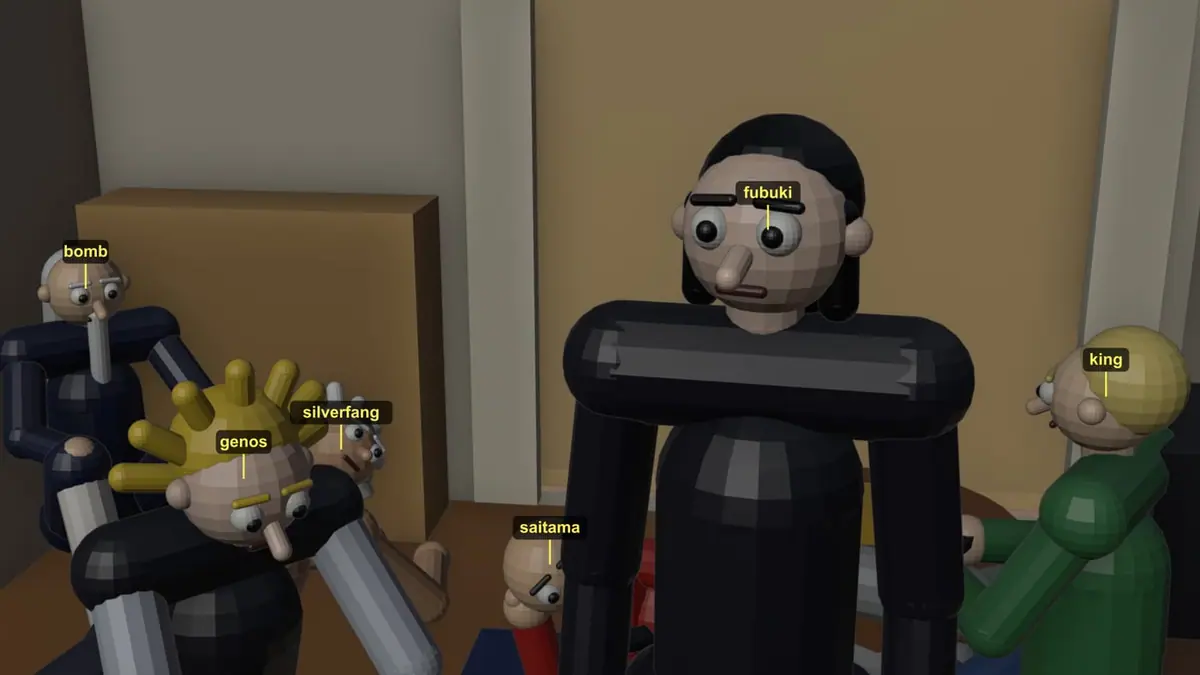 Second stagingD · second staging
Cut 71 p192 panel 1
Medium from behind the Ripper, tilting up: he lifts his head toward Gyoro-Gyoro on her ledge high on the south wall.
B · the compositionFirst stagingD · first staging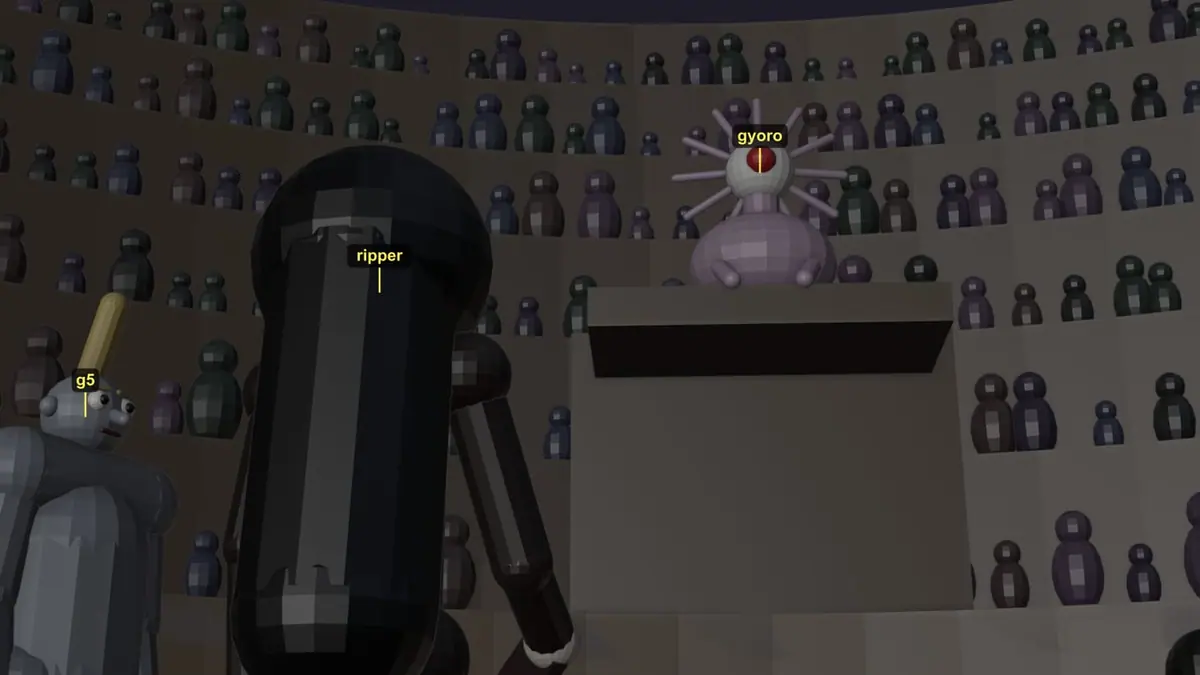 Second stagingD · second staging
Cut 72 p192 panel 2
Wide, high angle over Gyoro-Gyoro's shoulder: down on the sand Super S (left), the huddled captives, the Ripper and G5 (right); Orochi's huge claws rest at the top edge of frame.
B · the compositionFirst stagingD · first staging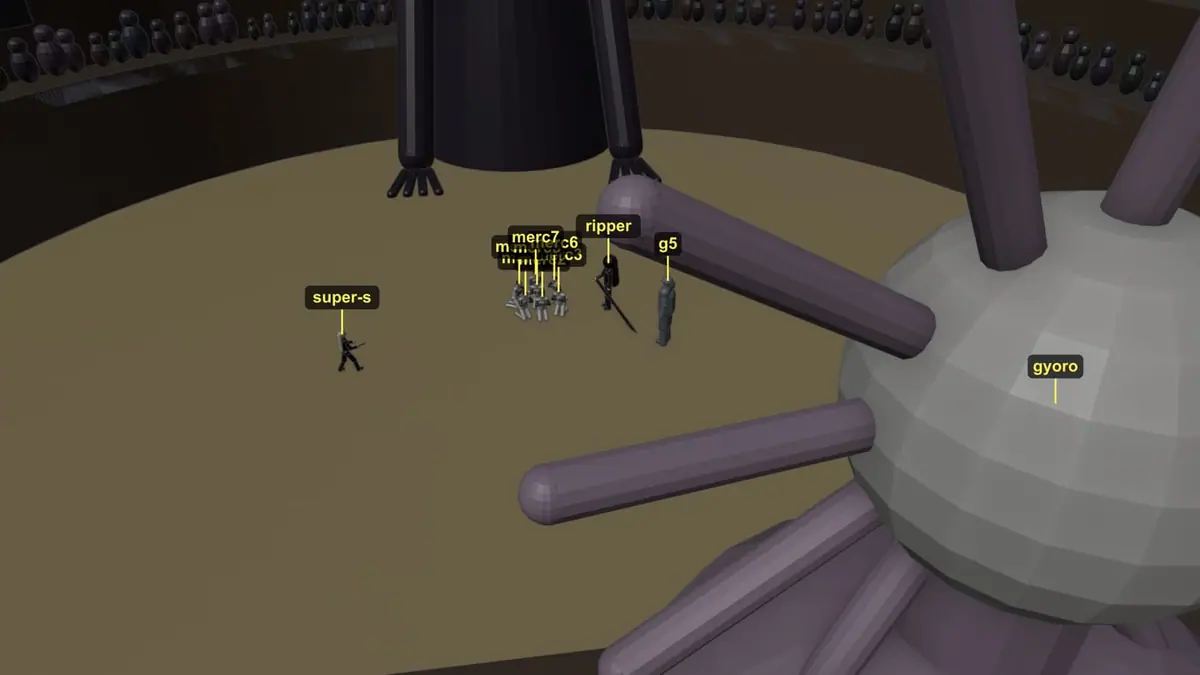 Second stagingD · second staging
Cut 73 p192 panel 3
Medium: two of the mercenaries clutch each other and plead upward in panic.
B · the compositionFirst stagingD · first staging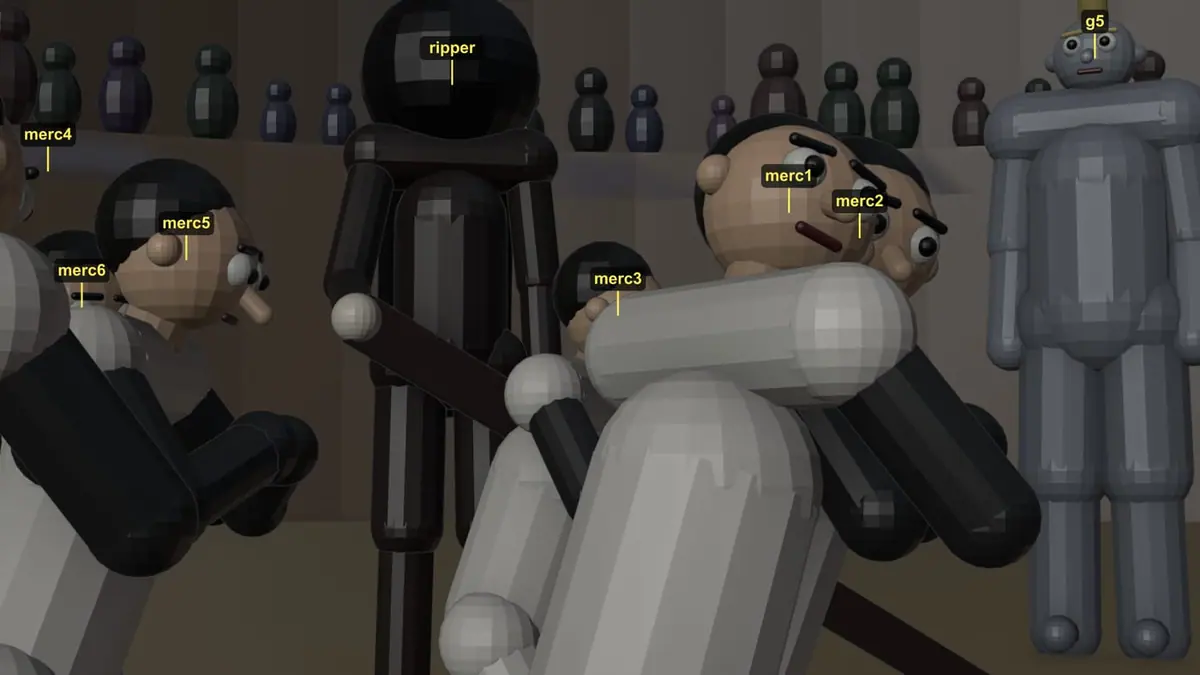 Second stagingD · second staging
Cut 74 p192 panel 4
Full shot, the camera whipping with the lash: Super S spins on one heel and cracks the whip in a huge arc over the whole huddle.
B · the compositionFirst stagingD · first staging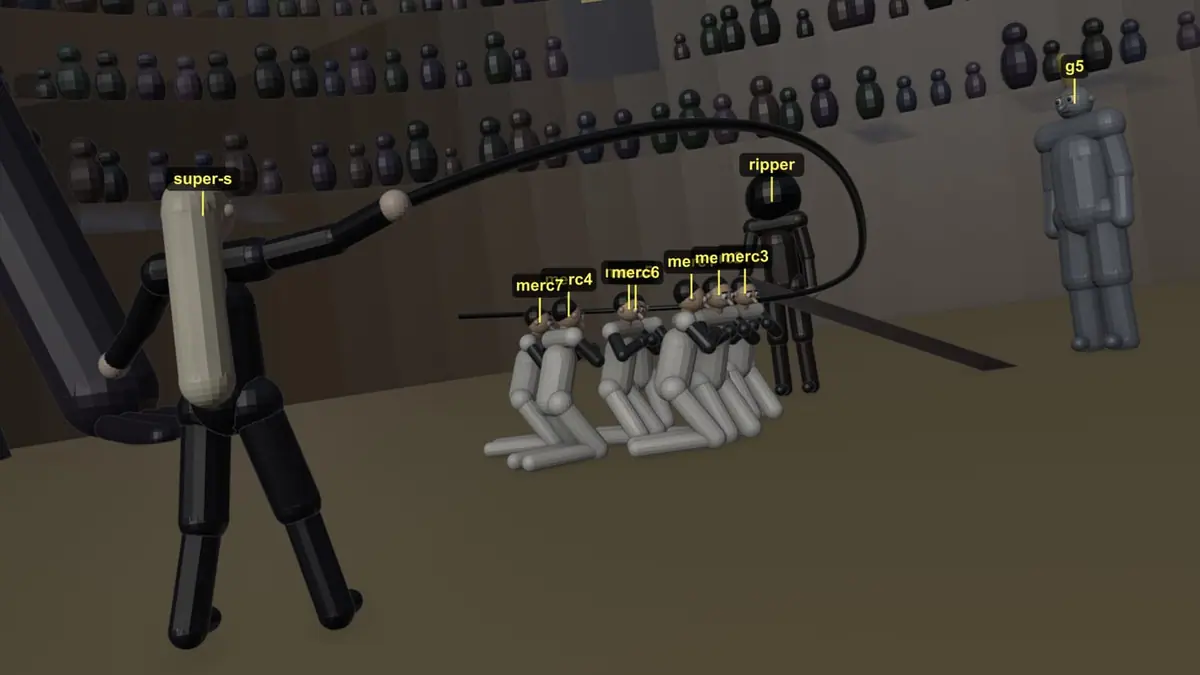 Second stagingD · second staging
Cut 76 p193 panel 2
Medium, handheld shake: their suits crack and splinter as their bodies convulse.
B · the compositionFirst stagingD · first staging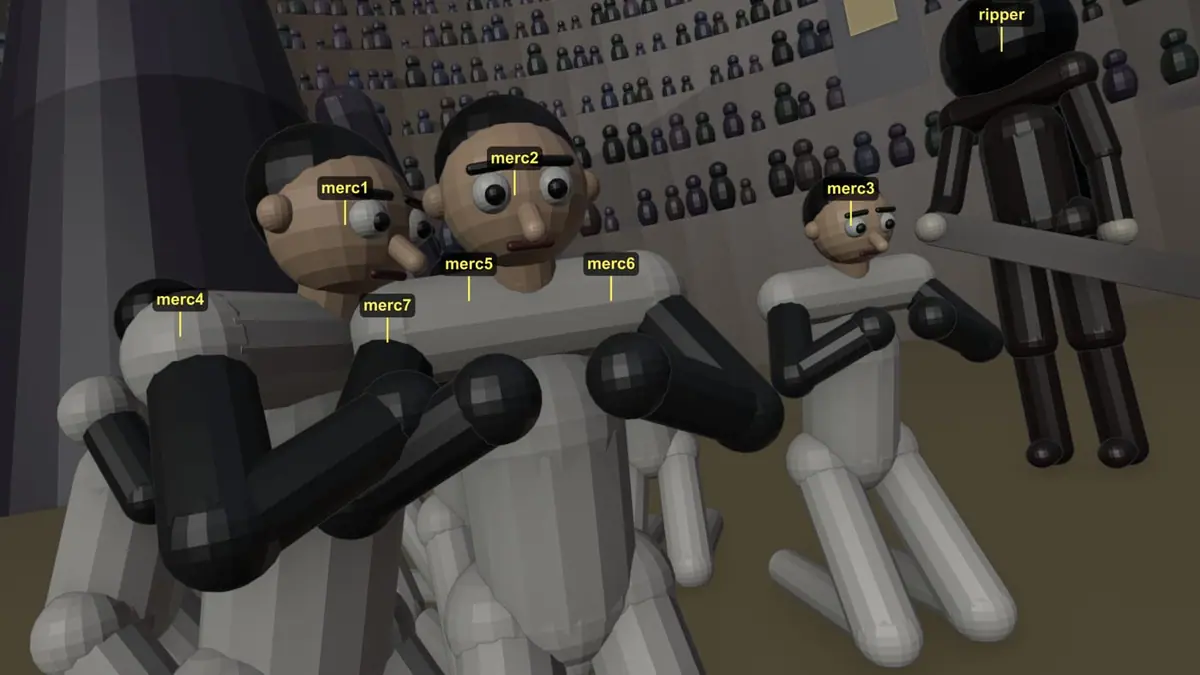 Second stagingD · second staging
Cut 77 p193 panel 3
Wide, debris flying past the lens: they burst up as hulking black brutes and roar, shards of white armour flying.
B · the compositionFirst stagingD · first staging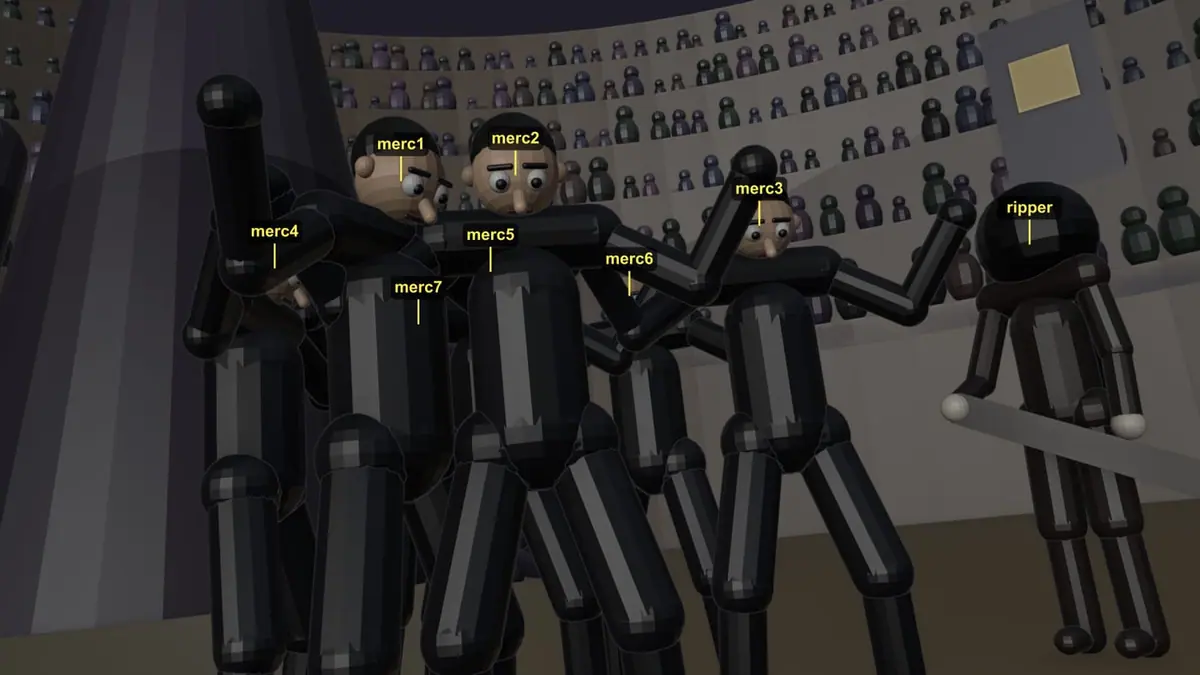 Second stagingD · second staging
11What it cost, and what's next
| Round | Where | Pictures | Spent |
|---|---|---|---|
| 24 Oct · masters, A and B on the first cameras, a few repaints | fal | 46 | $5.19 |
| 25 Oct · plates, then D and A on the revised cameras | Kie, one on fal | 49 | $2.54 |
| 26 Oct · the second staging: the apartment master, 19 cuts, one repaint of 128 | Kie | 21 | $1.05 |
| Every blocking render, audition and camera solve | Blender, on our machine | — | $0 |
| Total | 116 | $8.78 |
Compose with the camera solver from the start
For new scenes, chain a quick frame per cut, mark it, and solve the blocking to it before painting anything for real. The checks keep the line and the faces honest.
Carry it into motion
The blocking is real 3D, so a cut's last pose renders as easily as its first: Saitama sitting at the start of 123 and lying at its end, the mercenaries huddled and then bursting up. Painted, both go to Kling 4 as first and last keyframes.
The remake is a project on the workspace: One-Punch Man, season 3, remade. It is on show for now. Anyone can look around; joining and working on it open later.